Fulltext
Full text is available in the PDF.
IJ Psychiatry and Behavioral Sciences
IJPBS is the Official Journal of Mazandaran University of Medical Sciences
Image Credit:Iran J Psychiatry Behav Sci
Authors
Objective: Carpal Tunnel Syndrome (CTS) is the most frequent local neuropathy which often relapses despite treatment. This study is performed to determine the frequency of obsessive compulsive disorders in CTS as a main reason for relapse in patients referring to Electro-diagnosis clinic during year 2007.
Methods: In a case control study we considered two groups of subjects: with CTS (cases) and without CTS (controls), diagnosed by electro-diagnosis (EDX) and clinical assessment. Patients with underlying diseases such as diabetes mellitus, thyroid diseases and polyneuropathy, and patients with previous history of treatment, and also, pregnant women were excluded from the study. The EDX study has been performed by a physiatrist. All patients had an interview with a psychiatrist for assessment of obsessive compulsive disorder of cleaning type. Chi square test was used for data analysis.
Results: The study was conducted on 300 patients in two equal groups of cases and controls. Two hundred and fifty one patients (83.7%) were female and forty nine patients (16.3%) were male. Age range was from 20 to 80 years old. The Frequency of obsessive compulsive disorder was 42% in cases versus 28% in controls which is statistically significant (P<0.05) and calculated odds ratio was 1.86 (95%CI=1.15-3.01).
Conclusion: According to the significance of co morbidity between CTS and obsession, we suggest further researches for better clarifying the relationship. Perhaps contemporary treatment is useful for treatment and preventing CTS relapse and/or lowering the number of surgical treatment cases which decreases the overall treatment.
Declaration of interest: None.
© 2010, Author(s). This open-access article is available under the Creative Commons Attribution 4.0 (CC BY 4.0) International License (https://creativecommons.org/licenses/by/4.0/), which allows for unrestricted use, distribution, and reproduction in any medium, provided that the original work is properly cited.
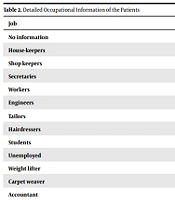
Azadvari M, Haghshomar M, Abbasi Feijani F, Abdolrazagh H, Emami Razavi SZ, et al. Demographical, Anatomical, Disease-Related, and Occupational Risk Factors for Carpal Tunnel Syndrome. Arch Neurosci. 2021;8(4):e117607. doi: https://doi.org/10.5812/ans.117607

Samadi S, Ebrahimi H, Khanjani N, Ebrahimi F. Evaluation of Findings in Carpal Tunnel Syndrome during Surgery in Patients Referred to Reconstructive Surgery Ward. Zahedan J Res Med Sci. 2015;17(1):e1932. doi:

Yazdanpanah P, Mohamadi H, Mousavizadeh A, Sahuli-Tanha A. Incidence of Recurrent and Persistent Carpal Tunnel Syndrome following Open Transverse Carpal Ligament Release. Zahedan J Res Med Sci. 2015;17(1):e1923. doi:
Motalebi M, Fakharian E, Hannani M. Carpet Weavers and Carpal Tunnel Syndrome (CTS). J Kermanshah Univ Med Sci. 2007;11(1):e81872. doi:

Iranmanesh F, Ebrahimi HA, Shahsavari A. Sleep Position in Patients With Carpal Tunnel Syndrome. Zahedan J Res Med Sci. 2015;17(6):e990. doi: https://doi.org/10.17795/zjrms990
Last Update: 1 month ago
Last Update: 1 month ago
Last Update: 1 month ago
Last Update: 5 days ago
Last Update: 1 day ago
Last Update: 2 days ago