Fulltext
Full text is available in the PDF.
IJ Psychiatry and Behavioral Sciences
IJPBS is the Official Journal of Mazandaran University of Medical Sciences
Image Credit:Iran J Psychiatry Behav Sci
Authors
Objective: Deliberate self-harm (DHS) is a deviant behavior that has been not completely emphasized in health-related studies in Iran. The current study was conducted to explore the prevalence and reasons associated with the incidence of DSH in patients referring to the emergency room of Baradaran-e Rezaee Hospital in Damghan, Iran.
Methods: Fifty-four clients with the mean age of 29.4 (±10.3) years participated in this cross-sectional study in 2010. Firstly, demographics and details of substance use were collected based on items elicited from the Addiction Severity Index (ASI) and a researcher-made questionnaire. Then details of comorbidity and factors associated with the current DHS were collected by a semi-structured interview. Data were analyzed by performing descriptive methods of statistics.
Results: Deliberate self-poisoning with using toxic substances such as lead, and poison (44.8%) followed by drug intoxication such as opiate and methamphetamine (35.2%) and body and vessel cutting (20%) were the most prevalent types of DSH. Furthermore, results revealed that comorbidities such as physical illness (38.9%) and psychiatric disorders including depression (31.5%), psychotic symptoms (15%), bipolar disorder (5.6%), stress (5.6%), and anxiety (1.9%) were commonly prevalent. The most frequently reported factors associated with DSH were desires for self-punishing (42%), self-medication for emotional sufferings (33%), experiencing euphoric feelings (24%), and stress (20%), respectively.
Conclusion: DSH is one of the critical health and treatment priorities, which are prevalent in emergency rooms of hospitals in Iran. Clients with comorbid diagnosis of DSH, especially drug use warrant specific attention in emergency rooms.
Declaration of interest: None.
Citation: Babakhanian M, Sadeghi M, Mohamadpur E, Rezazadeh H. Deliberate self-harm among patients referring to the emergency room in Damghan, Iran. Iran J Psychiatry Behav Sci 2014; 8(4): ...
© 2014, Author(s). This open-access article is available under the Creative Commons Attribution 4.0 (CC BY 4.0) International License (https://creativecommons.org/licenses/by/4.0/), which allows for unrestricted use, distribution, and reproduction in any medium, provided that the original work is properly cited.
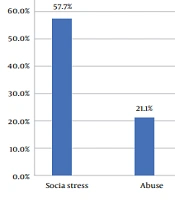
Al Rasbi HT, AlSumri H, Al Difai Z. Characteristics of Patients Presenting with Deliberate Self-harm to the Sultan Qaboos University Hospital, Muscat, Oman. Int J High Risk Behav Addict. 2023;12(4):e142717. doi: https://doi.org/10.5812/ijhrba-142717
Moradinazar M, Najafi F, Baneshi MR, Haghdoost AA. Effective Factors in Recurrent Deliberate Self-Poisoning Attempts. Iran J Psychiatry Behav Sci. 2017;11(4):e3252. doi: https://doi.org/10.5812/ijpbs.3252
Zarghami M, Khoshboresh Astaneh A. Substance Use in Patients Admitted to the Psychiatric Emergency Department in Northern Iran. Iran J Psychiatry Behav Sci. 2023;17(4):e139157. doi: https://doi.org/10.5812/ijpbs-139157
Mokhber N, Asgharipour N, Bananaj A. Frequency of Harmful Behaviors in Patients Who Are Suffering From Substances Abuse. Int J High Risk Behav Addict. 2012;1(3):132-136. doi: https://doi.org/10.5812/ijhrba.7403
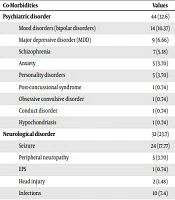
Maqbool M, Fekadu G, Dugassa D, Bekele F, Turi E, et al. The Pattern of Substance Abuse in the Psychiatry Department of a Tertiary Care of Srinagar Hospital, Jammu and Kashmir, India. Arch Neurosci. 2020;7(4):e106492. doi: https://doi.org/10.5812/ans.106492
Last Update: 2 weeks ago
Last Update: 2 weeks ago
Last Update: 2 weeks ago
Last Update: 5 days ago
Last Update: 2 hours ago
Last Update: 3 days ago