Cover image of the article: Painkiller Dependency: The Plight of Northern Nigerians Seeking Pain Relief

Image Credit:Interv Pain Med Neuromod

Painkiller Dependency: The Plight of Northern Nigerians Seeking Pain Relief

Authors

Faisal MuhammadFaisal Muhammad ORCID1, 2,*, Yusuf Yahaya Miya3, Abuhuraira Ado MusaAbuhuraira Ado Musa ORCID4
1Department of Public and Community Health, Faculty of Medicine and Health Sciences, Frontier University Garowe (FUG), Puntland, Somalia
2Otu Institute of Research and Training (OIRT), London, United Kingdom
3Federal College of Medical Laboratory Technology Jos, Plateau, Nigeria
4Department of Community Health, Emirate College of Health Sciences and Technology, Kano, Nigeria
*Corresponding Author: Department of Public and Community Health, Faculty of Medicine and Health Sciences, Frontier University Garowe (FUG), Puntland, Somalia. Email: fokkanya@yahoo.com

Interventional Pain Medicine and Neuromodulation:Vol. 4, issue 1; e145272
Published online:Dec 31, 2024
Article type:Letter
Received:Feb 04, 2024
Accepted:Dec 15, 2024
How to Cite:Muhammad F, Miya YY, Musa AA. Painkiller Dependency: The Plight of Northern Nigerians Seeking Pain Relief. Interv Pain Med Neuromod. 2024;4(1):e145272. doi: https://doi.org/10.5812/ipmn-145272

Dear Editor,
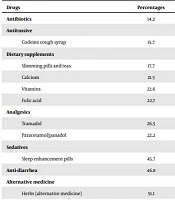
Pain is a universal human experience that can significantly impact one's quality of life (1). Chronic pain, whether caused by injury, illness, or other factors, can be debilitating and affect daily functioning (2). In Nigeria, specifically in the northern regions, the reliance on painkiller tablets has become a prevalent means of seeking relief from various types of pain (3). Like many other regions worldwide, northern Nigeria faces significant challenges in providing adequate healthcare services to its population (4). Limited access to healthcare facilities, shortages of medical professionals, and the high cost of healthcare often force individuals to resort to self-medication for pain relief (5, 6). As a result, painkiller tablets have become readily available over-the-counter solutions for many common ailments.
In this region, many remote areas lack specialized clinics or hospitals equipped to provide comprehensive pain relief services (4). Consequently, individuals must often travel long distances, endure extended waiting times, or even forgo treatment altogether. Cultural beliefs and stigma surrounding pain and pain management play a crucial role in shaping individuals' perceptions and actions. Some cultural beliefs may view pain as a normal part of life, leading individuals to downplay its significance or accept it as inevitable (7, 8). Additionally, the fear of being labeled weak or dependent on medications can discourage individuals from seeking professional medical care. Misconceptions about painkillers and addiction may further exacerbate this issue, preventing people from pursuing appropriate pain relief options (9, 10).
Limited awareness and education about pain management contribute to the reliance on painkillers as the primary solution (11). Many individuals may not be aware of alternative methods or non-opioid pain management techniques. This lack of knowledge leads to a disproportionate focus on painkillers as the sole means of pain relief. Education initiatives that promote understanding of various pain management strategies, including physical therapy, exercise, and psychological interventions, are vital in empowering individuals to make informed decisions (12).
Accessibility and affordability of pain medication pose significant challenges for northern Nigerians seeking pain relief. In remote areas, the availability of painkillers is often limited, forcing individuals to travel long distances or rely on traditional remedies that may not be effective (13). Moreover, the cost of medications can be prohibitive for many, especially those with limited financial resources. The combination of limited availability and high costs creates barriers to accessing essential pain relief treatments.
Weak drug regulation and control systems contribute to the misuse and overuse of painkillers, increasing the risk of dependency. Inadequate monitoring of prescribing practices and distribution channels allows for the unregulated sale and consumption of pain medication (14). Without proper oversight, individuals may unintentionally develop a dependency on these drugs, worsening their pain management struggles. Addressing regulatory challenges is essential to ensuring responsible prescribing, preventing misuse, and promoting safer pain management practices.
The plight of northern Nigerians seeking pain relief requires a comprehensive and multifaceted approach. Here are some strategies that can help alleviate the challenges: Firstly, investment in healthcare infrastructure is crucial to establish well-equipped medical facilities, train healthcare professionals, and improve access to pain management services across northern Nigeria (15). Secondly, initiatives should focus on raising awareness about pain management options, debunking myths surrounding painkillers, and promoting alternative therapies. Public campaigns and educational programs can empower individuals to seek appropriate pain relief and reduce stigma (16).
Thirdly, efforts should be made to enhance the availability and affordability of pain medications in remote areas. This can be achieved through partnerships with pharmaceutical companies, government subsidies, and the establishment of targeted distribution networks. Fourthly, strengthening drug regulation and control systems is essential (17). This includes enforcing appropriate prescribing practices, monitoring medication distribution, and implementing measures to identify and address cases of painkiller dependency.
Fifthly, integrating alternative therapies, such as physiotherapy, acupuncture, and psychological interventions, into pain management strategies can provide additional options for individuals seeking relief while reducing reliance on painkillers (18).
The plight of northern Nigerians seeking pain relief highlights the need for urgent attention and comprehensive action. By addressing healthcare infrastructure challenges, promoting education and awareness, improving medication accessibility and affordability, strengthening regulation and monitoring, and integrating alternative therapies, we can enhance pain management services and improve the lives of individuals grappling with chronic pain. Collaborative efforts involving government agencies, healthcare providers, community organizations, and international stakeholders are crucial to tackling this complex issue and ensuring that no one suffers needlessly from the lack of accessible and effective pain relief.
Footnotes

  • Authors' Contribution: F. M.: Manuscript Writing; Y. Y. M.: Manuscript editing; A. A. M.: Manuscript editing & reviewing.

  • Conflict of Interests Statement: The authors declared that they have no conflict of interest.

  • Funding/Support: The authors declared that they have no funding/support.

References

  • 1.
    Katz N. The impact of pain management on quality of life. J Pain Symptom Manage. 2002;24(1 Suppl):S38-47. [PubMed ID: 12204486]. https://doi.org/10.1016/s0885-3924(02)00411-6.
  • 2.
    Dydyk AM, Conermann T. Chronic Pain. Treasure Island (FL); 2025.
  • 3.
    Suleiman ZA, Wahab KW, Kolawole IK. Opioid prescribing habits of physicians in Kwara State, Nigeria. Ghana Med J. 2016;50(2):63-7. [PubMed ID: 27635092]. [PubMed Central ID: PMC5012137]. https://doi.org/10.4314/gmj.v50i2.2.
  • 4.
    World Health Organization. Strengthening the healthcare system in north-east Nigeria - a priority for WHO. Geneva, Switzerland: World Health Organization; 2019, [cited 2023]. Available from: https://www.afro.who.int/news/strengthening-healthcare-system-north-east-nigeria-priority-who.
  • 5.
    World Health Organization. Self-care in the context of primary health care. Report of the regional consultation Bangkok, Thailand, January 7-9. Geneva, Switzerland: World Health Organization; 2009. Report No.: 2023.
  • 6.
    Billings J, Ching BCF, Gkofa V, Greene T, Bloomfield M. Experiences of frontline healthcare workers and their views about support during COVID-19 and previous pandemics: a systematic review and qualitative meta-synthesis. BMC Health Serv Res. 2021;21(1):923. [PubMed ID: 34488733]. [PubMed Central ID: PMC8419805]. https://doi.org/10.1186/s12913-021-06917-z.
  • 7.
    Peacock S, Patel S. Cultural Influences on Pain. Rev Pain. 2008;1(2):6-9. [PubMed ID: 26525084]. [PubMed Central ID: PMC4589930]. https://doi.org/10.1177/204946370800100203.
  • 8.
    Givler A, Bhatt H, Maani-Fogelman PA. The Importance of Cultural Competence in Pain and Palliative Care. Treasure Island (FL); 2025.
  • 9.
    Alford DP, Compton P, Samet JH. Acute pain management for patients receiving maintenance methadone or buprenorphine therapy. Ann Intern Med. 2006;144(2):127-34. [PubMed ID: 16418412]. [PubMed Central ID: PMC1892816]. https://doi.org/10.7326/0003-4819-144-2-200601170-00010.
  • 10.
    Savage SR, Kirsh KL, Passik SD. Challenges in using opioids to treat pain in persons with substance use disorders. Addict Sci Clin Pract. 2008;4(2):4-25. [PubMed ID: 18497713]. [PubMed Central ID: PMC2797112]. https://doi.org/10.1151/ascp08424.
  • 11.
    Bonnie RJ, Schumacher MA, Clark JD, Kesselheim AS. Pain Management and Opioid Regulation: Continuing Public Health Challenges. Am J Public Health. 2019;109(1):31-4. [PubMed ID: 32941766]. [PubMed Central ID: PMC6301400]. https://doi.org/10.2105/AJPH.2018.304881.
  • 12.
    Wells N, Pasero C, McCaffery M. Improving the Quality of Care Through Pain Assessment and Management. In: Hughes RG, editor. Patient Safety and Quality: An Evidence-Based Handbook for Nurses. Rockville (MD); 2008.
  • 13.
    Adebisi YA, Nwogu IB, Alaran AJ, Badmos AO, Bamgboye AO, Rufai BO, et al. Revisiting the issue of access to medicines in Africa: Challenges and recommendations. Public Health Challenges. 2022;1(2). https://doi.org/10.1002/puh2.9.
  • 14.
    Preuss CV, Kalava A, King KC. Prescription of Controlled Substances: Benefits and Risks. Treasure Island (FL); 2025.
  • 15.
    Abubakar I, Dalglish SL, Angell B, Sanuade O, Abimbola S, Adamu AL, et al. The Lancet Nigeria Commission: investing in health and the future of the nation. Lancet. 2022;399(10330):1155-200. [PubMed ID: 35303470]. [PubMed Central ID: PMC8943278]. https://doi.org/10.1016/S0140-6736(21)02488-0.
  • 16.
    Yost O, Liverman CT, English R, Mackey S, Bond EC; National Academies of Sciences, et al. Improving Patient, Family, and Public Education and Awareness About TMDs. In: Yost O, Liverman CT, English R, Mackey S, Bond EC, editors. Temporomandibular Disorders: Priorities for Research and Care. Washington, D.C: National Academies Press (US); 2020.
  • 17.
    Etienne C, Califf R. Strengthening of regulatory systems for medicines in the Americas. SciELO Public Health; 2016. Available from: https://iris.paho.org/handle/10665.2/28533.
  • 18.
    Cho MH, Arya A, Fernandez JA. Complementary and Alternative Medicine's Effectiveness in Reducing High-Impact Chronic Pain and Opioid Consumption: A Case Report in the Veteran Population. Integr Med (Encinitas). 2021;20(2):26-30. [PubMed ID: 34377091]. [PubMed Central ID: PMC8325491].

Copyright

Copyright © 2025, Interventional Pain Medicine and Neuromodulation. This open-access article is available under the Creative Commons Attribution-NonCommercial 4.0 (CC BY-NC 4.0) International License (https://creativecommons.org/licenses/by-nc/4.0/), which allows for the copying and redistribution of the material only for noncommercial purposes, provided that the original work is properly cited.

Similar Articles

5
Apr
2021
Self-Medication with Over-the-Counter and Prescription Drugs and Illness Behavior in Nigerian Artisans

Self-Medication with Over-the-Counter and Prescription Drugs and Illness Behavior in Nigerian Artisans

Ebenezer Olutope Akinnawo,
Deborah Foluke Onisile,
Oluseyi Abiodun Alakija,
Bede Chinonye Akpunne

Akinnawo EO, Onisile DF, Alakija OA, Akpunne BC. Self-Medication with Over-the-Counter and Prescription Drugs and Illness Behavior in Nigerian Artisans. Int J High Risk Behav Addict. 2021;10(2):e107221. doi: https://doi.org/10.5812/ijhrba.107221

16
Jul
2016
Health Care Workers’ Knowledge, Attitude, and Practice About Chronic Pain Management, Shiraz, Iran

Health Care Workers’ Knowledge, Attitude, and Practice About Chronic Pain Management, Shiraz, Iran

Raziyeh Kheshti,
Soha Namazi,
Manoosh Mehrabi,
Dena Firouzabadi

Kheshti R, Namazi S, Mehrabi M, Firouzabadi D. Health Care Workers’ Knowledge, Attitude, and Practice About Chronic Pain Management, Shiraz, Iran. Anesth Pain Med. 2016;6(4):e61547. doi: https://doi.org/10.5812/aapm.37270

3
Dec
2016
The Management of Chronic Pain; Caught Between a Rock and a Hard Place: The Case for a Renewed Focus on Provider, Patient, and Payer Education

The Management of Chronic Pain; Caught Between a Rock and a Hard Place: The Case for a Renewed Focus on Provider, Patient, and Payer Education

Talal W. Khan,
Farnad Imani

W. Khan T, Imani F. The Management of Chronic Pain; Caught Between a Rock and a Hard Place: The Case for a Renewed Focus on Provider, Patient, and Payer Education. Anesth Pain Med. 2017;7(1):e40951. doi: https://doi.org/10.5812/aapm.40951

1
Dec
2019
Assessment of Factors Predicting Inadequate Pain Management in Chronic Pain Patients

Assessment of Factors Predicting Inadequate Pain Management in Chronic Pain Patients

Hossein Majedi,
S. Sharareh Dehghani,
Saeed Soleyman-Jahi,
Abbas Tafakhori,
S. Ali Emami,
Mohammad Mireskandari
,et al.

Majedi H, Dehghani SS, Soleyman-Jahi S, Tafakhori A, Emami SA, et al. Assessment of Factors Predicting Inadequate Pain Management in Chronic Pain Patients. Anesth Pain Med. 2019;9(6):e97229. doi: https://doi.org/10.5812/aapm.97229

26
Dec
2011
“Pain Relief is an Essential Human Right”, We Should be Concerned about It

“Pain Relief is an Essential Human Right”, We Should be Concerned about It

Farnad Imani,
Saeid Safari

Imani F, Safari S. “Pain Relief is an Essential Human Right”, We Should be Concerned about It. Anesth Pain Med. 2011;1(2):e93332. doi: https://doi.org/10.5812/kowsar.22287523.2306

More by these authors

Faisal MuhammadPubMedScholar
Yusuf Yahaya MiyaPubMedScholar
Abuhuraira Ado MusaPubMedScholar
Share
Cited by
Metrics