Fulltext
The full-text is available in pdf.
Note: Zohre Mohammadi and Mahmoud Beheshti participated to the same extent in this study.
International Cardiovascular Research Journal
An annual journal in scientific affiliation with the Cardiovascular Research Center, Shiraz University of Medical Sciences
Image Credit:Int Cardiovasc Res J
Authors
 1, 2, Saman Rostambeigi3, Parham Sadeghipour3, Anahita Tavousi4, Mahnoosh Foroughi5,*
Background:
Ventricular Septal Rupture (VSR) is a rare but challenging complication after Myocardial Infarction (MI).
Objectives:
The present study aimed to evaluate the surgical outcomes of VSR over 18 years.
Methods:
This multicenter study was conducted on 88 patients with post-MI VSR during 2000 - 2018.
Results:
A consecutive series of 88 patients with surgical repair of VSR was evaluated. The patients (n = 11) presenting hemodynamic deterioration at the time of hospital admission died before any attempt for surgery. The mean intervals between MI and VSR diagnosis and between admission and operation were 7.5 ± 7.2 and 5 ± 5 days, respectively. VSR location did not influence the outcomes (P = 0.1). Concomitant coronary bypass was done for all patients. Only 25 patients survived and left the hospital (13 patients died in the operating room due to pump weaning failure and 50 patients died in the ICU due to low cardiac output). The predictors of poor prognosis included low ejection fraction (P = 0.01), prolonged pump time (P = 0.01), and operation in the second half of the study period (P = 002). However, the results of multivariate analysis showed that none of them was an independent predictor of perioperative mortality.
Conclusions:
The perioperative mortality rate of VSR has remained high in case of inaccessibility to assist devices. Hence, VSR repair is recommended to be limited to certain centers with adequate experiences.
© 2021, Author(s). This open-access article is available under the Creative Commons Attribution 4.0 (CC BY 4.0) International License (https://creativecommons.org/licenses/by/4.0/), which allows for unrestricted use, distribution, and reproduction in any medium, provided that the original work is properly cited.

Mirzaaghayan MR, Aghaei Moghadam E, Dehestani A, Ghamari A. Early Surgical Closure of the Ventricular Septal Defects; to Be Done or Not to Be Done? A Question to Be Answered. Inn J Pediatr. 2018;28(6):e58876. doi: https://doi.org/10.5812/ijp.58876
Amoozgar H, Abdollahi A, Edraki M, Mehdizadegan N, Mohammadi H, et al. Heart Function and Ventricular Recovery After Percutaneous Closure of Perimembranous Ventricular Septal Defect in Children: A Cross-sectional Study. Inn J Pediatr. 2022;32(3):e117730. doi: https://doi.org/10.5812/ijp-117730
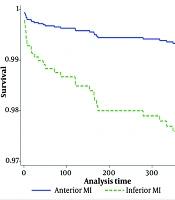
Janjani P, Godarzi F, Salehi N, Asadmobini A. Comparing One-Year Survival in Anterior Versus Inferior ST-Elevation Myocardial Infarction Patients: Results of a Cohort Study in Western Iran. Int Cardiovasc Res J. 2024;18(1):e145312. doi: https://doi.org/10.5812/icrj-145312
Sadeghi R, Maghsoomi Z, Kachoueian N, Sistanizad M, Soroureddin Z, et al. Cardiogenic Shock Following Acute Myocardial Infarction: A Retrospective Observational Study. Int J Cardiovasc Pract. 2019;4(4):e130564. doi: https://doi.org/10.29252/ijcp-27631
Edraki M, Farrokifar M, Amoozgar H, Mehdizadegan N, Mohammadi H, et al. Incidence, Risk Factors, and Outcomes of Conduction Disturbances After Percutaneous Closure of Perimembranous Ventricular Septal Defects in Children and Adolescents: A Mid-term Follow-up. Inn J Pediatr. 2023;33(5):e135528. doi: https://doi.org/10.5812/ijp-135528
Last Update: 1 month ago
Last Update: 1 month ago
Last Update: 1 month ago
Last Update: 8 hours ago
Last Update: 11 hours ago
Last Update: 4 days ago

