
Fulltext
The full-text is available in pdf.
International Cardiovascular Research Journal
An annual journal in scientific affiliation with the Cardiovascular Research Center, Shiraz University of Medical Sciences
Image Credit:Int Cardiovasc Res J
Authors
Background: Iron-induced cardiomyopathy is the main cause of heart failure in patients with beta-thalassemia major (β-TM). Early diagnosis and timely cardiac iron overload (IO) therapy can improve patients’ prognosis.
Objectives: This study evaluated the value of exercise test parameters and high-sensitivity C-reactive protein (hs-CRP) in detecting cardiac IO in patients with β-TM.
Methods: Forty β-TM patients (age range:18 – 48) were enrolled in this cross-sectional study. Serum hs-CRP was measured using ELISA. Echocardiography and exercise treadmill tests were performed. Cardiac IO was determined using cardiac T2* (CT2*) magnetic resonance imaging, and patients were divided into abnormal (CT2* < 20 ms; n = 22) and normal (CT2* > 20 ms; n = 18) groups. Statistical analyses were conducted using SPSS software. The Mann-Whitney U-test was used to assess differences between the groups. The correlations of variables were evaluated using Pearson’s or Spearman’s correlation analysis. Receiver operator characteristic (ROC) curves were drawn to calculate the optimum cutoff for each test.
Results: We found a significantly higher level of hs-CRP (P = 0.011) and lower levels of the chronotropic index (CI) (P = 0.009) and heart rate recovery (HRR) at minutes 2 – 5 (P < 0.01) in the patients with abnormal CT2*. CT2* was inversely correlated with hs-CRP (r = -0.381, P = 0.022) and positively correlated with the CI (r = 0.346, P = 0.031) and HRR at minute 4 (HRR4) (r = 0.456, P = 0.005). ROC curve data showed diagnostic values of CI (AUC = 0.80, P = 0.005), HRR4 (AUC = 0.786, P = 0.008), and hs-CRP (0.711, P = 0.033) in predicting the severity of IO. These tests showed high sensitivity (CI = 84.6%, HRR4 = 84.6%, and hs-CRP = 85.7%) but low specificity (CI = 70.6%, HRR4 = 41.2%, and hs-CRP = 53.3%) in detecting the severity of cardiac IO.
Conclusion: We found that hs-CRP, CI, and HRRs were significantly associated with the severity of cardiac IO. Despite high sensitivity, these markers showed poor specificity in predicting cardiac iron deposition in β-TM patients.
© 2023, Author(s). This open-access article is available under the Creative Commons Attribution 4.0 (CC BY 4.0) International License (https://creativecommons.org/licenses/by/4.0/), which allows for unrestricted use, distribution, and reproduction in any medium, provided that the original work is properly cited.
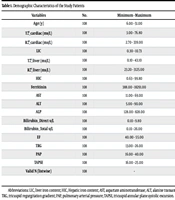
Mohammadi S, Jalilian M, Absalan F, Maghsoudi F, Samimi Z. Investigating the Relationship Between Liver and Heart Iron Overload Measured by T2 ⃰ Magnetic Resonance Imaging with Serum Ferritin Level, Liver Enzyme Ratio (Aspartate Aminotransferase / Alanine Aminotransferase) and Electrocardiography Findings in Patients with Thalassemia Major. Compr Health Biomed Stud. 2024;2(4):e151439. doi: https://doi.org/10.5812/chbs-151439
Ghandi Y, Habibi D, Eghbali A. Assessment of the Relationship Between Iron Overload Based on Cardiac T2* MRI and Fragmented QRS in Beta-Thalassemia Major Patients. Shiraz E-Med J. 2020;21(8):e96612. doi: https://doi.org/10.5812/semj.96612
Shahramian I, Razzaghian M, Ramazani AA, Ahmadi GA, Noori NM, et al. The Correlation between Troponin and Ferritin Serum Levels in the Patients with Major Beta-Thalassemia. Int Cardiovasc Res J. 2017;7(2):e12699. doi:
Bornaun H, Dedeoglu R, Oztarhan K, Dedeoglu S, Erfidan E, et al. Detection of Early Right Ventricular Dysfunction in Young Patients With Thalassemia Major Using Tissue Doppler Imaging. Inn J Pediatr. 2016;26(3):e5808. doi: https://doi.org/10.5812/ijp.5808
Do Thi Thanh L, Dao Bui Quy Q, Pham Thu H, Nguyen Trung K, Nguyen Huu D, et al. Plasma CRP-hs and Ferritin Concentration Related to Kidney Injury in Adult Patients with Beta-thalassemia: A Cross-sectional Study in Vietnam. Nephro-Urol Mon. 2023;15(3):e136753. doi: https://doi.org/10.5812/numonthly-136753
Last Update: 3 weeks ago
Last Update: 3 weeks ago
Last Update: 3 weeks ago
Last Update: 5 hours ago
Last Update: 8 hours ago
Last Update: 4 days ago


