Fulltext
The full text is available in PDF.
International Cardiovascular Research Journal
An annual journal in scientific affiliation with the Cardiovascular Research Center, Shiraz University of Medical Sciences
Image Credit:Int Cardiovasc Res J
Authors
Background: Metabolic syndrome (MetS) is rapidly rising at an alarming rate through all parts of the world.
Elevated serum aminotransferase was proposed as a marker for early detection of MetS. In this investigation we
primarily aimed to evaluate the prevalence of MetS and its components among army and secondly to explore the
association between elevated serum aminotransferase and the components of metabolic syndrome.
Methods: A total of 380 army personnel from a military camp in Southern Iran participated in this cross-sectional
study. Life style related characteristics, anthropometric features, serum aminotransferase and components of
MetS, based on National Cholesterol Education Program—Adult Treatment Panel III, were measured. Statistical
significant was set as p value less than 0.05.
Results: The mean age of participants was 35.0± 7.5 year-old and the prevalence of metabolic syndrome was
8.1%. The prevalence of the components of MetS including; central obesity, abnormal fasting blood glucose,
hypertension, hypertriglycridemia and low HDL cholesterol level was 8.6%, 10.4%, 18.5%, 31%, and 45.5%
respectively. MetS had significant relationship with obesity (P<0.001) and abnormal Waist Circumferance/Hip
Circumference ratio (P<0.001). Twenty-six percent of subjects had ALT ≥ 41 U/L and 4.9% of them had ALT ≥
81. Elevated serum aminotransferase had significant association with presence of MetS (P= 0.007).
Conclusion: Although prevalence of metabolic syndrome among the studied army population was not high, life
style modification of army members is recommended. Liver function tests should be included in routine health
checkup of military personnel.
© 2010, Author(s). This open-access article is available under the Creative Commons Attribution 4.0 (CC BY 4.0) International License (https://creativecommons.org/licenses/by/4.0/), which allows for unrestricted use, distribution, and reproduction in any medium, provided that the original work is properly cited.
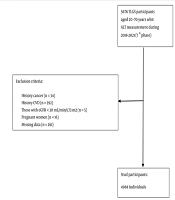
Asgari S, Azizi F, Hadaegh F. The Optimal Cut-Points of Alanine Aminotransferase for Screening Metabolic Syndrome in Iranian Adults. Int J Endocrinol Metab. 2025;23(1):e151542. doi: https://doi.org/10.5812/ijem-151542
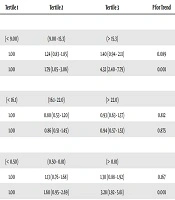
Gaeini Z, Bahadoran Z, Mirmiran P, Azizi F. The Association Between Liver Function Tests and Some Metabolic Outcomes: Tehran Lipid and Glucose Study. Hepat Mon. 2020;20(5):e98535. doi: https://doi.org/10.5812/hepatmon.98535
Maleki A, Rashidi N, Aghaei Meybodi H, Montazeri M, Montazeri M, et al. Metabolic Syndrome and Inflammatory Biomarkers in Adults: A Population-Based Survey in Western Region of Iran. Int Cardiovasc Res J. 2017;8(4):e11679. doi:
AbtaeiNaeini B, Skandarian R, Rashidi A, Khamse ME, Malek M, et al. Prevalence of metabolic syndrome according to ATPIII and IDF criteria in the Iranian population. koomesh. 2012;14(1):e152550. doi:
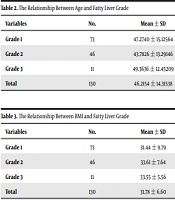
Zakerkish M, Assarzadeh A, Seyedian SS, Jahanshahi A. Prevalence of Metabolic Syndrome and Related Factors in Patients with Non-alcoholic Fatty Liver. Jundishapur J Chronic Dis Care. 2022;11(1):e114541. doi: https://doi.org/10.5812/jjcdc.114541
Last Update: 3 weeks ago
Last Update: 3 weeks ago
Last Update: 3 weeks ago
Last Update: 6 hours ago
Last Update: 1 day ago
Last Update: 4 days ago