
1. Introduction
Hidradenitis originated from the Greek word sweat gland, and the disease clinically manifests as single or multiple cutaneous nodules, which progress to abscess formation discharge sinus and may be complicated by the formation of ulcers with undermined edges. The sites affected include the axilla, inguinal region, perineum, breast, chest, scalp, and eyelids. The commonest age of the patient at the onset of the disease is pubertal age. Multiple treatment modalities are available for the management of HS, decided upon by the stage of the disease and any associated complications. We report the successful management of Hidradenitis Suppurativa of the gluteal region at a tertiary care hospital by the close collaboration of surgeons and dermatologists.
2. Case Presentation
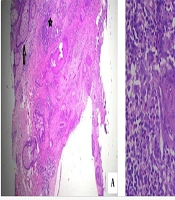
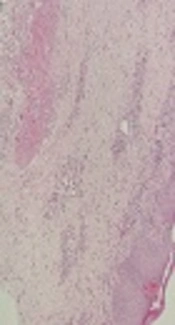
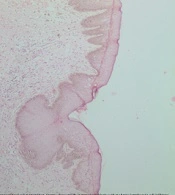
A 51-year-old male with no known comorbidities presented with recurrent seropurulent discharge from the perianal region. He had no fever, constitutional symptoms, or significant bowel complaints history. The general build-up of the patient was normal, and the abdominal examination was unremarkable. The digital rectal examination revealed multiple perianal sinuses with seropurulent discharge. There were no internal openings of the sinuses. The routine hematological and biochemical investigations were normal. Ultrasound of the abdomen was also unremarkable. Magnetic Resonance Imaging of the pelvis, rectum, and perianal region suggested perianal inflammatory changes with multiple blind-ending sinuses; however, there were no definitive internal openings, secondary tracts, or abscesses. A colonoscopy was done to rule out Crohn’s disease, which was normal. He underwent evaluation under anesthesia. Intra-operatively, three blind-ending inter-sphincteric tracts filled with pus were identified; however, no internal opening could be identified. Excision of all the tracts was done, preserving the sphincters. In the postoperative period, daily antiseptic dressings were done, and wound healing with secondary intention was planned. Histopathological examination of the excised tracts revealed stratified squamous epithelium with underlying fibro-collagenous tissue and moderate infiltration of inflammatory cells with no granuloma or malignant cells (Figure 1). The wound healed completely after about six weeks. The patient developed a recurrence of the disease after about 1 month after wound healing. Clinical evaluation showed multiple perianal sinuses with sero-purulent discharge. MRI of the perianal region showed a 3 mm blind-ending tract from the posterior aspect of the anal canal; however, there was no secondary fistulous tract or any abscess cavity (Figure 2). Given the recurrence of the disease with no fistulous tract, an opinion of a dermatologist was taken, and a diagnosis of hidradenitis suppurativa was made and was managed with 3 3-month course of Clindamycin with Rifampicin. The patient was also referred to the higher center, where he received 2 hair reduction sessions with a diode laser, which further improved the outcome.

Figure 1.
H & E section showing stratified squamous epithelium with increased basal cell pigmentation. Dermis shows mildly increased vascularity with moderate lymphocytic cell infiltrates.

Figure 2.
(A) STIR axial oblique image: A blind-ending sinus tract is seen (tract marked in arrow) extending from the posterior aspect of the anal canal at the 6 o’clock position and extending anteriorly. (B) STIR sagittal oblique image: A blind-ending sinus tract is seen (tract marked in arrow).
3. Discussion
Perianal and gluteal hidradenitis suppurativa is a rare chronic inflammatory condition caused by the occlusion of the apocrine glands. The disease presents as acute folliculitis with contiguous apocrine and surrounding subcutaneous tissue inflammation. It may get complicated by the formation of recurrent abscesses, sinuses, and, lastly, fibrosis and scarring. The disease results in extreme physical and psychological disturbances and affects quality of life (1).
The incidence of gluteal and perianal hidradenitis suppurativa reported is 1:300 (2). The condition's onset is usually at puberty, and females are more commonly affected. The incidence of the disease was reduced by the middle of the fourth decade. The sites affected include the axilla, inguinal region, perineum, breast, chest, scalp, and eyelids. It is primarily diagnosed clinically after excluding all other dermatological diseases affecting the apocrine glands (3). The perianal disease may get complicated with the extension of the disease to the anus and rectum, leading to the formation of fistula and even colitis (4). Cutaneous squamous cell carcinoma (SCC) can complicate chronic anogenital disease, most commonly the gluteal skin of male patients, and carries a poor prognosis: it has been reported more often in men than women. There are no reports of SCC complicating the axillary disease (5).
Several treatment modalities include topical antibiotics, oral antibiotics, retinoids, biologic therapies (high-dose anti-TNF-alpha therapy), and laser therapy. The surgical management of wound includes primary closure of the wound defect, split-thickness skin grafting, and even healing by secondary intention depending upon the disease severity, which is commonly classified by Hurley staging into Stage I (mild), II (moderate) and III (severe) (5, 6). Inadequate resection of the disease or the disease process commencing in the previous normal area can lead to recurrence. The differential diagnosis of early HS includes furuncle-infected sebaceous cysts, while that of advanced HS includes scrofuloderma, actinomycosis, pyoderma gangrenosum, Crohn's disease, and lymphogranuloma venereum. Early diagnosis and treatment of HS are required to prevent disease-associated morbidities and maintain the patient's quality of life (7).
In our patient, the disease was initially diagnosed as perianal sinus, and because of the multiple sinuses, a colonoscopy was performed to rule out Crohn's disease. As the colonoscopy findings were within normal limits, the surgeon did an excision of all the sinuses. However, there was a recurrence of lesions and symptoms associated with pain and tenderness along with discharge from the deep-seated nodules. Dermatological opinion was sought, and a diagnosis of Hidradenitis suppurativa was made. As the second step, a course of Clindamycin with Rifampicin, followed by hair reduction with diode laser, induced complete remission. Hence, multi-modalities and an open and combined approach can lead to better outcomes and treatment of the condition.
Prevention measures include laser hair removal using a neodymium-yttrium-aluminum-garnet laser, as well as intense pulsed light, weight, and smoking cessation (6, 8, 9).
Karl Marx, the father of communism, had suffered from HS, and it is hypnotized that the psychological disturbances associated with the disease might influence the framing of the 'Theory of Communism' (10).