Fulltext
The full text of this article is available on PDF.
Journal of Clinical Research in Paramedical Sciences
The Official Journal of Paramedical School, KUMS
Image Credit:J Clin Res Paramed Sci
Authors
Introduction: One of the most effective rehabilitation is phase discharge training and post-discharge telephone follow-up by nurses. The aim of this study was to investigate the effect of nurse’s telephone follow up care on quality of life in patients with acute coronary syndrome after discharge in Kermanshah Imam Reza hospital in 2015.
Methods: This clinical trial, was performed on 78 patients with acute coronary syndrome randomly were divided into two intervention and control groups. The data collected by demographic data collection form and quality of life questionnaire SF-36. Data were analyzed by using t-test, Wilcoxon, Mann Whitney with SPSS software (version 21).
Results: There was a significant difference between the mean scores of the intervention group before and after nurse telephone intervention (P < 001). There was no significant difference between the two groups before and after the based on general psychological health and general health (p>0/05(. Based on dimensions of quality of life, mean scores in intervention and control groups after the intervention, there was statistically significant difference in physical function, dimensions social functioning, pain, impairment of role due to physical and emotional health, energy / fatigue and emotional (P < 001).
Conclusion: Telephone follow-up after discharge by the nurses on the quality of life in patients with acute coronary syndrome is effective and as a low-cost method available, it is recommended to improve the quality of life of these patients.
© 2017, Journal of Clinical Research in Paramedical Sciences. This open-access article is available under the Creative Commons Attribution-NonCommercial 4.0 (CC BY-NC 4.0) International License (https://creativecommons.org/licenses/by-nc/4.0/), which allows for the copying and redistribution of the material only for noncommercial purposes, provided that the original work is properly cited.
nehrir B. Comparison of patient education and follow up by nurse on anxiety in heart failure patients. Med Surg Nurs J. 2014;3(1):e87738. doi:
Ebrahimi Tabas E, Sarani H, Faghihi H, Nezamjoo Z. Comparing the Impact of Three Follow-Up Methods (Telephone, Educational Booklet, and SMS) on Self-Care Ability of Patients with Acute Coronary Syndrome: A Quasi-Experimental Study. Med Surg Nurs J. 2020;9(1):e102328. doi: https://doi.org/10.5812/msnj.102328
lashkari T. Effect of phone follow-up on quality of life in type II. Med Surg Nurs J. 2014;3(2):e87907. doi:
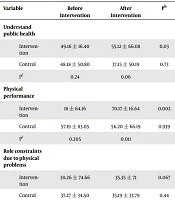
Borzou SR, Babaei N, Gholyaf M, Molavi Vardanjani M, Tapak L. The Effect of Telephone Follow-Up on Quality of Life in Hemodialysis Patients. Nephro-Urol Mon. 2020;12(2):e104178. doi: https://doi.org/10.5812/numonthly.104178
Yekefallah L, Najafi M, Shahrokhi A, Javadi HR, Mohammadpoorasl A. Effect of telenursing on quality of life of patients with atrial fibrillation referred to the teaching hospitals in Qazvin. J Inflamm Dis. 2024;20(1):e155953. doi:
Last Update: 3 days ago
Last Update: 3 days ago
Last Update: 3 days ago
Last Update: 5 hours ago
Last Update: 8 hours ago
Last Update: 4 days ago