Journal of Inflammatory Diseases
The Official Journal of Qazvin University of Medical Sciences
Frequency of surgical wound infection in operated patients at Golpayegani Hospital in Qom (2008-2009)
Authors
Abstract
Background: Nosocomial infection is an infection that neither is presented or in incubation period at time of admission. This complication increases the hospital stay, cost, and mortality. Surgical wound infection (SWI) is a major nosocomial infection. Objective: The study was performed to determine the frequency of SWI, causative agents, and underlying diseases in operated patients. Methods: This was a prospective cross-sectional study carried out on operated patients by general surgeons at Golpayegani Hospital in Qom (Iran) during 2008-2009. Data were analyzed by SPSS software using t-test and chi square test. Findings: Totally, 3400 patients were operated within this period. The mean age was 55±2 years and 53% were female. The most common operations were cholecystectomy (36.4%), appendectomy (29%), gastric surgery (13.4%), herniorrhaphy (9.3%), and intestinal surgery (6%). Of total patients operated, 2.9% developed SWI. The mean age among those was 58±2 years and 53% were female with no significant difference between the SWI cases and the total number of patients regarding the age and sex. The frequency of infection was higher in gastric, intestinal, and cholecystectomy surgeries than appendectomy and herniorrhaphy and the difference was found to be significant (P<0.01) indicating that the SWI was more common in gastric, intestinal, and gallbladder surgeries. The most common underlying diseases were diabetes and chronic obstructive pulmonary disease in both total patients and the SWI patients with no significant difference between two. The commonest agent was Staphylococcus aureus (32%) and pseudomonas (20.5%). Conclusion: Frequency of SWI was at expected limit indicating that it was not abnormally high or low. Although the predominant organism was different from that reported in some studies however, this could be the value of this study as each medical center should be aware of its own indices including its local specific organisms which may be different from those in other hospitals.
Highlights
Copyright
© 2024, Journal of Inflammatory Diseases. This open-access article is available under the Creative Commons Attribution-NonCommercial 4.0 (CC BY-NC 4.0) International License (https://creativecommons.org/licenses/by-nc/4.0/), which allows for the copying and redistribution of the material only for noncommercial purposes, provided that the original work is properly cited.
Similar Articles
Microbiologic Assessment of Non-Surgical Traumatic Wound Infections and Surgical Site Infections in Hospitalized Patients
Noroozi H, Kazemi A, Fadaee R, Alavi S, Mohammadzadeh M. Microbiologic Assessment of Non-Surgical Traumatic Wound Infections and Surgical Site Infections in Hospitalized Patients. Arch Clin Infect Dis. 2010;5(2):. doi:
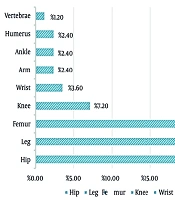
Microbiological Profile and Antimicrobial Resistance Patterns of Surgical Site Infections Following Orthopedic Surgery at Imam Hossein Hospital, Tehran, Iran (2023 - 2025)
Baroutkoub M, Shoaei SD, Moradi Shahrbabak M, Gachkar L, Moradi Shahrebabak H. Microbiological Profile and Antimicrobial Resistance Patterns of Surgical Site Infections Following Orthopedic Surgery at Imam Hossein Hospital, Tehran, Iran (2023 - 2025). Arch Clin Infect Dis. 2026;21(2):e169450. doi: https://doi.org/10.5812/archcid-169450
Comparing the early complications of surgical wounds in two methods of open surgery and laparoscopy in Milad Hospital
Khorasani B, GholiZadePasha A. Comparing the early complications of surgical wounds in two methods of open surgery and laparoscopy in Milad Hospital. koomesh. 2007;8(3):e152144. doi:
The Prevalence of Nosocomial Infections in Imam Reza Hospital of Kermanshah, Iran, During 2019 - 2020
Janbakhsh A, Naghipour A, Mohseni Afshar Z, Balvandi M, Naghibifar Z. The Prevalence of Nosocomial Infections in Imam Reza Hospital of Kermanshah, Iran, During 2019 - 2020. J Kermanshah Univ Med Sci. 2023;27(3):e138126. doi: https://doi.org/10.5812/jkums-138126
Surgical Site Infection in a 1000-Bed Tertiary-Care Teaching Hospital in New Delhi, India
Khan ID, Yadav A, Kapoor U, Joshi I, Pandey R, et al. Surgical Site Infection in a 1000-Bed Tertiary-Care Teaching Hospital in New Delhi, India. J Arch Mil Med. 2019;7(4):e107492. doi: https://doi.org/10.5812/jamm.107492
- Scopus by DOI: 0
Last Update: 3 weeks ago
- Scopus by Title: 0
Last Update: 3 weeks ago
- Scopus by Title (Ref): 2
Last Update: 3 weeks ago
- CrossRef: 0
Last Update: 5 days ago
- OpenAlex: 0
Last Update: 1 day ago
- OpenCitations: 0
Last Update: 4 days ago