



1. Background
Healthcare-associated infections (HAIs) are infections acquired by patients while receiving medical care and constitute some of the most serious complications affecting patient safety worldwide (1). Among these, surgical site infections (SSIs) represent one of the most important categories of HAIs and are defined as microbial contamination of the surgical wound within 30 days of an operation or within 1 year after surgery if an implant is placed. The CDC definitions of surgical site infections were used, based on the seminal CDC 1992 framework (2).
Surgical site infection remains an important complication in orthopedic surgery, with reported rates often exceeding national surveillance estimates and varying across procedure types. Evidence indicates that SSIs continue to occur despite modern preventive strategies, reflecting not only a persistent clinical challenge but also a substantial source of morbidity and healthcare burden (3, 4).
Antimicrobial resistance (AMR) has emerged as a global health concern, with bacterial pathogens developing resistance to commonly used antibiotics. Its most serious manifestation is MDR, defined as resistance to at least one agent in three or more antimicrobial categories, and it has escalated to pandemic levels over the past two decades (5). Despite this alarming trend, many resistant bacteria remain susceptible to at least some antimicrobial agents, underscoring that identifying the causative pathogen and its antibiotic resistance pattern is critical for successful treatment and improved patient outcomes.
Antibiotic resistance patterns vary across regions and are influenced by local consumption practices and access to healthcare. These variations underscore the importance of local surveillance systems and treatment guidelines (6).
2. Objectives
Given the need to better understand local pathogen profiles and antimicrobial resistance patterns, this study aimed to identify the bacterial pathogens responsible for orthopedic SSIs and to evaluate their antimicrobial susceptibility patterns at a tertiary care hospital in Tehran. The findings are expected to contribute to the improvement of evidence-based local guidelines to support clinicians in selecting appropriate antibiotics.
3. Methods
3.1. Study Design and Sample Size
This retrospective cross-sectional study was conducted at Imam Hossein Hospital, a tertiary care center. The study was performed after approval was obtained from the institutional research and ethics committee. The medical records of all patients who developed culture-positive SSI following an orthopedic procedure between March 2023 and March 2025 (1402 and 1403 in the Persian calendar) were reviewed. This yielded a cohort of 100 patients, from whom a total of 100 microorganism isolates were obtained. This study was designed as a retrospective descriptive case-series analysis of culture-confirmed orthopedic SSIs, with a primary focus on pathogen distribution and antimicrobial resistance patterns rather than the estimation of SSI incidence or procedural risk.
3.2. Inclusion and Exclusion Criteria
The inclusion criterion was any patient who underwent orthopedic surgery during the study period and developed a postoperative SSI. Patients presenting with open fractures and those undergoing emergency orthopedic procedures were excluded.
3.3. Data Collection Method
Data were collected retrospectively by reviewing patient medical records. A standardized data collection form was used to capture demographic characteristics (age and sex), underlying comorbidities (eg, diabetes mellitus and hypertension), details of the surgical procedure (type of surgery and anatomical site), and infection-related data (time to infection onset, microorganism isolated, and antimicrobial susceptibility testing). SSIs were defined according to the Centers for Disease Control and Prevention (CDC) criteria, including superficial incisional, deep incisional, and organ/space infections occurring within 30 days after surgery or within 1 year in cases involving implants. SSI ascertainment was based on the retrospective review of medical records, including clinical findings documented by orthopedic surgeons and infectious disease specialists, microbiological culture results, and infection-related treatment documentation.
Only culture-positive SSI cases were included because the primary objective was to evaluate microbiological characteristics and antimicrobial resistance patterns. Patients with clinically suspected SSI but negative cultures or without microbiological sampling were excluded. Owing to limitations inherent to retrospective documentation, SSI subtypes (superficial incisional, deep incisional, organ-space, and implant-related infections) were not consistently distinguishable across all patient records; therefore, all culture-confirmed orthopedic SSI cases were analyzed as a single study group.
The unit of analysis was the individual patient with one documented SSI episode. For analytical consistency, only one microbiologically significant isolate per patient was included in the final dataset. When multiple tissue specimens were obtained from the same infection episode, duplicate isolates with identical microbiological characteristics were considered a single isolate.
When more than one organism was recovered from the same patient, the predominant clinically significant pathogen, as documented in microbiology reports and treating physician records, was selected for analysis. Potential contaminants or colonizing organisms were interpreted based on clinical correlation, specimen source, repeated isolation, and microbiological assessment.
For infections involving an implant or device, three deep tissue biopsy samples were obtained from the infection site. For infections without a device, a single deep tissue or fluid sample was collected during surgical debridement. All specimens were subjected to Gram staining and cultured on blood agar plates under both aerobic and anaerobic conditions. All data were managed using a Microsoft Excel spreadsheet.
3.4. Antibiotic Susceptibility Testing
Antimicrobial susceptibility testing was performed using the disk diffusion method on Mueller-Hinton agar (Merck, Germany), and inhibition zone diameters were interpreted according to the Clinical and Laboratory Standards Institute (CLSI) guidelines routinely applied in the hospital microbiology laboratory during the study period. The tested antimicrobial agents included ampicillin-sulbactam, amikacin, gentamicin, cefotaxime, cefepime, ceftazidime, vancomycin, ceftriaxone, imipenem, meropenem, piperacillin-tazobactam, ciprofloxacin, co-amoxiclav, colistin, linezolid, clindamycin, erythromycin, and tetracycline.
Routine laboratory quality-control procedures were performed according to institutional microbiology laboratory protocols using standard reference strains when available.
Colistin susceptibility results were extracted retrospectively from routine laboratory reports. Because conventional diffusion-based methods have recognized limitations for colistin susceptibility testing, these results were interpreted with caution.
Multidrug-resistant organisms were defined as those resistant to at least one agent in three or more antimicrobial categories.
3.5. Statistical Analysis
All data were imported from Excel into SPSS Statistics for analysis. Descriptive statistics were used to report frequencies and percentages for categorical variables, such as sex, surgical site, procedure type, microorganism distribution, and antibiotic susceptibility or resistance. Associations between categorical variables (eg, specific pathogens and surgical site/type) were assessed using Pearson's chi-square test when expected cell frequencies were adequate. Fisher's exact test was used for analyses involving sparse contingency tables or when more than 20% of expected cell counts were less than 5. Because of the relatively small sample size and the exploratory nature of subgroup analyses, statistically significant findings were interpreted cautiously.
4. Results
The final analytical dataset comprised 100 patients with 100 distinct SSI episodes and one analyzed isolate per patient. Most patients were male (84%), whereas female patients accounted for 16%, and the most prevalent age group was 30 - 44 years (61%). Diabetes and hypertension were the most frequent comorbidities among the study patients. Late-onset infections, defined as those occurring after the 10th week after surgery, were identified in 47 cases (47%). In contrast, delayed-onset infections, defined as those occurring between 3 and 10 weeks after surgery, were observed in 25 cases (25%), and early-onset infections, defined as those occurring within 2 weeks or less after surgery, were observed in 26 patients (26%). The clinical characteristics of the study population are presented in Table 1.
Table 1.Clinical Characteristics of Patients
| Variables | No. (%) |
|---|---|
| Gender | |
| Male | 84 (84) |
| Female | 16 (16) |
| Age group (y) | |
| < 30 | 5 (5) |
| 30 - 44 | 61 (61) |
| 45 - 59 | 19 (19) |
| 60 - 74 | 9 (9) |
| ≥ 75 | 6 (6) |
| Past medical history | |
| Diabetes | 12 (12) |
| Hypertension | 10 (10) |
| DM/HTN | 7 (7) |
| Smoking | 8 (8) |
| Onset of infection | |
| Late-onset | 47 (47) |
| Delayed-onset | 25 (25) |
| Early-onset | 28 (28) |
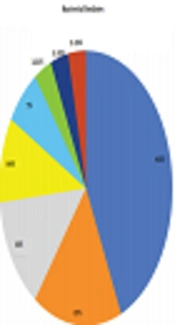
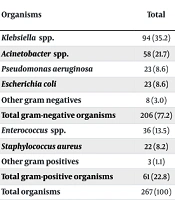
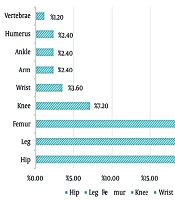
In this study, the procedures were categorized into 4 groups: hardware/implant procedures (47/83 = 56.6%), joint replacement (20/83 = 24.1%), open reduction (13/83 = 15.7%), and soft tissue procedures (3/83 = 3.6%). Among the identified SSI cases, the hip was the most commonly represented surgical site (34.9%) (Figure 1). The most prevalent pathogens among the 100 isolates were Klebsiella pneumoniae (25%, n = 25), Staphylococcus aureus (15%, n = 15), Escherichia coli (14%, n = 14), and Acinetobacter baumannii (14%, n = 14) (Figure 2). The prevalence of microorganism groups based on taxonomy was as follows: Enterobacteriaceae was the most common (44%), followed by Staphylococcus spp. (21%) and Enterococcus spp. (9%).
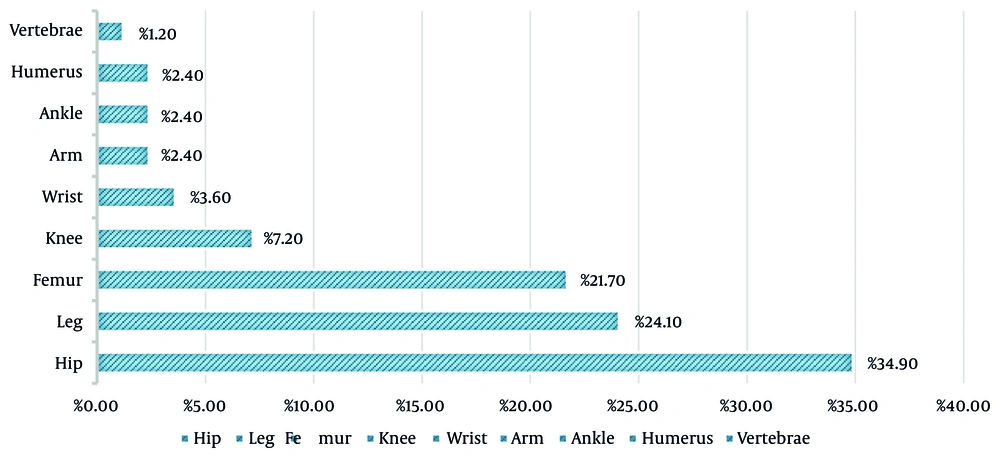
Figure 1.
Frequency of affected surgical sites after orthopedic surgery
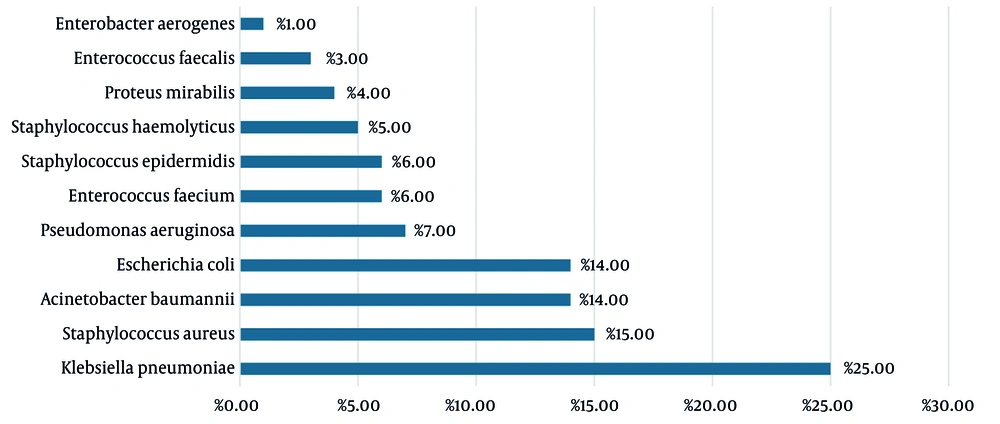
Figure 2.
Distribution of isolated pathogens from 100 cultures
Antimicrobial susceptibility testing showed that linezolid, with 97.1% sensitivity among 35 reported isolates, and colistin, with 96.5% sensitivity among 57 reported isolates, were the most effective antibiotics. Trimethoprim-sulfamethoxazole and gentamicin showed moderate effectiveness, with sensitivity rates of 48.5% and 48.1%, respectively. Among carbapenems, imipenem and meropenem showed limited effectiveness, with sensitivity rates of 31.7% and 34.5%, respectively. High resistance was observed for ciprofloxacin (92.7%), clindamycin (95.8%), cefotaxime (97.9%), ceftazidime (98.4%), and ceftriaxone (100%) among the reported isolates.
Antibiotic resistance patterns differed significantly between Gram-positive and Gram-negative bacterial isolates. The most effective antibiotic for Gram-positive microorganisms was linezolid, whereas high resistance was observed for clindamycin and erythromycin (Table 2). Among Gram-negative isolates, the most effective antibiotic was colistin; in contrast, ciprofloxacin showed 100% resistance among all tested Gram-negative pathogens (Table 3). However, these findings reflect laboratory susceptibility patterns and should not be interpreted as direct evidence of comparative clinical efficacy.
Table 2.Antimicrobial-Resistance Pattern of Gram-Positive Bacterial Isolates a
| Antibiotic | Enterococcus faecalis | Enterococcus faecium | Staphylococcus aureus | Staphylococcus epidermidis | Staphylococcus haemolyticus |
|---|---|---|---|---|---|
| Trimethoprim-sulfamethoxazole | NR | NR | 35.7 | 40.0 | 50.0 |
| Ampicillin-sulbactam | NR | NR | NR | NR | NR |
| Gentamicin | NR | NR | 14.3 | 20.0 | 0.0 |
| Linezolid | 0.0 | 0.0 | 0.0 | 0.0 | 0.0 |
| Imipenem | NR | NR | NR | NR | NR |
| Meropenem | NR | NR | NR | NR | NR |
| Tetracycline | NR | 100.0 | 84.6 | 100.0 | 75.0 |
| Ciprofloxacin | NR | NR | 86.7 | 100.0 | 50.0 |
| Clindamycin | NR | NR | 93.3 | 100.0 | 100.0 |
| Erythromycin | 66.7 | 100.0 | 93.3 | 100.0 | 50.0 |
| Amikacin | NR | NR | NR | NR | NR |
| Cefepime | NR | NR | NR | NR | NR |
| Ceftriaxone | NR | NR | NR | NR | NR |
| Cefotaxime | NR | NR | NR | NR | NR |
| Vancomycin | NR | 100.0 | NR | NR | NR |
a Abbreviation: NR, not reported.
Table 3.Antimicrobial-Resistance Pattern of Gram-Negative Bacterial Isolates a
| Antibiotic | Acinetobacter baumannii | Enterobacter aerogenes | Escherichia coli | Klebsiella pneumoniae | Proteus mirabilis | Pseudomonas aeruginosa |
|---|---|---|---|---|---|---|
| Trimethoprim-sulfamethoxazole | 100.0 | NR | 50.0 | 83.3 | NR | NR |
| Ampicillin-sulbactam | 81.8 | NR | 60.0 | 100.0 | 100.0 | NR |
| Gentamicin | 100.0 | NR | 60.0 | 76.9 | 100.0 | 100.0 |
| Colistin | 0.0 | 0.0 | 0.0 | 0.0 | 100.0 | 0.0 |
| Imipenem | 100.0 | 0.0 | 7.7 | 87.0 | 0.0 | 100.0 |
| Meropenem | 100.0 | NR | 0.0 | 85.0 | 0.0 | 100.0 |
| Tetracycline | 100.0 | NR | 42.9 | 76.5 | 100.0 | NR |
| Ciprofloxacin | 100.0 | NR | 100.0 | 100.0 | 100.0 | 100.0 |
| Amikacin | 100.0 | NR | 14.3 | 66.7 | 100.0 | 83.3 |
| Cefepime | 100.0 | 100.0 | 85.7 | 91.3 | 50.0 | 85.7 |
| Ceftriaxone | 100.0 | NR | 100.0 | NR | NR | NR |
| Cefotaxime | 100.0 | NR | 100.0 | 100.0 | 100.0 | NR |
| Cefotaxime | 100.0 | 100.0 | 100.0 | 95.7 | 100.0 | 100.0 |
a Abbreviation: NR, not reported.
Multidrug resistance was highly prevalent among the isolated pathogens. Acinetobacter baumannii, Proteus mirabilis, and Pseudomonas aeruginosa showed 100% MDR (Table 4).
Table 4.MDR Frequencies of Isolated Pathogens
| Microorganism | MDR (%) |
|---|---|
| Acinetobacter baumannii | 100 |
| Enterobacter aerogenes | 100 |
| Proteus mirabilis | 100 |
| Pseudomonas aeruginosa | 100 |
| Staphylococcus epidermidis | 100 |
| Staphylococcus aureus | 86.7 |
| Klebsiella pneumoniae | 84 |
| Staphylococcus haemolyticus | 60 |
| Escherichia coli | 42.9 |
| Enterococcus faecium | 33.3 |
| Enterococcus faecalis | 0 |
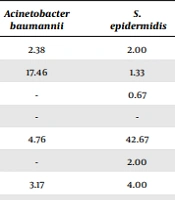
The analysis of pathogens by orthopedic surgery type showed the following results: Staphylococcus epidermidis was the most prominent pathogen in infections following joint replacement, accounting for 18.2% of isolates in that category (P = 0.084). Among SSI cases following open reduction procedures, Acinetobacter baumannii was the most frequently isolated pathogen, causing 33.3% of infections in that group (P = 0.145). Staphylococcus aureus was most common in hardware/implant procedures, accounting for 20.7% of isolates (P = 0.437). The most frequent pathogen overall, Klebsiella pneumoniae, was broadly distributed across all categories (Table 5).
Table 5.Distribution of Pathogens According to the Type of Orthopedic Surgery a
| Pathogen | Hardware/Implant Procedures (n = 58) | Joint Replacement (n = 22) | Open Reduction (n = 15) | Soft Tissue Procedures (n = 5) | Overall (n = 100) | P-Value |
|---|---|---|---|---|---|---|
| Acinetobacter baumannii | 6 (10.3) | 3 (13.6) | 5 (33.3) | 0 (0.0) | 14 (14.0) | 0.145 |
| Klebsiella pneumoniae | 16 (27.6) | 4 (18.2) | 3 (20.0) | 2 (40.0) | 25 (25.0) | 0.670 |
| Staphylococcus epidermidis | 2 (3.4) | 4 (18.2) | 0 (0.0) | 0 (0.0) | 6 (6.0) | 0.084 |
| Staphylococcus aureus | 12 (20.7) | 2 (9.1) | 1 (6.7) | 0 (0.0) | 15 (15.0) | 0.437 |
a Values are expressed as No. (%).
The analysis of pathogens by anatomical site of orthopedic surgery showed the following results: Staphylococcus epidermidis was most frequently identified in hip infections (17.6% of all isolates) (P = 0.008). Acinetobacter baumannii was significantly more frequent in femur infections, causing 36.4% of infections at that location (P = 0.011). The study's most common pathogen, Klebsiella pneumoniae, showed no significant association with any particular site (P = 0.561) (Table 6).
Table 6.Distribution of Pathogens According to the Anatomical Site of Orthopedic Surgery a
| Pathogen | Femur (n = 22) | Hip (n = 34) | Leg (n = 24) | Other Sites (n = 20) | Overall (n = 100) | P-Value |
|---|---|---|---|---|---|---|
| Acinetobacter baumannii | 8 (36.4) | 2 (5.9) | 3 (12.5) | 1 (5.0) | 14 (14.0) | 0.011 |
| Klebsiella pneumoniae | 6 (27.3) | 8 (23.5) | 8 (33.3) | 3 (15.0) | 25 (25.0) | 0.561 |
| Staphylococcus aureus | 2 (9.1) | 3 (8.8) | 5 (20.8) | 5 (25.0) | 15 (15.0) | 0.285 |
| Staphylococcus epidermidis | 0 (0.0) | 6 (17.6) | 0 (0.0) | 0 (0.0) | 6 (6.0) | 0.008 |
a Values are expressed as No. (%).
5. Discussion
Surgical site infections remain a major complication of orthopedic surgery, and effective management requires a thorough understanding of local pathogen distribution and antimicrobial susceptibility patterns.
In our study, the most frequent pathogen was Klebsiella pneumoniae (25%), followed by Staphylococcus aureus (15%). In most other reports, S. aureus was the leading pathogen (7-9). These variations underscore that pathogen distribution is influenced by multiple factors, including the patient population, the type of procedure, the hospital environment, and infection control practices, contributing to the heterogeneity observed across studies (8). The antimicrobial susceptibility patterns observed in this study showed substantial resistance trends. The near-total resistance of Gram-negative pathogens to third-generation cephalosporins and ciprofloxacin is consistent with findings from other regional centers in Iran, severely limiting empirical treatment options (10, 11).
Our data also align with previous local studies showing high rates of resistance to erythromycin and clindamycin among Staphylococcus aureus (12, 13). Consistent with other Iranian reports, linezolid demonstrated excellent activity against all tested Gram-positive isolates (12, 13).
We observed that Staphylococcus epidermidis was notably prevalent following joint replacement procedures (18.2% of isolates) and was significantly associated with hip infection (P = 0.008), whereas Acinetobacter baumannii emerged as the most frequent pathogen in open reduction procedures (33.3% of infections) and was significantly associated with femur infections (P = 0.011). These results highlight the importance of incorporating procedure-specific and site-specific epidemiological data when formulating empirical antibiotic guidelines. Further multicenter prospective studies are needed to validate these associations and provide stronger evidence for tailoring local treatment protocols.
In this study, the mean MDR rate among the isolates was 73.3% (100% for Acinetobacter baumannii, Proteus mirabilis, and Pseudomonas aeruginosa), which was higher than that reported in a local study (62.8% in a study of SSIs in northern Iran) (10). Comparable reports, such as those from Indonesia and Ethiopia, also demonstrated substantial resistance, although the specific patterns varied (7, 9).
These differences can largely be explained by the fact that MDR rates are strongly dependent on the intensity and patterns of antibiotic consumption in each region, as well as stewardship policies and infection control measures (14, 15).
Although statistically significant distribution patterns were observed for certain pathogens across anatomical sites, these findings should be interpreted cautiously because of the relatively small subgroup sizes and the retrospective exploratory design. Larger multicenter studies with denominator-based analyses are required to determine whether these observations represent reproducible epidemiological associations.
Although certain antimicrobial agents demonstrated high in vitro susceptibility rates, translating these findings into the clinical management of orthopedic SSI requires careful consideration of several additional factors. Implant-associated and deep musculoskeletal infections are influenced by biofilm formation, tissue penetration, surgical source control, toxicity profiles, and duration of therapy. Therefore, empirical and targeted antimicrobial selection should be guided by a comprehensive clinical assessment in conjunction with local antimicrobial stewardship principles, rather than by susceptibility percentages alone.
5.1. Conclusions
This study showed a high prevalence of multidrug-resistant pathogens among orthopedic SSIs, highlighting the importance of understanding local pathogen epidemiology and antimicrobial resistance patterns. These findings underscore the need for local evidence-based guidelines for antibiotic selection and infection control practices to improve patient outcomes. Considering the global rise of MDR organisms and their recognition as a major public health concern, this MDR level highlights the critical need for local surveillance and regular updates to local treatment guidelines. Although certain subgroup distribution patterns were observed, these findings should be interpreted cautiously and require confirmation in larger prospective studies.
5.2. Limitations
This study has several limitations that should be considered when interpreting the findings. First, there is potential selection bias, as only patients who underwent sampling or returned to the hospital were included. Patients with mild infections or those who received treatment elsewhere might have been missed. Second, antibiotic use before sampling may have affected both culture positivity and resistance patterns. The absence of standardized laboratory quality control and method validation may have affected the accuracy of microbiological results. Another limitation is that only culture-positive SSIs were included. Therefore, clinically diagnosed culture-negative infections and cases without microbiological sampling were not represented in the analysis, which may have introduced selection bias toward more severe or microbiologically confirmed infections. Another limitation was the unavailability of complete denominator data regarding the total number of orthopedic procedures performed during the study period. Consequently, the study could not estimate SSI incidence rates or compare infection risk across procedure categories; therefore, the findings should be interpreted as descriptive data from confirmed SSI cases rather than population-based estimates.
Another limitation relates to the retrospective use of routine laboratory susceptibility data. Certain organism-antibiotic combinations, particularly colistin susceptibility testing, may be method-sensitive, and diffusion-based susceptibility methods have recognized limitations compared with reference broth microdilution techniques.
Furthermore, detailed information regarding prior antibiotic exposure and immunocompromising conditions was not consistently available in the medical records because of the retrospective study design. These factors may have influenced both culture positivity and antimicrobial resistance patterns and therefore represent potential sources of bias. In addition, molecular characterization of resistance genes and minimum inhibitory concentration (MIC) data were not available, limiting a more comprehensive assessment of antimicrobial resistance mechanisms among the isolated pathogens.