Journal of Inflammatory Diseases
The Official Journal of Qazvin University of Medical Sciences
Effect of Helicobacter pylori, black tea and sodium bicarbonate on iron metabolism and MDCK cell survival
Authors
Abstract
Background: Iron deficiency anemia is the most common nutritional disorder in the world. Diet and Helicobacter pylori infection are among the main causes of this disorder. Objective: In this study, the effect of black tea extract and sodium bicarbonate with Helicobacter pylori on the genes involved in iron absorption and storage, as well as cell proliferation, were studied. Methods: Simultaneous cultivation of MDCK and Helicobacter pylori cell lines was performed at concentrations of 10, 20, 40 and 80 μg/ml of tea extract and 30, 40, 60 and 100 mM sodium bicarbonate at 24 and 48 hours. The effect of treatment on cell survival was investigated by trypan blue staining and expression of MYC, TFRC, FTH1, IRP2, IRP1, and NDRG1 genes by real-time PCR and analyzed by ANOVA and independent T-test. Findings: There was no significant change in the expression of the genes involved in iron metabolism under the influence of tea, sodium bicarbonate and Helicobacter pylori treatment in MDCK cell line. Upregulation MYC gene expression was observed in the presence of Helicobacter pylori after 24 hours treatment with tea extract, and sodium bicarbonate, and in the absence of Helicobacter pylori upregulation with tea extract after 48 hours (P<0.05). Also upregulation NDRG1 gene expression was seen after tea extract treatment of cells with or without Helicobacter pylori in both 24 and 48 h (P<0.05). Conclusion: Sodium bicarbonate and tea each one alone didn’t not influence iron status. This study suggests that reduction of tea intake could be served as a risk prevention strategy.
Highlights
Copyright
© 2024, Journal of Inflammatory Diseases. This open-access article is available under the Creative Commons Attribution-NonCommercial 4.0 (CC BY-NC 4.0) International License (https://creativecommons.org/licenses/by-nc/4.0/), which allows for the copying and redistribution of the material only for noncommercial purposes, provided that the original work is properly cited.
Similar Articles
Inhibitory Effect of Green and Black Teas Ethyl acetate extracts on Helicobacter pylori the causative agent of peptic ulcers
Ghaemi A, Mohmmadi I, Shoae Hassani A, Hamdi K, Ordouzadeh N. Inhibitory Effect of Green and Black Teas Ethyl acetate extracts on Helicobacter pylori the causative agent of peptic ulcers. J Inflamm Dis. 2024;13(4):e155498. doi:
A Comparative Study on the Effects of Glutathione and Green Tea Extract (Camellia sinensis L.) on Thioacetamide-induced Hepatotoxicity in Male Adult Wistar Rats
Shekarforoush S, Aghababa H, Azizi M, Changizi-Ashtiyani S, Zarei A, et al. A Comparative Study on the Effects of Glutathione and Green Tea Extract (Camellia sinensis L.) on Thioacetamide-induced Hepatotoxicity in Male Adult Wistar Rats. Zahedan J Res Med Sci. 2014;16(12):16-19. doi:
Comparison of the Antimicrobial Efficacy of Green Tea Extract With 1% Sodium Hypochlorite Against Enterococcus faecalis: An In Vitro Study
Sardari F, Hajisadeghi S. Comparison of the Antimicrobial Efficacy of Green Tea Extract With 1% Sodium Hypochlorite Against Enterococcus faecalis: An In Vitro Study. Jundishapur J Nat Pharm Prod. 2016;11(4):e30944. doi: https://doi.org/10.17795/jjnpp-30944
Green Tea in Non-Alcoholic Fatty Liver Disease: A Double Blind Randomized Clinical Trial
Tabatabaee SM, Alavian SM, Ghalichi L, Miryounesi SM, Mousavizadeh K, et al. Green Tea in Non-Alcoholic Fatty Liver Disease: A Double Blind Randomized Clinical Trial. Hepat Mon. 2017;17(12):e14993. doi: https://doi.org/10.5812/hepatmon.14993
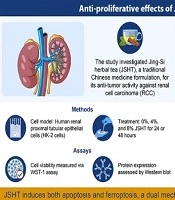
Traditional Chinese Medicine Approach to Renal Cell Carcinoma: Jing-Si Herbal Tea Triggers Apoptosis and Ferroptosis in HK-2 Cells
Tsai Y, Tsai C, Chang J, Chang H, Kuo C. Traditional Chinese Medicine Approach to Renal Cell Carcinoma: Jing-Si Herbal Tea Triggers Apoptosis and Ferroptosis in HK-2 Cells. Iran J Pharm Res. 2025;24(1):e166286. doi: https://doi.org/10.5812/ijpr-166286
- Scopus by DOI: 0
Last Update: 1 month ago
- Scopus by Title: 0
Last Update: 1 month ago
- Scopus by Title (Ref): 0
Last Update: 1 month ago
- CrossRef: 0
Last Update: 10 hours ago
- OpenAlex: 0
Last Update: 14 hours ago
- OpenCitations: 0
Last Update: 4 days ago