Introduction
Liver is one of the critical organs of the body. Due to its key role in metabolism and detoxification processes it continuously deals with different substances and compounds resulted from metabolism paths which may have destructive impacts on it [1]. The use of medicinal plants for disease treatment purposes has been in vogue since a long time ago so that by half century ago, plants were one of the main sources of preparing remedies for diseases [2]. Tea is a plant likes within single based angiosperms category, dicotyledonous class and partial row of Teacae family and Camellia kind with the scientific name of Camellia sinensis. Oxidative enzymes are available in more than 20% of different kinds of tea. Green tea has no oxidative enzyme which is considered as an advantage. Moreover, green tea consists of polyphenol ingredients including catchins, epigallocatechingallate, epicatechingallate, epigallocatechin and epicatechin. Green tea's catechins show strong antioxidant effects [3-5]. It is stronger than famous antioxidants like vitamins C and E. [5-7].
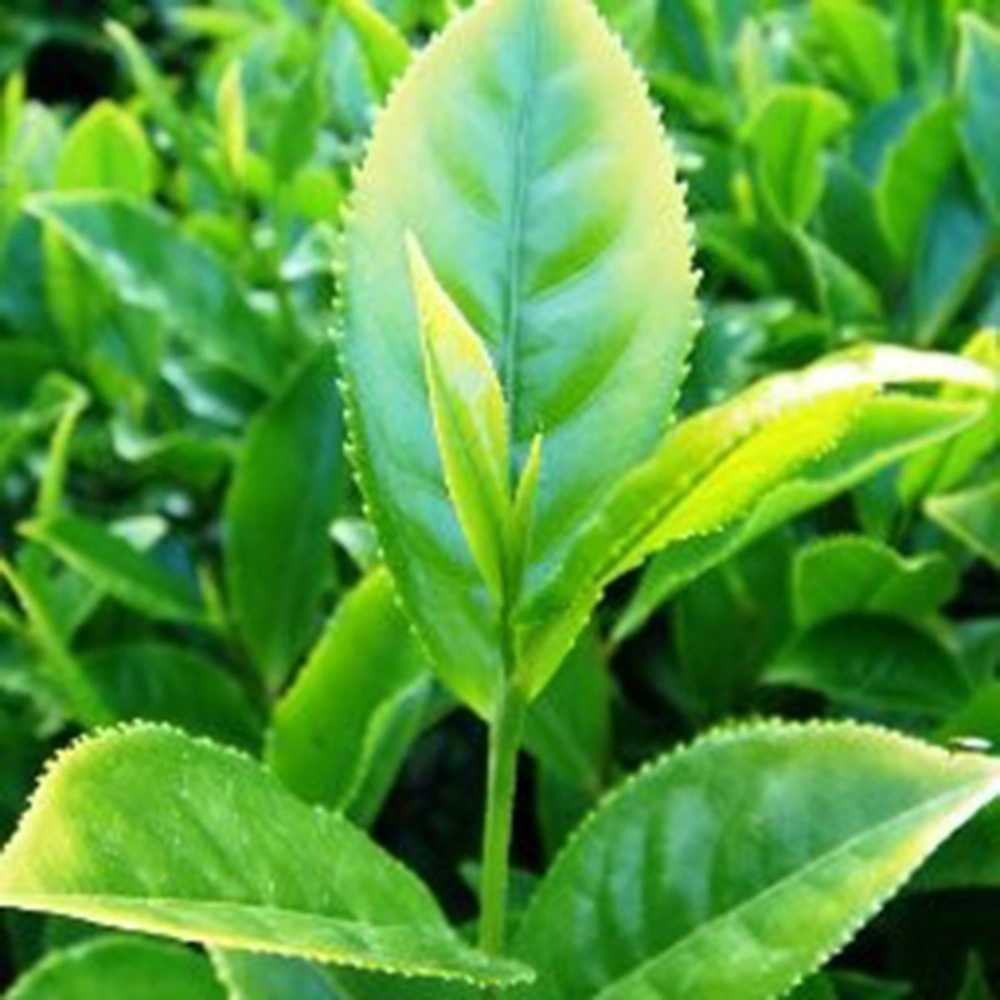
Figure 1.
Green tea plant
Glutathione (gammaglutaminsistenilgylicin) is the most abundant non-protein thiol compound with low molecular mass. The most important physiological roles of glutathione are: 1- antioxidant role, 2- detoxification role, 3- adjusting growth and reproduction and 4- safety [8, 9].
The studies demonstrated the protective effect of green tea against the formation of toxic metabolite of thioacetamide in liver by decreasing the activity of P450 cytochrome in one hand and on in the other hand it promotes liver detoxification capability by increasing glutathione concentration [1]. However, there is no study to compare the effects of green tea with glutathione on the hepatotoxic effect of thioacetamide. Thus, the aim of this research was to compare the effect of green tea extract on thioacetamide-induced hepatotoxicity with that of glutathione.
Results
The injection of 50 mg/kg thioacetamide in 3 successive days increased the significance level of ALT, AST and ALP enzyme activities compared with control group. However, the decrease of total protein and albumin was significant compared with control group.
The injection of alcoholic extract of green tea at different dosages decreased significantly the activity level of ALT, AST and alkaline phosphatase liver enzymes compared with thioacetamide group. Also, total protein (p=0.003) and albumin showed a significant increase (p<0.001) in the groups compared with thioacetamide group. A significant decrease was shown in the activity level of ALT (p=0.001), AST (p=0.002) and ALP (p=0.00) liver enzymes in the receptors of glutathione compared with thioacetamide group and total protein and albumin showed a significant increase level in the groups compared with thioacetamide group (Table 1).
The decrease of ALT and AST enzymes decrease as well as total protein and albumin increase in the experimental 1 and 2 groups was not significant while the decrease of ALP was significant. Also, the injection of green tea extract at dosages of 50 and 100 mg/kg had more effects on the significant increase of albumin level and total protein of blood, compared with the injection of glutathione. Simultaneous injection of green tea extract and glutathione decreased significantly the activity level of ALT, AST and ALP enzymes compared with thioacetamide group. A significant increase (p≤0.05) was observed in total protein and albumin in the group compared with thioacetamide group. The injection of green tea extract at dosages of 100 and 200 mg/kg decreases liver enzymes levels more than the injection of glutathione (Table 1).
Table 1.
The effects of glutathione and green tea extract (Camellia sinensis L.) in different doses on hepatic enzymes, alanine aminotransferase (ALT), aspartate aminotransferase (AST), alkaline phosphatase (ALP), after thioacetamide-induced hepatotoxicity
| Groups | Total Protein(mg/dl) | Albumin(mg/dl) | ALP(IU/l) | AST(IU/l) | ALT(IU/l) |
|---|---|---|---|---|---|
| Control | 7.68±0.09 | 4.1±0.08 | 535.6±4.2 | 183.38±3.22 | 63.9±1.3 |
| Sham | 7.8±0.1 | 4.3±0.2 | 573.3±8.9 | 206.8±2.3 | 68.7±1.7 |
| Hepatotoxic (Thioacetamide) | 7.3±0.1 | 3.05±0.06 | 787.1±10.2 | 409.3±4.4 | 107.3±3.7 |
| Experimental (50 mg/kg) | 7.9±0.13 | 3.95±0.06 | 735.8±7.7 | 262.2±9.7 | 76±3.08 |
| Experimental (100mg/kg) | 8.06±0.1 | 4±0.05 | 571.5±7.1 | 259.7±7.2 | 75.2±1.5 |
| Experimental (200mg/kg) | 7.3±0.1 | 3.7±0.05 | 569.7±19.3 | 210.1±28 | 69.9±0.83 |
| Experimental (250mg/kg) | 7.1±0.5 | 3.7±0.08 | 755.2±9.04 | 249.4±7.7 | 67±1.4 |
| Experimental (200 mg/kg+ Glutation) | 7.05±0.12 | 3.55±0.1 | 613±15.3 | 212.2±6.7 | 64.1±0.8 |
*Significant difference with the Sham group (p≥ 0.05)
#Significant difference with the thioacetamide group (p≥0.05)
Also, the injection of 200 mg/kg green tea extract has a more appropriate effect on decreasing liver enzymes level compared with the injection of glutathione. This means that the extract exhibits better protective effects on liver cells against thioacetamide injuries.
Discussion
Our results showed that green tea extract at doses of 50, 100 and 200 mg/kg significantly reduced the elevated activities of serum aminotransferases (ALT and AST), alkaline phosphatase and increased the production of proteins including albumin compared to the thioacetamide-treated group. In addition, daily injection of 200 mg/kg green tea had more efficacy compared to that of glutathione. Thioacetamide is used as an appropriate model in the studies of anti poisoning as well as protective effects of medicines and different compounds on liver [11].
Thioacetamide is a strong liver poison. When it enters the body it is metabolized by the enzymes of cytochrome P450 detoxification system [12, 13]. The metabolism of thioacetamide produces S thioacetamide oxide producing oxidative stress in liver cells. Studies show that thioacetamide results in liver cell necrosis and apoptosis [14, 15].
The study of Sai et al. showed the controlling effect of green tea on nitropropane toxicity of liver [16]. In another study carried out by Sugiyama et al., it was revealed that green tea extract mitigates beta-di galactosamine toxicity of liver [17] which agrees with the results of this study. The protective mechanism of green tea is likely generated due to its antioxidant effect [18, 19]. Moreover, the injection of green tea extract increases the concentration of glutathione [20]. Muto et al. and Yang and Raner showed in their studies the controlling effect of green tea in the statement of P450 cytochrome [21, 22].
The polyphenols of green tea increase the anti-apoptotic factor generated due to Bcl-2 in thioacetamide toxicity of liver in rats [23].
Xu et al. showed that the injection of green tea controls the biochemical parameters as well as histopathological changes due to micromicin [24]. In this research, the increase of the activity of aminotransferases and alkaline phosphatase due to treatment by thioacetamide implies the liver cells injuries due to thioacetamide because the enzymes are available inside cells and in the event of damaging cells they enter to serum. Polyphenol compounds are from the most important antioxidants. The compounds especially flavonoids have a protective effect on liver against liver poisoning and free radical injuries. The polyphenol compounds inside cells could act as electron donor and show both antioxidant and anti-prooxidant effects by two enzyme and no enzyme methods. Khorsandi et al. showed that the oral consumption of green tea extract affects severe poisoning of liver due to acetaminophen, improves liver necrosis and decreases serum transaminases [25].
In his study on the tea-cardamom aquatic essence, Baghy-Nia et al. showed that the essences have antioxidant effects and could decrease oxidative stress by decreasing free radicals [26]. Glutathione is the most efficient cellular tool for detoxification of medicines, pesticide substances and other xenobiotic substances and neutralize them before reaction with cellular elements like nucleic acids and proteins [27, 28]. Yuan et al. showed in his study that by its oxidation and reduction states, glutathione plays a key role in protecting liver against liver necrosis, liver cells apoptosis, hepatitis, kidney ischemia and stress oxidative of liver cells [11]. Dulundu investigated the effect of grape essence on the stress oxidative and liver cells necrosis and reported that the decrease of glutathione level in liver cells is the main reason of liver cells fibrosis and stress oxidative [29].
Green tea decreases cellular death due to thioacetamide probably by decreasing or controlling apoptosis which in turn decreases serum transaminase and increases serum protein and albumin and it shows a better performance in these situations than glutathione.