Journal of Inflammatory Diseases
The Official Journal of Qazvin University of Medical Sciences
Prevalence of Premenstrual Syndrome, Premenstrual Dysphoric Disorder and Associated Factors Among Female High School Students
Authors

Abstract
Background Premenstrual Syndrome (PMS) is a common psychosomatic disorder linked to menstruation in women at gestational age and can lead to absence from work and academic failure. Objective This study aimed to determine the prevalence and severity of PMS, Premenstrual Dysphoric Disorder (PMDD) and associated factors among the female high school students. Methods This descriptive-analytical study was carried using randomized classification method on 368 female high school students in Shoushtar, Iran in 2016. Data were collected by a demographic form and Premenstrual Symptoms Screening Tool. Collected data were analyzed in SPSS software using Kolmogorov-Smirnov test, Chi-squared test, binomial test, Mann-Whitney test and Spearman correlation test at a significance level of P<0.05. Findings The Mean±SD age of participants was 16.3±0.87 years. The prevalence of PMS in students was 53.5% and for PMDD it was 12.22 %. The most prevalent symptoms were mood, behavioral and physical symptoms. The frequency of PMS was higher in students with a positive family history. Conclusion The prevalence of PMS in high school female students was relatively high. Since this problem can interfere with one's personal, social and academic activities, an educational program at schools and informing students in this regard can be helpful and effective in promoting the health and young girls.
Highlights
Copyright
© 2024, Journal of Inflammatory Diseases. This open-access article is available under the Creative Commons Attribution-NonCommercial 4.0 (CC BY-NC 4.0) International License (https://creativecommons.org/licenses/by-nc/4.0/), which allows for the copying and redistribution of the material only for noncommercial purposes, provided that the original work is properly cited.
Similar Articles
Prevalence of premenstrual symptoms and premenstrual dysphoric disorder among adolescents students of Zahedan
Bakhshani NM, Hasanzadeh Z, Raghibi M. Prevalence of premenstrual symptoms and premenstrual dysphoric disorder among adolescents students of Zahedan. Zahedan J Res Med Sci. 2012;13(8):e93773. doi:
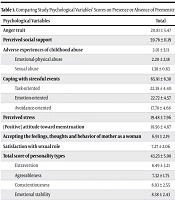
Predicting Premenstrual Syndrome Among University Students: Considering Anger, Social Support, Childhood Adversity, and Stress Related Factors, Menstrual Attitudes, and Sex Role Satisfaction
Barari M, Shahhosseini Z, Hosseinnataj A, Khaleghi F, Azimi Lolaty H. Predicting Premenstrual Syndrome Among University Students: Considering Anger, Social Support, Childhood Adversity, and Stress Related Factors, Menstrual Attitudes, and Sex Role Satisfaction. J Nurs Midwifery Sci. 2026;13(1):e165764. doi: https://doi.org/10.5812/jnms-165764
Premenstrual Syndrome and Comorbid Depression Among Medical Students in the Internship Stage: A Descriptive Study
Sadr SS, Samimi Ardestani SM, Razjouyan K, Daneshvar M, Zahed G. Premenstrual Syndrome and Comorbid Depression Among Medical Students in the Internship Stage: A Descriptive Study. Iran J Psychiatry Behav Sci. 2014;8(4):. doi:
The Relationship Between Age at Menarche and Premenstrual Syndrome with Anthropometric Indices in High School Female Students in Zahedan in 2017
Karajibani M, Montazerifar F, Nazare N, Dashipour AR. The Relationship Between Age at Menarche and Premenstrual Syndrome with Anthropometric Indices in High School Female Students in Zahedan in 2017. Zahedan J Res Med Sci. 2019;22(1):e93862. doi: https://doi.org/10.5812/zjrms.93862
Frequency of sleep disorders among women with premenstrual dysphoric disorder in Islamic Azad University, Kermanshah, 2011
Chehri A, khaledipaneh B, Khazaie H. Frequency of sleep disorders among women with premenstrual dysphoric disorder in Islamic Azad University, Kermanshah, 2011. J Kermanshah Univ Med Sci. 2013;17(4):e77103. doi:
- Scopus by DOI: 0
Last Update: 1 month ago
- Scopus by Title: 0
Last Update: 1 month ago
- Scopus by Title (Ref): 0
Last Update: 1 month ago
- CrossRef: 0
Last Update: 5 days ago
- OpenAlex: 0
Last Update: 2 days ago
- OpenCitations: 0
Last Update: 3 days ago