Journal of Inflammatory Diseases
The Official Journal of Qazvin University of Medical Sciences
High Frequency of Nephropathy Among the Iranian Children and Adolescents With Type 1 Diabetes
Authors

Abstract
Background: Type 1 Diabetes (T1D) is an autoimmune condition, in which the pancreas produces little or no insulin. Nephropathy is a serious T1D microvascular complication that is associated with high mortality and morbidity. Objective: This study aimed to investigate the prevalence of diabetic nephropathy and comorbidities in children with T1D. Methods: This cross-sectional study was conducted on 208 children (aged 1–18 years old) with T1D who were referred to the Qazvin endocrinology clinic from 2017 to 2019. Anthropometric, demographic, laboratory, and comorbidities data were collected. Results: The Mean±SD age at diagnosis of diabetes was 7.59 years, and the Mean±SD HbA1c level of the study subjects was 8.68±1.42 mmol/mol. Out of 208 diabetic patients, 64 cases (30.7%) had diabetic nephropathy, of whom 53 cases (25.5%) had microalbuminuria and 11 cases (5.3%) had macroalbuminuria. Among the studied diabetic patients, 30 cases (14.45%) had hypothyroidism, 12 patients (5.8%) had celiac disease, and 14 patients (6.7%) had anemia. Retinopathy was not found in any of the patients. Moreover, variables, such as the duration of diabetes, puberty status, mean HbA1c levels, and age were significantly associated with diabetic nephropathy (P<0.05). Conclusion: Mean HbA1c levels were significantly higher in patients with macroalbuminuria, which may corroborate the role of metabolic control of diabetes in the development of albuminuria.
Highlights
Copyright
© 2024, Journal of Inflammatory Diseases. This open-access article is available under the Creative Commons Attribution-NonCommercial 4.0 (CC BY-NC 4.0) International License (https://creativecommons.org/licenses/by-nc/4.0/), which allows for the copying and redistribution of the material only for noncommercial purposes, provided that the original work is properly cited.
Similar Articles
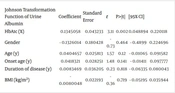
Microalbuminuria in Children with Type 1 Diabetes and Its Relationship with Body Mass Index, Hemoglobin A1c, and Age at Diabetes Onset
Mosallanejad A, Pournasiri Z, Saneifard H, Shirvani A, Forati M. Microalbuminuria in Children with Type 1 Diabetes and Its Relationship with Body Mass Index, Hemoglobin A1c, and Age at Diabetes Onset. Inn J Pediatr. 2024;34(1):e139616. doi: https://doi.org/10.5812/ijp-139616
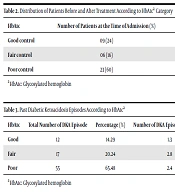
Evaluation of Microalbuminuria and Glycosylated Hemoglobin in the Assessment of Diabetes Control in Children with Type 1 Diabetes Mellitus Hospitalized with Diabetic Ketoacidosis
Kavthekar SO, Mali VT, Verma S, Kurane AB, Patil NB, et al. Evaluation of Microalbuminuria and Glycosylated Hemoglobin in the Assessment of Diabetes Control in Children with Type 1 Diabetes Mellitus Hospitalized with Diabetic Ketoacidosis. J Compr Ped. 2021;12(2):e109904. doi: https://doi.org/10.5812/compreped.109904
Microabuminuria in Type 1 Diabetes Mellitus
Abdeyazdan Z, Hashemipour M, Hasanzadeh A, Pour Naghshban Z, Kabirzadeh M. Microabuminuria in Type 1 Diabetes Mellitus. Shiraz E-Med J. 2007;8(1):. doi:
Prevalence of Celiac Disease in Children with Type 1 Diabetes Mellitus in the South of Turkey
Sahin Y, Cakir MD, Isakoca M, Aydin Sahin D. Prevalence of Celiac Disease in Children with Type 1 Diabetes Mellitus in the South of Turkey. Inn J Pediatr. 2019;30(1):e97306. doi: https://doi.org/10.5812/ijp.97306
Prevalence of Metabolic Syndrome in Children With Type 1 Diabetes in South of Iran
Saki F. Prevalence of Metabolic Syndrome in Children With Type 1 Diabetes in South of Iran. J Compr Ped. 2016;7(3):e37703. doi: https://doi.org/10.17795/compreped-37703
- Scopus by DOI: 0
Last Update: 2 days ago
- Scopus by Title: 0
Last Update: 2 days ago
- Scopus by Title (Ref): 0
Last Update: 2 days ago
- CrossRef: 0
Last Update: 5 days ago
- OpenAlex: 0
Last Update: 2 hours ago
- OpenCitations: 0
Last Update: 3 days ago