
1. Background
Staphylococcus aureus is a major Gram-positive pathogen responsible for both community-acquired and healthcare-associated infections. Clinical manifestations range from superficial skin and soft tissue infections to severe diseases, including pneumonia, osteomyelitis, infective endocarditis, and bloodstream infection (1). Although S. aureus commonly colonizes the skin and mucosal surfaces of healthy individuals, it can become pathogenic when host defenses are impaired by conditions such as immunosuppression, surgery, burns, or prolonged hospitalization (2). Infection results from complex interactions between bacterial virulence factors and the host immune response, leading to inflammatory activation and tissue injury.
The increasing prevalence of antimicrobial resistance has made the management of S. aureus infections more challenging. Methicillin-resistant S. aureus (MRSA) is of particular concern because resistance mediated by the mecA gene produces penicillin-binding protein 2a (PBP2a), reducing susceptibility to β-lactam antibiotics (3). Since its first description shortly after the introduction of methicillin, MRSA has spread worldwide and has been associated with increased morbidity, mortality, and healthcare costs (4). The prevalence of MRSA varies across regions and healthcare systems. Differences in antimicrobial prescribing practices, infection prevention measures, and patient movement between healthcare facilities contribute to this variation (5, 6). Similar patterns have been reported in Iran, where regional studies have demonstrated substantial differences in MRSA prevalence and resistance profiles (7-9). Investigations among healthcare workers have also identified asymptomatic nasal carriage as a potential source of hospital transmission (10, 11, 12). Recent studies have further described emerging resistance to agents such as vancomycin and linezolid, underscoring the need for continued surveillance (13). Environmental studies have detected resistant S. aureus isolates in hospital wastewater, suggesting that environmental reservoirs may contribute to the persistence and spread of resistant strains (14).
Hospital-acquired infections caused by S. aureus, particularly MRSA, continue to impose a considerable burden on healthcare systems. These infections are common in intensive care units and surgical wards, where opportunities for transmission are increased by direct contact and contaminated surfaces (15). The emergence of multidrug-resistant strains has further complicated treatment by prolonging hospitalization, increasing healthcare costs, and limiting therapeutic options (16, 17). Local surveillance is essential because resistance patterns differ across geographic regions and healthcare institutions. Understanding these differences supports empirical antibiotic selection, antimicrobial stewardship, and infection prevention programs. This study evaluated antimicrobial resistance patterns among S. aureus isolates recovered from two referral hospitals in Qazvin, Iran, to provide updated regional surveillance data and inform local clinical practice.
2. Objectives
The primary objective of this study was to characterize antimicrobial susceptibility patterns among clinical Staphylococcus aureus isolates collected from Bou-Ali Hospital and Velayat Center in Qazvin, Iran, from 2021 to 2024.
The specific objectives were to:
1) determine the prevalence of MRSA using cefoxitin susceptibility testing;
2) evaluate resistance to commonly prescribed antimicrobial agents;
3) compare resistance patterns between the participating hospitals;
4) examine differences in resistance by specimen source; and
5) assess temporal changes in antimicrobial resistance during the study period.
These findings are intended to inform empiric antibiotic selection, strengthen antimicrobial stewardship initiatives, and provide regional surveillance data for future monitoring.
3. Methods
3.1. Study Design and Bacterial Isolation
This retrospective, descriptive-analytical, cross-sectional laboratory surveillance study was conducted using Staphylococcus aureus isolates recovered from hospitalized patients at Bou-Ali Hospital and Velayat Center in Qazvin, Iran, between January 2021 and December 2024.
Eligible participants included all inpatients with culture-confirmed S. aureus isolated from clinical specimens during the study period. Isolates were obtained from multiple hospital departments, including internal medicine, surgery, intensive care units (ICUs), and emergency services. Clinical specimens included blood, wound swabs, urine, sputum, respiratory secretions, and other routinely collected samples, providing broad representation of infections encountered in the participating hospitals.
The required sample size was initially estimated using a previously reported MRSA prevalence of 43%, a precision of 5%, and a 95% confidence level, resulting in a minimum of 377 isolates (7). Owing to the retrospective design, all eligible isolates available during the study period were included using a census sampling approach. A total of 565 isolates met the eligibility criteria, exceeding the calculated minimum sample size. The annual distribution was 51 isolates in 2021, 104 in 2022, 221 in 2023, and 245 in 2024.
Inclusion criteria comprised laboratory-confirmed identification of S. aureus and the availability of essential clinical information, including patient sex, hospital department, specimen source, and inpatient status. Samples showing mixed bacterial growth, contaminated cultures, or incomplete laboratory records were excluded. Only inpatient isolates were included. Patient age was not consistently available in the retrospective database. Information on prior antimicrobial exposure, treatment duration, route of administration, underlying diseases, and other potential confounding variables was also unavailable; therefore, these factors could not be incorporated into the analysis.
Identification of S. aureus followed standard microbiological procedures. Gram staining confirmed Gram-positive cocci arranged in clusters. Catalase and coagulase testing differentiated S. aureus from other Gram-positive cocci, and growth on mannitol salt agar with mannitol fermentation supported species identification (18).
3.2. Antimicrobial Susceptibility Testing
Antimicrobial susceptibility testing was performed using the Kirby-Bauer disk diffusion method on Mueller-Hinton agar in accordance with the Clinical and Laboratory Standards Institute (CLSI) 2020 guidelines (19). The antimicrobial panel included cefoxitin (FOX), ciprofloxacin (CIP), clindamycin (CLI), erythromycin (ERY), gentamicin (GEN), doxycycline (DOXY), penicillin (PEN), and trimethoprim-sulfamethoxazole (SXT). After incubation, inhibition zone diameters were measured and interpreted using CLSI breakpoint criteria. Isolates resistant to cefoxitin were classified as MRSA, with cefoxitin serving as the phenotypic surrogate marker for methicillin resistance (20). Molecular confirmation by detection of mecA or mecC genes was not performed. Inducible clindamycin resistance was not assessed because D-testing was unavailable during the study period. Quality control procedures followed CLSI recommendations using standard reference strains.
3.3. Statistical Analysis
Laboratory records and corresponding clinical information were reviewed retrospectively. Data were entered into a structured database and analyzed using SPSS version 27. Categorical variables are presented as frequencies and percentages, whereas continuous variables are summarized as means and standard deviations, where appropriate. Ninety-five percent CIs were calculated for major resistance estimates. Associations between antimicrobial resistance and categorical variables, including hospital, specimen source, and patient characteristics, were evaluated using the chi-square test or Fisher's exact test when expected cell counts were small. Statistical significance was defined as a two-sided P value < 0.05. Resistance patterns were also compared by specimen source, including blood, wound, urine, sputum or respiratory specimens, and body fluids.
Multivariable regression analysis was not performed because the study was primarily descriptive and important clinical variables, including previous antimicrobial exposure, treatment history, and route of antibiotic administration, were unavailable in the retrospective records. Temporal changes in antimicrobial resistance between 2021 and 2024 were evaluated using the Cochran-Armitage trend test. This analysis was conducted in R version 4.3.2 (R Foundation for Statistical Computing, Vienna, Austria) using the DescTools package (21, 22). Resistance data were grouped by calendar year to assess the presence of a linear trend over the study period.
3.4. Ethical Considerations
The study was conducted in accordance with the principles of the Declaration of Helsinki. Ethical approval was obtained from the Research Ethics Committee of Qazvin University of Medical Sciences. Because the study used anonymized retrospective laboratory records, the requirement for informed consent was waived. All patient identifiers were removed before analysis, and study data were stored securely with restricted access.
4. Results
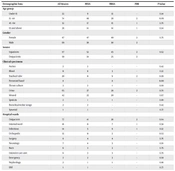
A total of 565 clinical Staphylococcus aureus isolates were included in the analysis. Among the patients, 343 (60.8%) were male and 221 (39.2%) were female. No significant association was observed between patient sex and MRSA status (P = 0.105). Patient age was not consistently available in the retrospective database and therefore was not analyzed.
Of all isolates, 394 (69.9%) were obtained from Velayat Center and 170 (30.1%) from Bou-Ali Hospital. The distribution of isolates across hospital departments differed significantly between the two institutions (P < 0.001). The largest proportion originated from the emergency department (34.3%, n = 194), followed by internal medicine (17.3%, n = 98) and intensive care units (17.2%, n = 97).
Blood cultures were the most common specimen source (30.6%, n = 173), followed by wound swabs (23.5%, n = 133), urine (13.0%, n = 73), sputum (10.1%, n = 57), respiratory secretions (9.7%, n = 55), and other clinical specimens (12.9%, n = 73). Wound specimens were collected more frequently at Bou-Ali Hospital than at Velayat Center (51.2% vs 11.6%).
4.1. Prevalence of Methicillin-Resistant Staphylococcus aureus
Among the 565 isolates, 138 (24.4%) were classified as MRSA (95% CI: 20.9%–28.0%), whereas 427 (75.6%) were methicillin-sensitive Staphylococcus aureus (MSSA). The prevalence of MRSA was 27.6% (47/170, 95% CI: 21.0%–34.9%) at Bou-Ali Hospital and 23.0% (91/394, 95% CI: 19.0%–27.4%) at Velayat Center. This difference was not statistically significant (P = 0.242).
4.2. Antimicrobial Resistance Patterns
Overall resistance rates are summarized in Table 1. Penicillin showed the highest resistance rate (96.1%), followed by erythromycin (61.1%), clindamycin (57.4%), doxycycline (56.1%), and ciprofloxacin (55.1%). Gentamicin showed the lowest resistance rate (8.0%). Comparisons between the two hospitals showed significant differences in resistance to erythromycin (P = 0.004) and trimethoprim-sulfamethoxazole (P < 0.001). Resistance rates for the remaining antibiotics were similar between hospitals.
Table 1.
Antimicrobial Resistance Patterns by Hospital a
| Antibiotic | Total Resistance | Bou-Ali Resistance | Velayat Resistance | P Value |
|---|---|---|---|---|
| Cefoxitin (FOX) | 138 (24.4) | 47 (27.6) | 91 (23.0) | 0.242 |
| Ciprofloxacin (CIP) | 311 (55.1) | 99 (58.5) | 210 (53.4) | 0.315 |
| Clindamycin (CLI) | 324 (57.4) | 96 (56.3) | 228 (57.8) | 0.162 |
| Erythromycin (ERY) | 345 (61.1) | 109 (64.2) | 234 (59.4) | 0.004 b |
| Gentamicin (GEN) | 45 (8.0) | 13 (7.9) | 32 (8.0) | 0.763 |
| Penicillin (PEN) | 543 (96.1) | 161 (94.7) | 381 (96.8) | 0.245 |
| Trimethoprim-Sulfamethoxazole (SXT) | 177 (31.4) | 77 (45.3) | 83 (21.1) | < 0.001 b |
| Doxycycline (DOXY) | 317 (56.1) | 105 (61.5) | 215 (54.7) | 0.084 |
a Values are expressed as No. (%).
b A P value ≤ 0.05 was considered statistically significant.
4.3. Antimicrobial Resistance According to Specimen Source
Resistance patterns varied across specimen types. Wound isolates showed the highest resistance to ciprofloxacin (66.1%), erythromycin (69.0%), and trimethoprim-sulfamethoxazole (45.2%). In contrast, blood isolates showed the lowest resistance to gentamicin (3.2%) and trimethoprim-sulfamethoxazole (15.6%). The association between specimen source and resistance was statistically significant for trimethoprim-sulfamethoxazole (P < 0.001) and erythromycin (P = 0.046). No significant associations were observed for the remaining antimicrobial agents.
4.4. Comparison of MRSA and MSSA Isolates
Resistance profiles differed between MRSA and MSSA isolates. As expected, all MRSA isolates were resistant to cefoxitin, whereas all MSSA isolates were susceptible (P < 0.001). Compared with MSSA isolates, MRSA isolates showed significantly higher resistance to ciprofloxacin (73.0% vs 49.6%, P < 0.001), erythromycin (72.4% vs 57.5%, P = 0.007), gentamicin (30.0% vs 1.1%, P < 0.001), and trimethoprim-sulfamethoxazole (47.6% vs 25.6%, P < 0.001). Resistance to clindamycin, doxycycline, and penicillin did not differ significantly between the two groups. Detailed susceptibility profiles are presented in Table 2.
Table 2.
Susceptibility Profiles of MRSA and MSSA Isolates a
| Antibiotic / Category | MRSA Resistance | MSSA Resistance | P Value |
|---|---|---|---|
| Cefoxitin (FOX) - Resistant | 138 (100.0) | 0 (0.0) | < 0.001 |
| Sensitive | 0 (0.0) | 427 (100.0) | |
| Ciprofloxacin (CIP) - Resistant | 84 (73.0) | 187 (49.6) | < 0.001 |
| Intermediate | 2 (1.7) | 14 (3.7) | |
| Sensitive | 29 (25.2) | 176 (46.7) | |
| Clindamycin (CLI) - Resistant | 74 (63.8) | 199 (55.3) | 0.162 |
| Intermediate | 0 (0.0) | 7 (1.9) | |
| Sensitive | 42 (36.2) | 154 (42.8) | |
| Erythromycin (ERY) - Resistant | 76 (72.4) | 185 (57.5) | 0.007 |
| Intermediate | 7 (6.7) | 17 (5.3) | |
| Sensitive | 22 (21.0) | 120 (37.3) | |
| Gentamicin (GEN) - Resistant | 33 (30.0) | 4 (1.1) | < 0.001 |
| Intermediate | 3 (2.7) | 2 (0.6) | |
| Sensitive | 74 (67.3) | 348 (98.3) | |
| Penicillin (PEN) - Resistant | 125 (98.4) | 371 (95.4) | 0.245 |
| Intermediate | 0 (0.0) | 1 (0.3) | |
| Sensitive | 2 (1.6) | 17 (4.4) | |
| Trimethoprim-Sulfamethoxazole (SXT) - Resistant | 50 (47.6) | 75 (25.6) | < 0.001 |
| Intermediate | 1 (1.0) | 24 (8.2) | |
| Sensitive | 54 (51.4) | 194 (66.2) | |
| Doxycycline (DOXY) - Resistant | 34 (59.6) | 77 (54.6) | 0.084 |
| Intermediate | 2 (3.5) | 4 (2.8) | |
| Sensitive | 21 (36.8) | 60 (42.6) |
a Values are expressed as No. (%).
4.5. Temporal Trends in Antimicrobial Resistance
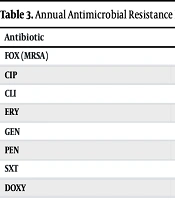
Annual resistance rates were evaluated for the period from 2021 to 2024 (2021, n = 51; 2022, n = 104; 2023, n = 221; 2024, n = 245). Although resistance rates varied slightly over time, the Cochran-Armitage trend test did not identify statistically significant temporal trends for any of the antimicrobial agents evaluated (all P > 0.05). Annual resistance rates are presented in Table 3.
Table 3.
Annual Antimicrobial Resistance Rates a
| Antibiotic | 2021 | 2022 | 2023 | 2024 | P Trend |
|---|---|---|---|---|---|
| FOX (MRSA) | 27.0 | 27.8 | 23.5 | 22.7 | 0.365 |
| CIP | 37.8 | 50.0 | 58.6 | 56.3 | 0.065 |
| CLI | 39.1 | 51.8 | 61.6 | 57.2 | 0.253 |
| ERY | 47.4 | 53.2 | 62.6 | 60.7 | 0.310 |
| GEN | 2.4 | 9.5 | 11.9 | 6.6 | 0.631 |
| PEN | 100.0 | 95.1 | 94.8 | 96.3 | 0.362 |
| SXT | 25.0 | 26.5 | 28.1 | 30.9 | 0.254 |
| DOXY | 50.0 | 45.8 | 56.7 | 58.5 | 0.250 |
a Values are expressed as percentages. Abbreviations: MRSA, methicillin-resistant Staphylococcus aureus; FOX, cefoxitin; CIP, ciprofloxacin; CLI, clindamycin; ERY, erythromycin; GEN, gentamicin; PEN, penicillin; SXT, trimethoprim-sulfamethoxazole; DOXY, doxycycline.
These results illustrate the differential impact of resistance mechanisms between MRSA and MSSA, with MRSA consistently showing higher resistance to key antibiotics.
Overall, MRSA isolates consistently demonstrated higher resistance than MSSA isolates to several clinically important antimicrobial agents. However, no evidence of a significant increase or decrease in resistance was observed during the four-year study period.
5. Discussion
In this retrospective surveillance study, MRSA accounted for 24.4% of all Staphylococcus aureus isolates recovered from two tertiary healthcare facilities in Qazvin. This prevalence is consistent with reports describing moderate MRSA rates in several regional settings, although it is lower than estimates reported from some other areas of Iran and neighboring countries. Differences among studies are expected because of variations in patient populations, specimen sources, study periods, and laboratory methods (1, 9, 23). For example, investigations based on nasal carriage among healthy individuals are not directly comparable with studies of clinical isolates obtained from hospitalized patients (24). Similarly, differences in infection control practices and antimicrobial prescribing policies may contribute to regional variation in MRSA prevalence.
The high prevalence of penicillin resistance (96.1%) observed in this study is consistent with the widespread production of β-lactamase among S. aureus isolates worldwide (3). Similar resistance patterns have been reported in previous Iranian and international studies, indicating that penicillin has limited value for the empirical treatment of suspected S. aureus infections (7, 16). Resistance to erythromycin (61.1%), clindamycin (57.4%), and ciprofloxacin (55.1%) was also common, suggesting substantial selective pressure from antimicrobial use within healthcare settings. Comparable findings have been reported in regions where prolonged or inappropriate antibiotic use has contributed to increasing resistance (25, 26). In contrast, gentamicin showed the lowest resistance rate (8.0%) among the antimicrobial agents evaluated. This finding suggests that gentamicin may remain a useful component of combination therapy when clinically appropriate and supported by susceptibility testing. However, treatment decisions should continue to rely on local antibiograms and individual patient characteristics rather than on resistance rates alone.
Although overall resistance patterns were broadly similar between the two participating hospitals, significant differences were observed in resistance to erythromycin and trimethoprim-sulfamethoxazole. These findings may reflect differences in local prescribing practices, patient case mix, referral patterns, or infection prevention strategies. Institution-specific surveillance therefore remains important, as resistance profiles may vary even within the same geographic region. Environmental reservoirs may also contribute to the persistence of resistant organisms within healthcare settings. Recent studies have identified antimicrobial-resistant S. aureus in hospital wastewater, supporting the possibility that environmental contamination plays a role in maintaining and disseminating resistant strains (14). Although environmental sampling was beyond the scope of the present study, this mechanism should be considered when designing comprehensive infection prevention and antimicrobial stewardship programs.
Analysis by specimen source identified clinically relevant differences in antimicrobial susceptibility. Wound isolates showed the highest resistance to ciprofloxacin, erythromycin, and trimethoprim-sulfamethoxazole, whereas blood isolates exhibited the lowest resistance to gentamicin and trimethoprim-sulfamethoxazole. These observations suggest that resistance profiles may vary by site of infection. Similar findings have been reported previously and may reflect differences in antimicrobial exposure, tissue microenvironment, bacterial population dynamics, and prescribing practices across clinical settings. The significant association between specimen source and resistance to erythromycin and trimethoprim-sulfamethoxazole further supports the importance of considering the site of infection during empirical antimicrobial selection. Nevertheless, empirical therapy should be guided primarily by local susceptibility data and adjusted once culture and susceptibility results become available.
Comparison of MRSA and MSSA isolates showed that MRSA strains were more frequently resistant to several non-β-lactam antimicrobial agents, including ciprofloxacin, erythromycin, gentamicin, and trimethoprim-sulfamethoxazole. This pattern is consistent with the accumulation of multiple resistance determinants among MRSA lineages and reflects the well-recognized association between methicillin resistance and multidrug resistance (27). These findings reinforce the importance of accurate microbiological diagnosis and antimicrobial susceptibility testing to support appropriate treatment decisions.
5.1. Temporal Trends in Antimicrobial Resistance
No statistically significant temporal trends in antimicrobial resistance were observed between 2021 and 2024. Although resistance rates fluctuated slightly across the study period, these variations did not reach statistical significance. Several factors may explain this finding. The relatively small number of isolates collected during the first study year reduced the statistical power to detect temporal changes. In addition, the unequal distribution of isolates across study years and the retrospective design limited the precision of trend analyses. Changes in healthcare delivery, infection prevention practices, and antimicrobial prescribing during the COVID-19 pandemic may also have influenced resistance patterns. These variables were not available for analysis and therefore could not be evaluated systematically. Consequently, the absence of significant temporal trends should be interpreted cautiously and should not be considered evidence that resistance patterns remained unchanged.
5.2. Clinical Relevance of the Findings
This study provides contemporary antimicrobial resistance data from two major referral hospitals in Qazvin, Iran. These findings contribute to regional surveillance efforts and establish a reference point for future monitoring.
The observed MRSA prevalence indicates that methicillin resistance remains an important concern in hospitalized patients. Continued surveillance is therefore necessary to detect changes in resistance patterns and to support antimicrobial stewardship programs. The consistently low resistance to gentamicin suggests that this agent may remain an appropriate therapeutic option in selected clinical situations when supported by antimicrobial susceptibility testing. Likewise, the identification of specimen-specific resistance profiles may assist clinicians in selecting empirical therapy before culture results become available.
The differences observed between the participating hospitals also underscore that local resistance data should guide empirical treatment recommendations. Hospital-specific antibiograms are likely to provide more useful information for clinical decision-making than regional estimates alone. An additional finding was the absence of D-testing for inducible clindamycin resistance during the study period. Because inducible resistance may lead to therapeutic failure despite apparent in vitro susceptibility, routine implementation of the D-test would improve laboratory reporting and support more appropriate antimicrobial selection.
Overall, these findings add to the available evidence describing antimicrobial resistance among S. aureus isolates in Iran and provide data that may assist local infection prevention and antimicrobial stewardship initiatives.
5.3. Strengths and Limitations
Several limitations should be considered when interpreting the findings of this study.
First, the retrospective design limited the availability of clinical information and prevented adjustment for important confounding variables, including previous antimicrobial exposure, duration of hospitalization, severity of illness, and underlying comorbidities. Second, MRSA identification was based on phenotypic cefoxitin resistance without molecular confirmation of mecA or mecC. Consequently, the study could not evaluate resistance mechanisms, characterize circulating clones, or investigate the molecular epidemiology of MRSA isolates. Third, inducible clindamycin resistance was not assessed because D-testing was unavailable. As a result, the reported clindamycin resistance rates may underestimate the true prevalence of clinically relevant resistance. Fourth, incomplete demographic and clinical data limited the assessment of patient-level risk factors and reduced the ability to explore associations between antimicrobial resistance and clinical characteristics. Finally, the unequal number of isolates collected across study years reduced the statistical power of temporal trend analyses. Therefore, the absence of significant changes over time should be interpreted with caution.
Despite these limitations, the study has several strengths. It includes a relatively large number of clinical isolates collected over four consecutive years from two major referral hospitals. Standardized microbiological methods and CLSI susceptibility criteria were used throughout the study period, allowing consistent assessment of antimicrobial resistance. The inclusion of analyses by specimen source and hospital also provides information that may support local antimicrobial stewardship and empirical treatment recommendations.
The findings provide updated regional surveillance data and may serve as a baseline for future multicenter studies incorporating molecular characterization, comprehensive clinical information, and prospective data collection.
5.4. Clinical Implications
The findings of this study have several implications for clinical practice and antimicrobial stewardship. Given the high resistance rates observed for penicillin, erythromycin, clindamycin, and ciprofloxacin, empirical use of these agents should be guided by local susceptibility data and culture results whenever possible. Hospital antimicrobial stewardship programs should regularly review prescribing practices to reduce unnecessary use of antibiotics associated with high resistance rates.
Gentamicin demonstrated the lowest overall resistance rate and may remain an appropriate treatment option in selected patients, particularly when used as part of combination therapy and supported by antimicrobial susceptibility testing. Because resistance patterns differed by specimen source, hospital-specific antibiograms that incorporate site-specific susceptibility data may improve empirical antibiotic selection. The study also supports continued investment in infection prevention measures, including adherence to hand hygiene, contact precautions for patients colonized or infected with MRSA, environmental cleaning, and surveillance of high-risk patient populations. These measures remain essential for limiting healthcare-associated transmission.
Routine implementation of the D-test for erythromycin-resistant, clindamycin-susceptible isolates should be considered to identify inducible clindamycin resistance and reduce the risk of treatment failure. Continued microbiological surveillance using standardized laboratory methods, together with periodic evaluation of local resistance patterns, will help guide empirical therapy and support evidence-based antimicrobial stewardship within the participating institutions.
5.5. Conclusions
This study found that nearly one-quarter of Staphylococcus aureus isolates recovered from hospitalized patients in two referral hospitals in Qazvin were methicillin resistant. Resistance to several commonly prescribed antimicrobial agents, particularly penicillin, erythromycin, clindamycin, and ciprofloxacin, remained high throughout the study period, whereas gentamicin retained relatively good in vitro activity. Resistance patterns differed by specimen source and between hospitals for selected antibiotics, highlighting the importance of institution-specific surveillance and local antibiograms when selecting empirical therapy. No statistically significant temporal changes in antimicrobial resistance were identified between 2021 and 2024.
These findings support continued antimicrobial stewardship, regular surveillance of resistance patterns, and ongoing infection prevention efforts. Future prospective studies incorporating molecular characterization of MRSA isolates and more detailed clinical data would improve understanding of resistance mechanisms and factors associated with antimicrobial resistance in this setting.