
1. Background
Chronic renal failure (CRF) is a progressive and irreversible disease in which the kidneys lose the ability to remove waste materials and maintain electrolyte balance, leading to conditions such as uremia (increased urea in the blood) (1). Patients with CRF experience numerous problems, including sleep disorders, peripheral neuropathy, infections, mental stress, anxiety and depression, cognitive changes, and malnutrition (2). Statistics show that the number of chronic kidney disease (CKD) patients worldwide was about 850 million at the end of 2017 (3). Nearly 4 million people globally are living on hemodialysis (4). In 2015, the population of chronic kidney patients with advanced kidney failure in Iran reached about 58,000 people. By the end of 2015, the number of hemodialysis patients in Iran was reported to be 30,800 (5).
The quality of life (QOL) of chronic kidney patients tends to decline as the disease progresses (6). For patients undergoing hemodialysis treatment, the level of QOL decreases significantly due to a wide range of physical, psychological, social, and economic problems resulting from the disease process and its treatment (7). Although these patients face restrictions on diet, fluid, and drug consumption and incur high healthcare costs, their life expectancy remains limited (8). Maintaining health in advanced chronic kidney patients depends on four aspects of treatment: Limiting fluid intake, dietary precautions (low salt, low potassium, low phosphorus, etc.), taking recommended drugs, and regular participation in dialysis sessions (9). Evaluating adherence to diet and medication in patients with advanced heart failure treated with hemodialysis is mandatory. Today, the most objective method to measure adherence to medication and therapy in these patients is the evaluation of laboratory indicators (10).
The quality of life of patients with chronic kidney failure who are treated with hemodialysis remains a significant concern for health professionals (11). Various solutions have been proposed to improve the QOL of patients with chronic diseases, including health-promoting behaviors (12). Among the educational interventions aimed at improving the QOL of dialysis patients, studies have focused on family-oriented empowerment models and self-care behaviors (13). Although most interventional studies show a significant improvement in QOL, there is a lack of a powerful educational model that identifies the factors affecting the quality of life of dialysis patients and provides a systematic framework for the necessary measures to enhance their QOL (14).
The PRECEDE-PROCEED model is a planning model that examines problems affecting QOL with the participation of beneficiaries. This model provides a framework for identifying predisposing factors (knowledge, attitudes, perceptions, beliefs), reinforcing factors (influence of others, family, peers, health workers), and enabling factors (availability of resources, skills, etc.) as effective factors in educational diagnosis (15). The QOL of patients undergoing hemodialysis treatment is influenced by various factors, and this model considers individual, environmental, and social factors related to a problem, with the ultimate goal of improving QOL.
2. Objectives
The present study was conducted to determine the effect of an educational program based on the PRECEDE-PROCEED model on improving the QOL and laboratory indicators of patients undergoing hemodialysis treatment.
3. Methods
This study is an educational clinical trial conducted on 80 patients undergoing hemodialysis in the hemodialysis departments of Imam Khomeini and Ayatollah Boroujerdi hospitals in Boroujerd, a city located in the southwest of Iran. The inclusion criteria were more than six months of hemodialysis, consent to participate in the study, and not participating in any other study at the same time. The sample size, determined using similar studies that examine the effect of education on the quality of life of hemodialysis patients (16), with an alpha of 5%, a power of 80%, and a dropout probability of 30%, was 40 hemodialysis patients per group, totaling 80 patients.
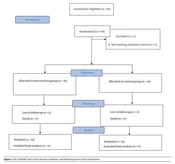
Eighty out of 82 patients who met the inclusion criteria were enrolled in the study and divided into two groups—intervention and control—of 40 each, using the block randomization method. In the present study, two tools were used to collect data.
3.1. Data Collection Tools
In the present research, two tools were used to collect data. To collect QOL data, the standard questionnaire for the quality of life of chronic kidney patients (KDQOL), whose validity and reliability were established by Pakpour et al. (17), was used. This questionnaire contains 80 items, of which 36 items are related to the general dimension and 44 items are related to the specific dimension of the quality of life of dialysis patients. The method of scoring the QOL questionnaire followed the standard instructions of the questionnaire. Except for the part related to pain, where a lower score indicates a better condition of the patient both in terms of pain and the impact of pain on the patient's daily activities, a lower score in other sections indicates poor performance, while a higher score indicates optimal performance in that dimension. In this scale, the score for each question ranges from 0 to 100, where 100 indicates the highest amount and 0 indicates the lowest amount. The mentioned questionnaire was validated in Iran by Pakpour et al., and Cronbach's alpha in different dimensions of the questionnaire ranged from 0.73 to 0.93 (17). The total quality of life score for each patient was obtained by summing the scores of 36 questions. The data were classified into three groups: Poor (0 - 30), medium (30 - 60), and good (60 - 100).
To measure the effect of the educational program on the constructs of the PRECEDE-PROCEED model (predisposing factors: Knowledge, attitude, self-efficacy; enabling factors: Health insurance, access to a nutritionist, access to transportation, access to a sports space; reinforcing factors: Support from family members and friends, and help from nurses in the dialysis department), a questionnaire was designed by the researcher. To check the content validity of the questionnaire, a panel of 10 professors of health education, nursing, nutrition, and nephrology was consulted. In the questionnaire designed by the researcher based on the constructs of the model, the content validity ratio was 0.92, and the content validity index was 0.97. Cronbach's alpha method was used to determine the internal consistency of the questionnaire. The value of Cronbach's alpha was 0.83 for awareness constructs and enabling and reinforcing factors, 0.85 for the self-efficacy questionnaire, and 0.79 for the attitude and behavior questionnaire. The overall Cronbach's alpha coefficient for the questionnaire designed by the researcher was calculated to be 0.89.
3.2. Educational Intervention
The study was conducted in two stages. In the first stage, a cross-sectional study (18), the QOL questionnaire was completed by the researcher in the form of an interview after obtaining informed consent and considering the literacy status of the patients, who were mostly illiterate. Additionally, the laboratory indicators of the patients (hemoglobin, hematocrit, phosphorus, etc.) were extracted from the checklist in the hemodialysis departments of both hospitals. The data were then analyzed to identify the structures predicting QOL, and the average score of each structure was determined separately. Based on the analysis and the results of the KDQOL, and considering the most effective structures in QOL, the second questionnaire was designed based on the constructs of the model. After calculating the validity and reliability of the PRECEDE-PROCEED model questionnaire, this questionnaire was also completed in the form of an interview, and the data were analyzed using software.
Following the analysis of the questionnaire, the educational content was designed in the form of a booklet, emphasizing the general aspects of kidney disease, diet, fluid intake restriction, care of a hemodialysis patient, and how to control the complications caused by hemodialysis. Considering that each patient undergoes dialysis three times a week, intervention group patients received educational intervention on even days, and control group patients on odd days to prevent the dissemination of information from the intervention group to the control group. The educational content was taught face-to-face by the researcher in four sessions over four weeks, referring to the hemodialysis departments.
Due to the condition of the hemodialysis patients and the need for family members to accompany them, necessary training was also provided to the patients' family members to encourage and assist the patients in implementing their care. The control group received routine training during the study. At the end of the educational intervention, the designed booklets were given to the control group patients, and the booklet file was provided to the educational supervisors of the hospitals for distribution in the hospital departments. One month after the intervention, both questionnaires were redistributed, and three months later, the laboratory indicators of the patients were extracted (Table 1).
Table 1
. Educational Content of Intervention in Educational Sessions
| The Structure Under Discussion | Educational Content | Type of Intervention | Session Number |
|---|---|---|---|
| Predisposing factors (awareness) | Increasing the awareness of patients with the functions of kidneys; increasing the awareness of patients about how to cause kidney failure; acquaintance of patients with types of kidney failure | Increasing awareness | Session one |
| Predisposing factors (awareness and attitude) | Increasing patient awareness of how to take care of vascular access; creating a positive attitude in patients towards admission; permanent vascular accesses Increasing the patient's belief in the care of a hemodialysis patient | Increasing awareness and creating attitudes | Session two |
| Enabling and predisposing factors | Empowering the patient to measure blood pressure daily; increasing patient awareness about how to provide counseling services and access to nutritional counselors; increasing patient awareness regarding food contraindications for hemodialysis patients; empowering patients regarding how to calculate the daily volume of fluids received Increasing the patient's awareness about ways to reduce potassium in foods with high potassium | Increasing awareness and necessary skills | Session three |
| Strengthening and predisposing factors | Increasing the patient's awareness about the necessary care in controlling nausea and anorexia; participation of companions of hemodialysis patients in the educational content area; presentation of educational content by the head of the hemodialysis department; increasing the patient's awareness about the control of gastrointestinal symptoms | Increasing awareness, self-efficacy and getting support from those around you | Session four |
3.3. Data Analysis
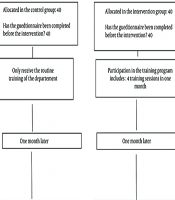
SPSS version 25 software was used for data analysis. In the cross-sectional part of the study, mean, frequency, standard deviation, and independent t-tests were used. Additionally, linear regression was employed to determine the effective structures in predicting the quality of life. The data were checked for normality by performing the Kolmogorov-Smirnov test. Proportional tests, including the independent t-test to compare the intervention and control groups and the paired t-test to examine the groups before and after the intervention, were used. For non-parametric data, non-parametric equivalents such as the Mann-Whitney and Wilcoxon tests were used (Figure 1).

Figure 1.
Consort diagram
4. Results
The average age of participants in the intervention group was 56.55 ± 15.99 years, and in the control group, it was 56.12 ± 15.22 years. Regarding the duration of dialysis, the overall average was 6.3 ± 3.05 years, with the intervention group averaging 7.85 ± 2.99 years and the control group averaging 4.92 ± 2.36 years (P < 0.001). The average number of family members of patients undergoing hemodialysis was 4.75 ± 1.47, showing no significant difference between the two groups (P = 0.453) (Table 2).
Table 2.
Comparison of Quantitative and Qualitative Demographic Characteristics of Hemodialysis Patients in Two Intervention and Control Groups a
| Variables | Intervention | Control | P-Value |
|---|---|---|---|
| Gender | 0.371 b | ||
| Male | 22 (55) | 22 (55) | |
| Female | 18 (45) | 18 (45) | |
| Education status | 0.001 b | ||
| Less than a high school diploma | 34 (85) | 31 (77.5) | |
| High school diploma | 5 (12.5) | 2 (5) | |
| Associate of arts | 1 (2.5) | 3 (7.5) | |
| Bachelor | 0 (0) | 4 (10) | |
| Less than a high school diploma | 34 (85) | 31 (77.5) | |
| Economic status | 0.001 b | ||
| Good | 1 (2.6) | 1 (2.6) | |
| Average | 16 (41) | 20 (52.6) | |
| Poor | 22 (56.4) | 17 (44.7) | |
| Employment status | 0.001 b | ||
| Employed | 4 (10.3) | 15 (37.5) | |
| Unemployed | 9 (23.1) | 1 (2.5) | |
| Retired | 8 (20.5) | 6 (15) | |
| Others | 18 (46.2) | 18 (45) | |
| Health status | 0.049 b | ||
| Very weak | 10 (25) | 12 (30) | |
| Weak | 11 (27.5) | 10 (25) | |
| Fair | 17 (42.5) | 17 (42.5) | |
| Good | 2 (5) | 1 (2.5) | |
| Age (y) | 56.55 ± 15.99 | 56.12 ± 15.22 | 0.903 c |
| History of dialysis (y) | 7.85 ± 2.99 | 4.92 ± 2.36 | 0.001 c |
| Family members | 4.87 ± 1.52 | 4.62 ± 1.44 | 0.453 c |
a Values are expressed as No. (%) or mean ± SD.
b Chi square.
c Independent t-test.
Comparing the mean specific dimensions of QOL, the Wilcoxon test showed that the scores for symptoms and signs, the effect of kidney disease, the burden of kidney disease, cognitive factors, the quality of social interactions, sleep, staff encouragement, and patient satisfaction in the intervention group significantly increased one month after the intervention compared to before (P < 0.001). Similarly, comparing the general dimensions of quality of life, the results showed that scores for physical function, role limitation due to physical problems, pain, general health, social function, mental health, and vitality significantly increased in the intervention group one month after the intervention compared to before (P < 0.001).
Regarding the constructs of awareness, attitude, self-efficacy, behavioral factors, and reinforcing factors, the independent t-test showed no statistically significant difference between the intervention and control groups before the educational intervention. However, one month after the training, the scores of these constructs were higher in the intervention group than in the control group (P < 0.001). The paired t-test (Wilcoxon) showed that in the intervention group, the score of all constructs increased significantly one month after the training compared to before (P < 0.001), but this difference was not observed in the control group.
Regarding the quality of life score, the independent t-test showed no significant difference in the average quality of life score of the patients before the educational intervention. However, one month after the intervention, the quality of life score of the intervention group was significantly higher than that of the control group (Table 3). The paired t-test also showed a significant improvement in the quality of life score after the intervention compared to before (P < 0.001).
Table 3.
| Variables | Before the Intervention | After the Intervention | ||||
|---|---|---|---|---|---|---|
| Intervention | Control | P-Value | Intervention | Control | P-Value | |
| Awareness | 6.25 ± 3.34 | 6.17 ± 3.20 | 0.919 | 10.72 ± 1.32 | 5.94 ± 3.01 | 0.001 |
| Attitude | 36.57 ± 4.40 | 36.75 ± 3.37 | 0.842 | 43.75 ± 4.22 | 37.18 ± 3.33 | 0.001 |
| Self-efficacy | 7.97 ± 2.79 | 8.50 ± 3.40 | 0.697 | 10.91 ± 2.32 | 7.91 ± 3.26 | 0.001 |
| Behavior | 16.87 ± 4.40 | 17.17 ± 3.92 | 0.749 | 25.40 ± 3.76 | 16.64 ± 4.13 | 0.057 |
| Enabling factors | 1.77 ± 1.07 | 2.05 ± 1.08 | 0.212 | 2.67 ± 1.31 | 2.54 ± 0.99 | 0.001 |
| Reinforcing factors | 0.82 ± 0.87 | 0.85 ± 0.94 | 0.996 | 1.97 ± 0.37 | 0.78 ± 0.88 | 0.001 |
| Quality of life score | 47.05 ± 6.06 | 48.67 ± 6.36 | 0.248 | 53.69 ± 4.55 | 47.87 ± 6.72 | 0.001 |
| Dimensions of the Quality of Life Questionnaire d | ||||||
| Signs and symptoms | 38.24 ± 14.83 | 49.73 ± 16.56 | 0.002 | 73.47 ± 13.18 | 46.90 ± 16.73 | 0.001 |
| Effect of kidney disease | 20.10 ± 11.52 | 31.72 ± 16.97 | 0.001 | 44.92 ± 10.64 | 28.88 ± 17.25 | 0.001 |
| Burden of kidney disease | 32.96 ± 16.56 | 37.81 ± 17.09 | 0.151 | 38.17 ± 16.52 | 34.79 ± 18.49 | 0.410 |
| Cognitive factors | 68 ± 12.73 | 74.50 ± 9.88 | 0.064 | 72.25 ± 11.16 | 74.05 ± 10.63 | 0.802 |
| Patient satisfaction | 44.99 ± 11.44 | 44.58 ± 10.25 | 0.639 | 48.64 ± 9.11 | 44.14 ± 10.55 | 0.031 |
| Physical performance | 49.25 ± 32.11 | 51 ± 32.56 | 0.780 | 55.13 ± 30.33 | 49.72 ± 33.22 | 0.505 |
| Pain | 23.53 ± 38.3 | 41.50 ± 20.88 | 0.589 | 55.87 ± 18.67 | 42.43 ± 22.74 | 0.007 |
| Mental health | 51.00 ± 10.55 | 55.10 ± 7.78 | 0.090 | 54.10 ± 10.32 | 53.08 ± 7.32 | 0.622 |
a Values are presented as mean ± SD.
b Independent t-test.
c Paired t-test.
d Wilcoxon test.
The results of the independent t-test showed no significant difference in all laboratory indicators between the control and intervention groups before the intervention. However, after the intervention, there was a significant difference between the two groups in hemoglobin, hematocrit, creatinine, sodium, and triglyceride levels (P < 0.001). There was no significant difference in platelet count, fasting blood sugar, potassium, phosphorus, and cholesterol levels. The paired t-test showed significant improvements in hemoglobin, hematocrit, fasting blood sugar, sodium, and cholesterol levels in the intervention group after the educational intervention compared to before, while there was no significant difference in platelet count, creatinine, potassium, and phosphorus levels (Table 4).
Table 4.
| Laboratory Indicators (mg/dL) | Before the Intervention | After the Intervention | ||||
|---|---|---|---|---|---|---|
| Intervention | Control | P-Value | Intervention | Control | P-Value | |
| Hemoglobin | 10.99 ± 1.82 | 10.35 ± 1.76 | 0.949 | 11.68 ± 1.38 | 10.35 ± 1.92 | 0.001 |
| Hematocrit m | 34.83 ± 519 | 33.17 ± 5.42 | 0.531 | 35.70 ± 4.80 | 32.93 ± 5.99 | 0.001 |
| Platelet | 171.52 ± 62.94 | 176.30 ± 56.75 | 0.547 | 171.79 ± 56.61 | 170.67 ± 49.20 | 0. 959 |
| Fasting blood sugar | 120.50 ± 59.91 | 139.77 ± 64.17 | 0.252 | 111 ± 43.83 | 137.05 ± 55.47 | 0.005 |
| Creatinine | 7.45 ± 1.65 | 7.76 ± 2.95 | 0.263 | 7.38 ± 1.60 | 8.09 ± 3.09 | 0.490 |
| Sodium | 142.77 ± 3.22 | 143.57 ± 3.82 | 0.251 | 141.79 ± 2.39 | 144.27 ± 4.21 | 0.020 |
| Potassium | 5.36 ± 1.24 | 5.17 ± 1.03 | 0.414 | 5.34 ± 1.15 | 5.54 ± 0.93 | 0.681 |
| Phosphorus | 5.83 ± 1.48 | 5.24 ± 1.52 | 0.949 | 5.76 ± 1.38 | 5.66 ± 1.51 | 0.854 |
| Cholesterol | 126.32 ± 34.06 | 147 ± 31.26 | 0.531 | 122.82 ± 32.33 | 151.35 ± 28.99 | 0.007 |
| Triglyceride | 125.35 ± 61.15 | 152.20 ± 128.06 | 0.547 | 121.76 ± 52.32 | 150.13 ± 99.19 | 0.052 |
a Independent t-test.
b Paired t-test.
5. Discussion
This educational trial study was designed to determine the effect of an educational intervention based on the PRECEDE-PROCEED model on the quality of life of hemodialysis patients. The results showed that the educational intervention significantly improved the quality of life in the intervention group. This improvement can be attributed to the educational intervention based on the PRECEDE-PROCEED model, as many studies have emphasized the effect of education based on this model (19-21). The result of this study aligns with the findings of Naseri-Salahshour et al., who studied the effect of virtual nutrition education on the QOL of dialysis patients (20).
In the study by Sabzmakan et al., after conducting an educational intervention based on the PRECEDE-PROCEED model on patients’ post-vascular bypass surgery, results showed a decrease in depression, an improvement in general health, and an increase in QOL (22). Similarly, in the study by Wang et al., an educational intervention consisting of nine sessions for cardiac patients indicated the effectiveness of the PRECEDE-PROCEED model in increasing self-care, reducing depression, and increasing the QOL of these patients (21).
The results of the study showed that the average awareness score of hemodialysis patients before the educational intervention was almost the same in both the intervention and control groups. However, after the educational intervention, the average awareness score in the intervention group increased significantly, while there was no significant increase in the control group. This indicates the effectiveness of the educational intervention in increasing the awareness of patients undergoing hemodialysis.
In the study by Taqdisi et al., the average knowledge score of diabetic patients in the intervention group increased significantly compared to the control group after the educational intervention (23). Similarly, the study by Sabzmakan et al., conducted on 54 patients post-vascular bypass surgery, showed a significant increase in the average awareness score in the intervention group (22).
Regarding other constructs of the PRECEDE-PROCEED model, the average scores for attitude, behavioral factors, self-efficacy, and reinforcing factors showed significant differences between the two groups after the intervention. However, for the enabling factors construct, this difference was not observed. The increase in the average attitude score in hemodialysis patients after the educational intervention likely occurred due to the rise in their awareness following the intervention. The study by Sabzmakan et al. supports our findings (22). Similarly, in the study by Nejad et al., the attitude score of patients showed a significant improvement after four training sessions compared to before the intervention (24). The self-efficacy score also showed a statistically significant increase in the intervention group after the educational intervention. This result aligns with the interventional study by Jamshidimanesh et al., which involved four group sessions (25). Razi et al.'s study also indicated the positive effect of education on mothers' self-efficacy in dealing with danger signs in children (26). These results demonstrate that training positively impacts self-efficacy, highlighting the need for educational interventions in this area.
The score for behavioral factors also showed a significant improvement after the educational intervention compared to before. In Matin et al.'s study, behavioral factors significantly increased after the educational intervention (27). The findings of other studies were consistent with our results, showing the positive impact of educational programs on behavior improvement (27, 28). It seems that raising awareness about patient care has fostered a correct understanding of health behaviors and increased the score for behavioral factors after the educational intervention.
Before the educational intervention, there was no statistically significant difference between the two groups regarding reinforcing factors. However, one month after the intervention, the average scores of reinforcing factors showed a statistically significant difference between the two groups. In a study conducted by Mosavi et al. on 67 hemodialysis patients, the results showed a statistically significant difference between the two groups three months after the educational intervention (29). Additionally, the results of this research were not consistent with the study by Matin et al., which aimed to improve the quality of life of the elderly. One reason for this inconsistency could be the demographic characteristics of the target group in the Matin et al. study, including the lack of family and societal support for the elderly (27). In Matin et al.'s study, the mean scores for knowledge, attitude, reinforcing factors, and enabling factors showed a significant difference between the intervention and control groups after the intervention. The difference in the enabling factors structure seems to be related to the type of enabling factors in each study and their susceptibility to change through education. For example, in the study by Matin et al., only the healthy eating skill component of the enabling factors showed a significant difference after the educational intervention, while other enabling factors did not (27).
In this study, the levels of hemoglobin and hematocrit increased significantly after the intervention. Similarly, in the study by Ebrahimi et al., hemoglobin and hematocrit levels increased significantly after the educational intervention compared to before the intervention (30). A decrease in hemoglobin levels can lead to anemia, resulting in increased hospitalizations and blood transfusions. The study by Locatelli et al. found that anemia is associated with a higher mortality rate in dialysis patients. Therefore, educating patients about preventing anemia is necessary and important (31). Fasting blood sugar levels also showed a significant decrease after the educational intervention.
In the study by Bahadori et al., blood sugar levels decreased significantly after the intervention (1). Considering that many patients undergoing hemodialysis have developed kidney failure due to nephropathy caused by diabetes, controlling blood sugar is essential to prevent other complications associated with its increase. The sodium levels also decreased significantly after the intervention; a finding consistent with the study by Bahadori et al. (1). However, this finding was not in line with the study by Baraz et al. (32). The inconsistency between the findings of these two studies could be due to differences in the implementation of the educational program or the protocols of the hemodialysis machines.
Potassium levels did not decrease significantly after the intervention. Similarly, in the study by Salehi Taly et al., potassium levels did not decrease significantly after the intervention (33). The mean creatinine levels also did not decrease significantly after the intervention, which is consistent with Salehi Taly et al.'s findings (33). The mean phosphorus and triglyceride levels did not decrease statistically significantly after the intervention, which can be attributed to the insufficiency of dialysis and the difficulty patients face in adhering to dietary recommendations.
5.1. Conclusions
The educational intervention based on the PRECEDE-PROCEED model successfully improved the quality of life of patients undergoing hemodialysis in the intervention group and increased the scores of the constructs of the PRECEDE-PROCEED model. This significant increase demonstrates the success of the study in achieving its general purpose: Enhancing the QOL of patients undergoing hemodialysis. While changes in structures such as enabling factors may be difficult to achieve solely through educational interventions due to their influence on several factors, the role of education in increasing the level of awareness, attitude, and behavior of hemodialysis patients is undeniable.
5.2. Limitations
Among the limitations of the study, we can mention the low literacy level of the participants, which may have affected their ability to answer the questions accurately. Additionally, the effects of the COVID-19 pandemic on the study may have influenced the outcomes and the overall conduct of the research.
5.3. Further Research Suggestion
Recommendations for Future Research and Practice:
(1) Explore the use of other educational models and theories to enhance the effectiveness of interventions aimed at improving the quality of life of hemodialysis patients.
(2) Conduct needs assessments and cross-sectional studies to investigate the specific educational needs of hemodialysis patients.
(3) Implement various educational methods, such as group discussions, brainstorming sessions, and interactive workshops, to increase the awareness and knowledge of hemodialysis patients as much as possible.