
1. Introduction
The global population is aging rapidly. The number of adults aged 60 years and older is projected to increase from 1 billion in 2020 to 2.1 billion by 2050 (1). Aging is accompanied by declines in organ and immune function, increasing susceptibility to cardiovascular, metabolic, and psychological conditions (2). Hypertension affects nearly 50% of individuals over 50 years of age and contributes to stroke, heart failure, and kidney disease (3, 4).
Psychological well-being in older adults is also affected by isolation, loss of self-esteem, and depressive symptoms (5). Anxiety affects 10 – 20% of older adults and impairs quality of life (6). Sleep disturbances, particularly insomnia, are common and have been linked to cognitive decline, emotional instability, and chronic complications (7-9).
Polypharmacy, adverse drug reactions, and declining drug metabolism can hinder medication use in this population (2, 9), increasing the need for safe, cost-effective non-pharmacological approaches (2, 10). Developed by Edmund Jacobson in the 1920s, Progressive Muscle Relaxation (PMR) is a mind-body practice in which physical relaxation leads to mental tranquility (11, 12). It involves the systematic tensing and releasing of major muscle groups (5, 9).
PMR may regulate the autonomic nervous system by stimulating parasympathetic activity, thereby decreasing heart rate and blood pressure (3, 4). Reduced sympathetic drive and cortisol levels further promote calmness (2, 11). Because it requires no specialized equipment or physical strength, PMR can be adapted for older adults with varied physical capabilities (10, 12). However, its safety profile has not been systematically established, as adverse events were not consistently reported or extracted in most primary studies. This limitation is discussed further in the Limitations section of this review.
The existing literature associates PMR with lower systolic and diastolic blood pressure (3, 4, 13); improvements in depression, anxiety, happiness, and life satisfaction (5, 11, 14); and better sleep (8, 15, 16). Some studies have also reported reduced head pain in patients with hypertension and reduced fatigue in patients undergoing hemodialysis (11, 17).
Limitations of the existing literature include the frequent use of pre-experimental designs without control groups (4, 14) and heterogeneous PMR protocols (10 – 45-minute sessions; 3 days to 12 weeks), which complicate the determination of optimal parameters (10, 18, 19). Most studies address a single outcome (2). Previous reviews have also been narrower in scope: a recent scoping review included 10 studies (2), whereas a systematic review addressed adults broadly (10). A gap therefore remains in mapping the full range of physical and psychological outcomes of PMR specifically in adults aged 60 years and older across healthcare settings.
To address this gap, the present scoping review maps 45 primary studies across cardiovascular stability, psychological well-being, sleep, pain, and functional adaptation in community settings, nursing homes, and hospitals. It classifies intervention types into standalone PMR, PMR-plus-cointervention, and PMR-as-comparator; constructs a standalone-PMR sensitivity map to improve attribution; provides a citation-overlap matrix to quantify overlap with prior reviews; applies criterion-level MMAT 2018 appraisal; and synthesizes the direction of effect without vote-counting significance. The Population, Concept, and Context (PCC) question guiding this review is as follows: What are the extent and characteristics of the evidence (Concept) regarding PMR use in adults aged 60 years and older (Population) across healthcare settings (Context)?
2. Methods
The review followed the Arksey and O'Malley framework, as refined by Levac et al. (20), and current scoping review guidance (21, 22). Screening, extraction, and reporting followed PRISMA-ScR (23).
Rationale for including secondary reviews. Secondary reviews were included specifically for contextual evidence mapping rather than for primary outcome synthesis. Their purpose was threefold: 1) to situate the present scoping review within the existing evidence landscape; 2) to identify primary studies already synthesized elsewhere, thereby enabling a citation-overlap audit; and 3) to distinguish between evidence sources (primary vs secondary) so that no secondary review would be counted as primary evidence. Accordingly, the primary studies included in each secondary review were individually identified, listed, and cross-checked against the present set of primary studies, and an overlap matrix was constructed to quantify citation overlap (Table 1). Secondary reviews were excluded from all primary evidence counts, from the standalone PMR sensitivity map, and from MMAT appraisal. Therefore, all quantitative syntheses, direction-of-effect classifications, and study-design distributions reported in this review were derived exclusively from the 45 primary studies.
Table 1.
Citation Overlap of Secondary Reviews a
| Secondary Review | Relevant Denominator for Overlap | Confirmed Overlaps | Overlap Proportion |
|---|---|---|---|
| Asriadi et al. (2) (2026) | 10 primary studies included in their Table 1 | 1 — Goksin & Aşiret (2021) (24) | 1/10 = 10.0% |
| Rini et al. (11) (2025) | 5 primary-study citations b | 0 | 0% |
| Jha et al. (25) (2018) | 25 individually listed citations c | 1 — Nalawade & Nikhade (2016) (26) | 1/25 = 4.0% |
| Apriany & Aljaberi (16) (2024) | 3 PMR studies d | 2 — Sutrisno et al. (2022) (9); Arianti & Novera (2019) (10) | 2/3 = 66.7% |
| Overall | Review-specific denominators; not pooled | 4 confirmed overlaps | Not pooled |
a Denominators are review-specific. Percentages are not pooled. Abbreviation: PMR, progressive muscle relaxation.
b Rini et al. (11) list six citations, including one secondary review, so five primary-study citations form the denominator.
c Jha et al. (25) state that 26 studies were evaluated, but only 25 are individually listed.
d Apriany & Aljaberi (16) list six articles, of which three are PMR studies; overlap is calculated against those three PMR studies only.
2.1. Protocol Registration
The protocol was registered on OSF (https://osf.io/98b3r) on July 30, 2026, after the search conducted on March 15, 2026. Registration was retrospective, partly because of temporary international internet disruptions in Iran. The prespecified components were the PCC framework, eligibility criteria, search strategy, data extraction, and narrative synthesis. The deviations from the protocol were as follows: 1) inclusion of secondary reviews for contextual mapping; 2) MMAT appraisal; and 3) restriction of Google Scholar searching to the first 20 pages. No other amendments were made. The retrospective registration is acknowledged as a methodological limitation.
2.2. Eligibility Criteria
Inclusion criteria: 1) adults aged 60 years or older; 2) PMR alone or combined with other interventions, with at least one physical or psychological outcome; 3) community, primary care, nursing home, or hospital settings; 4) RCTs, quasi-experimental studies, pre-experimental studies, and case studies as primary evidence; secondary reviews were also eligible, but solely for contextual evidence mapping and citation-overlap assessment, and were not counted as primary evidence; 5) publication in English or Persian, 2015 – 2026; 6) accessible full text; and 7) human participants.
Multiple reports from the same underlying study were grouped when the population, intervention, and setting matched. Reports with unclear relationships were treated separately, and this was documented. No multiple publications were identified among the 45 primary studies.
Minimum PMR content: systematic tensing and releasing of major muscle groups, consistent with Jacobson's technique.
Interventions were classified into three mutually exclusive categories:
Standalone PMR (n = 35): PMR as the sole active intervention.
PMR-plus-cointervention (n = 7): PMR plus at least one other active component (e.g., deep breathing, music, activity schedule, guided imagery, or warm foot soak).
PMR-as-comparator (n = 3): PMR compared with another active intervention (e.g., taVNS, sleep restriction therapy, or laughter therapy).
Sensitivity map: restricted to standalone PMR and presented by outcome. Cointervention and comparator studies were reported separately and were not pooled with standalone findings.
A citation-overlap matrix covered primary studies that were individually identifiable within the four secondary reviews. Apriany & Aljaberi (16) state that nine articles were selected but list only six in their Article Analysis table; therefore, overlap for the three unlisted articles was not imputed.
Exclusion criteria: 1) studies including participants younger than 60 years or lacking separable data for those aged 60 years or older; 2) non-PMR interventions; 3) feasibility-only outcomes; 4) preclinical studies, protocols, abstracts, editorials, and unpublished theses; 5) risk of double-counting; and 6) publications in languages other than English or Persian, or with inaccessible full text.
2.3. Search Strategy
Searches covered PubMed, Google Scholar, Scopus, Web of Science, Cochrane Library, SID, and Magiran (January 2015 – March 2026). We used population, PMR, and context blocks combining controlled vocabulary, free-text terms, Boolean operators, and truncation. PMR terms included "progressive muscle relaxation," "progressive muscular relaxation," "Jacobson relaxation," "Jacobson's progressive relaxation," "Jacobson's progressive muscle relaxation," "JPMR," and "PMR." Population terms included "older adults," "elderly," "aged," "geriatric," "senior," and "60 years and older." Context terms included "community," "nursing home," "hospital," "primary care," "assisted living," and "long-term care." The full search strings are provided in Supplementary Table S1.
Google Scholar stopping rule: Because the Google Scholar retrieval interface is not reproducible, the first 20 relevance-ranked pages (approximately 200 records) were screened. This pragmatic rule was not prespecified and is acknowledged as a limitation. Google Scholar records were cross-checked against the other databases to identify unique records.
Search date: All databases were searched on March 15, 2026. No update search was performed.
Supplementary searching: Reference-list screening, forward-citation searching, and trial-register searches were not performed and are acknowledged as limitations.
2.4. Screening and Data Extraction
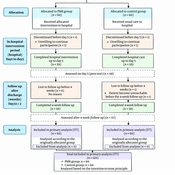
All records were imported into EndNote and deduplicated. Two independent reviewers screened titles and abstracts and subsequently full texts. Disagreements were resolved through discussion or by consulting an additional reviewer. Inter-rater agreement was not quantified using a formal statistic (eg, Cohen's kappa); this is acknowledged in the Limitations section. To ensure consistency, both reviewers used a standardized screening form and applied the same eligibility criteria, and any unresolved discrepancy was arbitrated by a third reviewer. The standardized extraction form covered bibliographic information; study design and MMAT; sample characteristics; intervention type, duration, frequency, session length, muscle groups, supervision, delivery, and comparator; and outcome, instrument, follow-up, adherence, adverse events, attrition, and effect estimates. Selection details and full-text exclusions are shown in Figure 1.
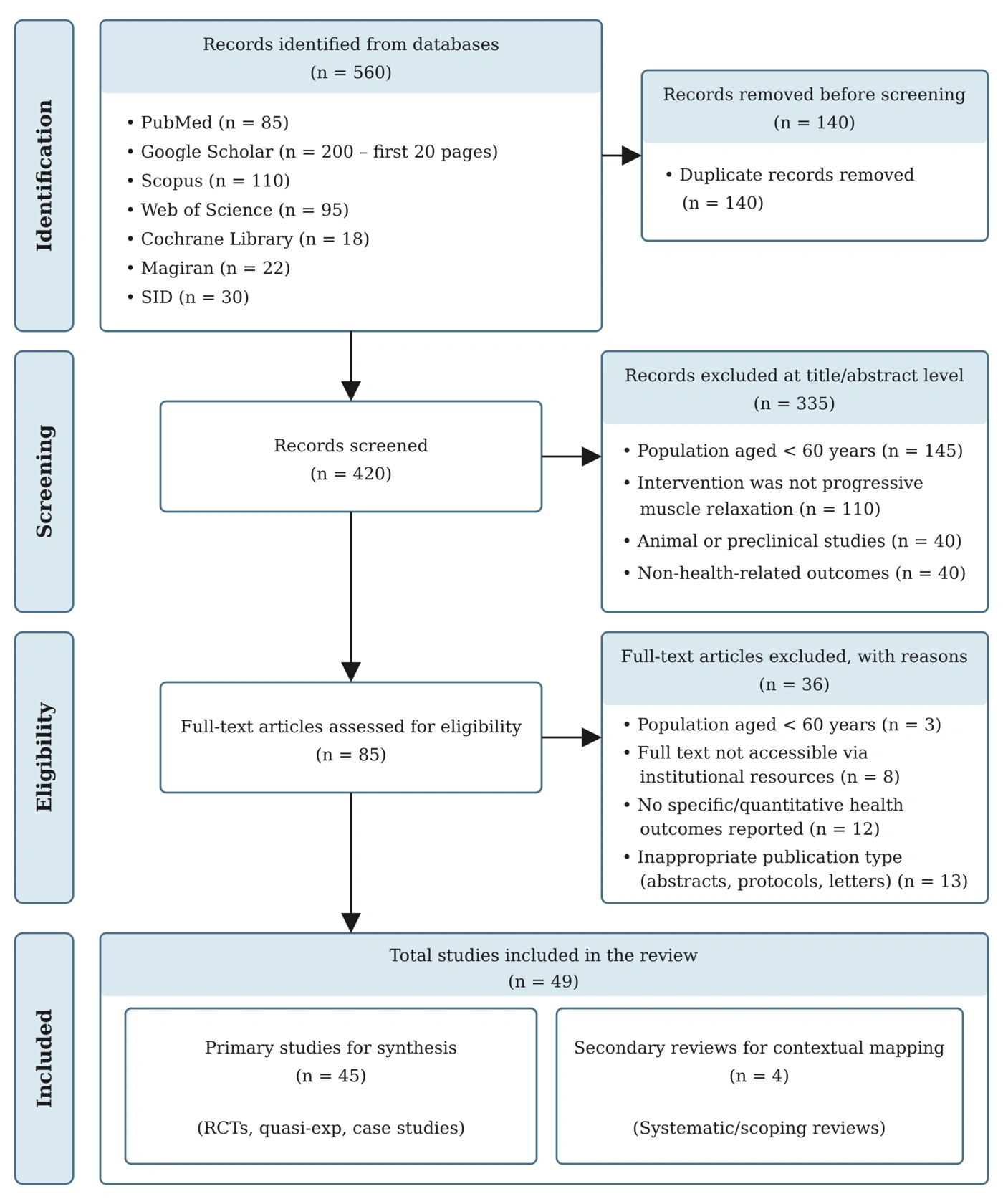
Figure 1.
PRISMA-ScR flow diagram of the study selection process.
2.5. Data Synthesis and Presentation
Data were classified by outcome and summarized in tables. The narrative synthesis considered the direction of effect, study design, intervention type, and MMAT criterion-level concerns rather than vote-counting by statistical significance. Statistical significance was recorded within the direction-of-effect assessment but was not used to weight or rank studies.
The primary outcome was defined as an outcome explicitly stated as primary or main in the original study. "Any outcome" includes primary, secondary, and exploratory outcomes.
Setting definitions:
Community = private homes, community daycare centers, senior citizen clubs, or primary care. Nursing home = institutional long-term care, elderly or social homes, or assisted living. Hospital = inpatient units, hemodialysis units, or hospital-based outpatient clinics.
Master dataset: Table 2 presents the core characteristics of the 45 primary studies. Detailed charting of participants, interventions, comparators, doses, and outcomes is provided in Supplementary Table S3, using Study IDs S01–S45.
Table 2.
Characteristics of 45 Primary Studies a
| Study ID (Reference) | Author (Y) | Age, (y) | Clinical Condition/Population | Country | Design | Sample (n) | Intervention Type | Setting | Comparator |
|---|---|---|---|---|---|---|---|---|---|
| S01 (27) | N. Siva Subramanian (2026) | 60 | N/R | India | Quasi-exp | 100 | Standalone PMR | N/R | N/R |
| S02 (28) | Fatemeh Khorashadizadeh et al. (2024) | N/R | Hospitalized older adults | Iran | N/R | N/R | Standalone PMR | N/R | N/R |
| S03 (6) | Milka Rajiv Devraj (2024) | N/R | N/R | India | One-group pre/post | 80 (40 + 40) | Standalone PMR | Community | Control group |
| S04 (13) | Zahra Asgari Tapeh (2024) | N/R | N/R | Iran | Quasi-exp | 34 | Standalone PMR | Nursing home | N/R |
| S05 (29) | Vignesh Srinivasan (2024) | N/R | Older health care workers; post-COVID-19 | India | Two-group comparative | 42 | PMR as Comparator | N/R | taVNS vs PMR |
| S06 (30) | Smrutishree Priyadarsini Dalai (2025) | N/R | N/R | India | One-group pre/post | 60 | Standalone PMR | Nursing home | N/R |
| S07 (31) | Pauline Sharmila (2020) | 60 – 70 | N/R | India | N/R | 60 | Standalone PMR | Nursing home | N/R |
| S08 (32) | Ajay Kumar Ghodela (2019) | N/R | N/R | India | Quasi-exp | 50 | Standalone PMR | N/R | N/R |
| S09 (7) | Josphen Youssef Gaied Abdelsaid (2019) | N/R | N/R | Egypt | N/R | 60 | Standalone PMR | Nursing home | N/R |
| S10 (33) | G. S. Tak (2016) | N/R | N/R | India | Quasi-exp | 60 (30 + 30) | Standalone PMR | Nursing home | Control group |
| S11 (19) | N. Kalra (2015) | N/R | Hospitalized older adults | N/R | Quasi-exp | 60 (30 + 30) | PMR + cointervention | N/R | N/R |
| S12 (34) | Rizky Erwanto (2018) | N/R | N/R | Indonesia | Quasi-exp | 40 | PMR + cointervention | Nursing home | N/R |
| S13 (24) | Ilknur Göksin & Güler Duru Aşiret (2021) | N/R | N/R | Turkey | RCT | 49 (21 + 28) | Standalone PMR | N/R | Control group |
| S14 (5) | Ahmad Hayati (2020) | N/R | N/R | Iran | Quasi-exp | 76 (38 + 38) | Standalone PMR | N/R | Control group |
| S15 (35) | Jayapriya R. (2016) | N/R | N/R | India | Quasi-exp | N/R | PMR + cointervention | N/R | N/R |
| S16 (26) | Tejal C. Nalawade (2016) | 60 – 85 | N/R | India | Experimental | 30 | Standalone PMR | Community | N/R |
| S17 (36) | Kiran Kumari (2023) | N/R | N/R | N/R | Quasi-exp | 50 | Standalone PMR | Nursing home | N/R |
| S18 (37) | W. Jayarathne (2016) | 65 | Insomnia | Sri Lanka | Experimental | 98 (48 + 50) | PMR + cointervention | Nursing home | N/R |
| S19 (38) | Dyah G. R. Kareri (2020) | N/R | N/R | Indonesia | Pre-exp | 19 | Standalone PMR | Nursing home | N/R |
| S20 (18) | Aziza Mahmoud Boughdady (2024) | N/R | End-stage renal failure / hemodialysis | Egypt | Quasi-exp | 61 | Standalone PMR | Hospital | N/R |
| S21 (10) | Diana Arianti (2019) | N/R | Insomnia | Indonesia | Pre-exp | 15 | Standalone PMR | N/R | N/R |
| S22 (39) | Desi Natalia Trijayanti Idris (2019) | N/R | Insomnia | Indonesia | Pre-exp | 14 | Standalone PMR | Nursing home | N/R |
| S23 (40) | Reham Magdy Mohammed Abd Elsalam (2020) | 60 | N/R | Egypt | N/R | 50 (25 + 25) | PMR as Comparator | Nursing home | Sleep restriction therapy vs PMR |
| S24 (41) | Niswa Salamung (2025) | N/R | N/R | Indonesia | Pre-exp | 32 | Standalone PMR | Nursing home | N/R |
| S25 (42) | Erna Irawan (2024) | N/R | N/R | Indonesia | Quasi-exp | 15 | Standalone PMR | N/R | N/R |
| S26 (9) | Sutrisno Sutrisno (2022) | N/R | Insomnia | Indonesia | Pre-exp | 30 | Standalone PMR | N/R | N/R |
| S27 (17) | Desi Natalia Trijayanti Idris (2020) | N/R | Insomnia | Indonesia | Quasi-exp | 28 (14 + 14) | PMR as Comparator | Nursing home | Laughter therapy vs PMR |
| S28 (8) | Suhendra Agung Wibowo (2025) | 60 – 90 | N/R | N/R | Pre/post | 20 | Standalone PMR | Nursing home | N/R |
| S29 (43) | Nanda Satria (2023) | N/R | N/R | N/R | Pre-exp | N/R | Standalone PMR | N/R | N/R |
| S30 (21) | Cemile Kütmeç Yilmaz (2021) | N/R | N/R | Turkey | RCT | 45 (21 + 24) | Standalone PMR | Nursing home | Control group |
| S31 (44) | Mohsen Shahriari (2017) | N/R | Breast or prostate cancer | Iran | RCT | 50 (25 + 25) | PMR + cointervention | N/R | Control group |
| S32 (45) | Ali Hassanpour Dehkordi (2016) | N/R | N/R | Iran | Quasi-exp | 60 (30 + 30) | Standalone PMR | N/R | Control group |
| S33 (46) | Ali Hassanpour Dehkordi & Amir Jalali (2015) | N/R | N/R | Iran | RCT | 60 (30 + 30) | Standalone PMR | N/R | Control group |
| S34 (14) | Nurhayati (2025) | N/R | Hypertension | Indonesia | Pre-exp | 38 | Standalone PMR | Nursing home | N/R |
| S35 (4) | Mohammad Fahrul Arifin (2025) | N/R | Hypertension | Indonesia | Pre-exp | 30 | Standalone PMR | N/R | N/R |
| S36 (3) | Wardah Fauziah (2024) | N/R | Hypertension | Indonesia | Quasi-exp | 60 (30 + 30) | Standalone PMR | N/R | Control group |
| S37 (15) | Ria Anggraini (2024) | N/R | Hypertension | Indonesia | Quasi-exp | 39 | Standalone PMR | Nursing home | N/R |
| S38 (47) | Paramita Ratna Gayatri (2023) | N/R | Hypertension | Indonesia | N/R | 62 (31 + 31) | Standalone PMR | N/R | Control group |
| S39 (48) | Susan Susyanti (2022) | N/R | Hypertension | Indonesia | Case study | N/R | Standalone PMR | Community | N/R |
| S40 (49) | Siti Fadlilah (2017) | N/R | Hypertension | Indonesia | Quasi-exp | 40 (20 + 20) | PMR + cointervention | N/R | Control group |
| S41 (50) | Niken Fitri Astuti (2019) | N/R | Hypertension | Indonesia | Quasi-exp | 100 (50 + 50) | PMR + cointervention | Community | N/R |
| S42 (51) | Eqlima Elfira (2020) | N/R | N/R | Indonesia | Pre-exp | 33 | Standalone PMR | N/R | N/R |
| S43 (52) | Moch. Azzam Miftahurroziqin (2024) | 66 | Chronic pain; hypertension | Indonesia | Case study | 1 | Standalone PMR | Nursing home | N/R |
| S44 (12) | Widiastuti Murdo Saputri (2025) | N/R | Hypertension | N/R | Case study | 1 | Standalone PMR | Nursing home | N/R |
| S45 (53) | Arjuna Azazi (2025) | N/R | N/R | Indonesia | Quasi-exp | 138 (67 + 71) | Standalone PMR | Community | N/R |
a Setting: community (private homes, community daycare centers, senior citizen clubs, primary care); nursing home (institutional long-term care, elderly/social homes, assisted living); hospital (inpatient units, hemodialysis, hospital-based outpatient clinics). S09 was in assisted living and classified as nursing home. Studies with Setting = N/R are not included in the setting distribution counts. Abbreviations: N/R, not reported; PMR, progressive muscle relaxation; RCT, randomized controlled trial; Quasi-exp, quasi-experimental; Pre-exp, pre-experimental; taVNS, transcutaneous auricular vagus nerve stimulation.
Citation and study identification: Reference numbers identify studies in the main text and evidence tables. Study IDs (S01–S45) are used in the Supplementary Tables and Table 3. Boughdady (18) corresponds to S20 throughout the article and supplements.
Table 3.
Outcome Domains, Direction of Effect, and MMAT Concerns a
| Study ID (Reference) | Outcome Domain | Direction of Effect | MMAT Concern |
|---|---|---|---|
| S01 (27) | Anxiety | Favorable — Anxiety mean score decreased from 12.6 ± 3.8 to 7.1 ± 3.6; mean reduction 5.5 points | C4: No control group |
| S02 (28) | Anxiety; vital signs | Not interpretable — Not reported | C4: Confounders not clearly addressed |
| S03 (6) | Anxiety | Favorable — Significant decrease in anxiety after intervention (P = 0.00001) | C4: No control group |
| S04 (13) | Anxiety; happiness | Favorable — Post-intervention anxiety 4.91 ± 1.96 and happiness 37.18 ± 7.92; both significantly improved (P < 0.001) | C4: No control group |
| S05 (29) | Anxiety; sleep disturbances | Comparator — taVNS vs PMR; taVNS group P = 0.001 | C4: No blinding reported |
| S06 (30) | Anxiety | Favorable — Mean difference 2.366; t = 31.363; P = 0.000; anxiety reduced | C4: No control group |
| S07 (31) | Anxiety | Not interpretable — Not reported | C4: Baseline differences |
| S08 (32) | Anxiety; depression | Not interpretable — Baseline: 28% moderate anxiety and 100% depressive symptoms; post-intervention result not reported | C4: No control group |
| S09 (7) | Blood pressure; anxiety; stress | Favorable — Significant differences between study and control groups in BP, anxiety, and stress after the program | C4: Baseline differences in age |
| S10 (33) | Anxiety | Favorable — Significant pre/post difference in experimental group; anxiety associated with gender (P < 0.05) | C4: Baseline differences |
| S11 (19) | Anxiety; psychological distress; sleep quality | Favorable (cointervention) — Significant improvements in experimental group | C4: Non-concurrent control |
| S12 (34) | Stress | Favorable (cointervention) — Mean stress score decreased by about 4.4 points; P = 0.000 | C4: No control group |
| S13 (24) | Depression; adaptation | Favorable — Significant differences between intervention and control groups (P < 0.05) | C4: Confounders not clearly addressed |
| S14 (5) | Depressive symptoms | Favorable — Depression score 7.13 ± 1.14 to 5.55 ± 0.98 in intervention group (P < 0.001) | C4: No control group |
| S15 (35) | Depression; activities of daily living | Favorable (cointervention) — Depression 17.27 to 12.73 and ADL 2.87 to 4.33 (both P < 0.001) | C4: Baseline comparability not fully reported |
| S16 (26) | Depressive symptoms; QoL enjoyment/satisfaction | Not interpretable — No numeric effect reported in bank | C4: No control group |
| S17 (36) | Sleep quality; depression | Favorable — Significant improvement in sleep quality and reduction in depression symptoms (P < 0.05) | C4: Unclear |
| S18 (37) | Insomnia; sleep quality | Favorable (cointervention) — Significant reduction in insomnia in experimental group, not control | C4: No control group |
| S19 (38) | Sleep quality | Favorable — Sleep quality improved; P = 0.002 | C4: No control group |
| S20 (18) | Fatigue; sleep quality | Not interpretable — Quantitative result not captured in master database | C2: Measurement not fully described; C4: No control group |
| S21 (10) | Insomnia | Favorable — Mean insomnia score 6.467 ± 2.416; P = 0.000 | C4: No control group |
| S22 (39) | Insomnia | Favorable — Significant effect on insomnia; P = 0.004, z = 2.850 | C4: No control group |
| S23 (40) | Sleep quality | Comparator — SRT 63.0 ± 5.05 vs PMR 44.50 ± 5.50; P < 0.001 (favors SRT) | C4: No control group |
| S24 (41) | Sleep quality | Favorable — P = 0.001; poor sleep 56.3% before and good sleep 87.5% after | C4: No control group |
| S25 (42) | Sleep quality | Favorable — PSQI mean 9.93 to 4.0; t = 6.615; P = 0.000 | C4: No control group |
| S26 (9) | Insomnia | Favorable — Insomnia mean 13.10 ± 5.08 to 11.07 ± 5.09; P = 0.001 | C4: No control group |
| S27 (17) | Insomnia | Comparator — Laughter P = 0.002 and PMR P = 0.004 (favors laughter) | All criteria met |
| S28 (8) | Sleep quality | Favorable — P = 0.001; good sleep increased from 56.3% to 87.5% | C4: Unclear |
| S29 (43) | Sleep quality | Not interpretable — Not clearly reported | C4: No control group |
| S30 (21) | Adaptation to old age; quality of life | Favorable — PMR group improved significantly on adaptation and Nottingham Health Profile (P < 0.001) | C4: No blinding reported |
| S31 (44) | Quality of life; physical functioning | Favorable (cointervention) — Significant improvement (P < 0.001) | C4: No blinding reported |
| S32 (45) | Social performance; quality of life | Favorable — PMR associated with enhanced quality of life | C4: Confounders not addressed |
| S33 (46) | Fatigue; quality of life | Favorable — Quality of life increased significantly and fatigue severity decreased significantly | C4: No blinding reported |
| S34 (14) | Blood pressure | Favorable — Severe hypertension category decreased; P = 0.000 | C4: No control group |
| S35 (4) | Systolic/diastolic blood pressure | Favorable — Systolic BP 143.33 before to median 132.67 after; P = 0.000 | C4: No control group |
| S36 (3) | Systolic blood pressure | Favorable — SBP intervention 157 to 136 mm Hg; control 149 to 134; P = 0.000 | All criteria met |
| S37 (15) | Blood pressure | Not interpretable — Stage-1 23 (59%) and stage-2 16 (41%) before; post detail not fully captured | C4: No control group |
| S38 (47) | Blood pressure | Not interpretable — BP varied across groups; no further numeric result captured | C4: No control group |
| S39 (48) | Hypertension / nursing care | Not interpretable — Case study; no quantitative result reported | C4: No control group |
| S40 (49) | Systolic/diastolic blood pressure | Favorable (cointervention) — SBP/DBP decreased 9.50/1.50 mm Hg; between-group P = 0.018/0.023 | C4: No control group |
| S41 (50) | Blood pressure | Favorable (cointervention) — SBP decreased 29.2 mm Hg; DBP decreased 16.2; SBP P < 0.001, DBP P > 0.167 | C4: Confounders not addressed |
| S42 (51) | Functional status | Null — No significant effect (P = 0.085) | C4: No control group |
| S43 (52) | Pain; blood pressure | Favorable — Pain 4.4 – 3.4 NRS; SBP 155.7 – 142.8; DBP 94.2 – 90 mm Hg | C4: No control group |
| S44 (12) | Headache pain; blood pressure | Favorable — BP 158/100 – 140/90; headache pain 6 – 2 | C4: No control group |
| S45 (53) | Anxiety | Favorable — Anxiety significantly decreased (P = 0.0001); between-group P = 0.0001 | C2: Representativeness unclear; C4: Baseline differences |
a Direction: favorable = intended outcome direction; null = explicit nonsignificant/no effect; mixed = explicitly contradictory; not interpretable = insufficient verified result; comparator = PMR used as comparator. MMAT concern refers to the most relevant criterion-level issue for each study (C2, representativeness; C4, confounders). Abbreviations: MMAT, Mixed Methods Appraisal Tool; PMR, progressive muscle relaxation; QoL, quality of life; BP, blood pressure; SBP, systolic blood pressure; DBP, diastolic blood pressure; taVNS, transcutaneous auricular vagus nerve stimulation; SRT, sleep restriction therapy; PSQI, Pittsburgh Sleep Quality Index; ADL, activities of daily living; NRS, numeric rating scale.
Separation of evidence sources: Primary studies and secondary reviews were treated as distinct evidence sources throughout the review. Secondary reviews were not included in any primary evidence count, were not entered into the standalone-PMR sensitivity map, and were not appraised with the MMAT. Their primary-study citations were extracted individually and audited against the present primary-study set using a citation-overlap matrix (Table 1). This separation ensured that the 45 primary studies constituted the sole basis for outcome synthesis, direction-of-effect classification, and methodological appraisal, whereas the four secondary reviews served only to contextualize the present evidence map and to quantify overlap with prior syntheses.
2.6. Citation-Overlap Assessment
A citation-overlap matrix (Table 1) included primary-study citations that were individually identifiable in the four secondary reviews. This matrix was used to identify which primary studies had already been synthesized elsewhere and to quantify the degree of overlap with the present primary-study set. Secondary reviews were excluded from primary evidence counts; only their individually identifiable primary studies were entered into the matrix.
Asriadi et al. (2): All 10 primary studies were extracted from Table 1 of their review.
Jha et al. (25) stated that 26 studies were evaluated, but only 25 were individually listed. The overlap denominator was therefore based on the 25 identifiable citations.
2.7. Methodological Quality Appraisal
Two reviewers independently applied the MMAT 2018 at the criterion level, without calculating summed scores or assigning an overall ranking. Disagreements in criterion-level judgments were resolved through discussion; agreement statistics were not calculated, which is acknowledged as a limitation. The five criteria were C1 (sampling strategy), C2 (representativeness), C3 (measurement), C4 (confounders), and C5 (intervention administration/nonresponse bias). The results are presented in Supplementary Table S2. Secondary reviews were not appraised.
3. Results
The mapping included 49 publications (45 primary studies and 4 secondary reviews). The 45 primary records comprised standalone PMR, PMR-plus-intervention, and PMR-as-comparator studies. All primary-study tables were reconciled with these 45 records.
3.1. PRISMA-ScR Flow Diagram
Of the 560 records identified, 140 duplicates were removed, and 420 were screened; 335 were excluded at the title/abstract level. Of the 85 full texts assessed, 36 were excluded for the following reasons: aged < 60 years (n = 3), full text inaccessible (n = 8; e.g., Bagheri et al. 2021; Misbah & Prio 2019; Sucu & Çitil 2024; Ikemata & Momose 2017), no quantitative health outcomes (n = 12), and inappropriate publication type (n = 13). The final set comprised 49 publications (45 primary and 4 secondary). Three studies were excluded for not meeting the ≥ 60-year criterion: Kusumawaty (2021), Megawati (2022), and Hasina (2024).
3.2. Intervention Type, Study Design, and Setting Distribution
Among the 45 primary studies, 35 evaluated standalone PMR, 7 evaluated PMR-plus-cointervention, and 3 used PMR-as-comparator. The study designs were as follows: RCT (n = 4), quasi-experimental (n = 19), pre-experimental (n = 11), experimental (n = 2), case study (n = 3), two-group comparative intervention study (n = 1), one-group pre-test/post-test (n = 1), and design not reported (n = 4).
Standalone PMR (n = 35): S01, S02, S03, S04, S06, S07, S08, S09, S10, S13, S14, S16, S17, S19, S20, S21, S22, S24, S25, S26, S28, S29, S30, S32, S33, S34, S35, S36, S37, S38, S39, S42, S43, S44, S45.
PMR-plus-cointervention (n = 7): S11, S12, S15, S18, S31, S40, S41.
PMR-as-comparator (n = 3): S05, S23, S27.
Study design:
RCT (n = 4): S13, S30, S31, S33
Quasi-experimental (n = 19): S01, S03, S04, S07, S10, S11, S12, S14, S15, S17, S20, S25, S27, S32, S36, S37, S40, S41, S45
Pre-experimental (n = 11): S08, S19, S21, S22, S24, S26, S28, S29, S34, S35, S42
Experimental (n = 2): S16, S18
Case study (n = 3): S39, S43, S44
Two-group comparative intervention study (n = 1): S05
One-group pre-test/post-test (n = 1): S06
Design not reported (n = 4): S02, S09, S23, S38
Setting:
Community (n = 23): S03, S13, S14, S15, S16, S21, S22, S23, S25, S26, S28, S32, S33, S35, S36, S37, S38, S39, S40, S41, S42, S43, S45
Nursing home (n = 15): S04, S06, S07, S08, S09, S10, S12, S17, S18, S19, S24, S27, S30, S34, S44
Hospital (n = 5): S02, S05, S11, S20, S31
Not reported (n = 2): S01, S29
Publications from the same underlying study were grouped when identifiable by a shared population, intervention, and setting. Publications with unclear relationships were treated separately. No multiple publications were identified among the 45 primary studies.
3.3. Citation-Overlap Summary
The four secondary reviews were audited using review-specific denominators. Four confirmed overlaps were identified: one from Asriadi et al. (2), one from Jha et al. (25), and two from the PMR subset of Apriany & Aljaberi (16). Rini et al. (11) contains five primary-study citations and one secondary-review citation; the latter was excluded from the primary denominator. Apriany & Aljaberi list three PMR and three CBT studies; overlap assessment was restricted to the three PMR studies. Percentages were not pooled.
3.4. Methodological Quality: Criterion-Level Concerns
The confounders criterion (C4) was the most frequent concern, rated No or Unclear in 43 studies (29 No; 14 Unclear), whereas 2 studies were rated Yes for C4. Other concerns included absent control groups, nonconcurrent or nonequivalent controls, lack of blinding, and sampling or measurement limitations.
3.5. Summary of Standalone PMR Sensitivity Map by Outcome Domain
Outcome-specific synthesis was restricted to the 35 standalone PMR studies. Direction was classified only when the study database contained an interpretable result: favorable = intended outcome direction; null = explicitly nonsignificant or no effect; mixed = explicitly contradictory; and not interpretable = insufficient verified result. Missing results were not treated as either negative or favorable.
Blood pressure / vital signs (9 standalone studies): 6 favorable (S34, S35, S36, S43, S44, S09) (14, 4, 3, 52, 12, 7); 3 not interpretable or not reported (S02, S37, S38) (28, 15, 47). No explicit null or mixed standalone finding was recorded for this domain.
Anxiety (10 standalone studies): 7 favorable (S01, S03, S04, S06, S09, S10, S45) (27, 6, 13, 30, 7, 33, 53); 3 not interpretable (S02, S07, S08) (28, 31, 32). Interpretable evidence came from two one-group/pre-post studies and five quasi-experimental studies; the design was not reported for three. No explicit null or mixed standalone finding was retained after the audit.
Depression (3 standalone studies): 2 favorable (S13, S17) (24, 36), including one RCT (S13) and one quasi-experimental study (S17); S08 was not interpretable because its post-intervention result was not captured. The RCT remains subject to the reported concern regarding confounding.
Sleep quality (7 standalone studies): 5 favorable (S17, S19, S24, S25, S28) (36, 38, 41, 42, 8); 2 not interpretable (S20, S29) (18, 43). The interpretable studies comprised one pre/post, three quasi-experimental, and one pre-experimental design; the noninterpretable studies were quasi-experimental and pre-experimental. No explicit null or mixed finding was recorded.
Insomnia (3 standalone studies): all 3 favorable (S21, S22, S26) (10, 39, 9); all were pre-experimental. No randomized or controlled standalone PMR studies were identified in this subgroup; therefore, these findings should not be interpreted as evidence of comparative efficacy.
Quality of life (4 standalone studies): 3 favorable (S30, S32, S33) (21, 45, 46), including two RCTs (S30, S33) and one quasi-experimental study (S32); S16, an experimental study, was not interpretable because the bank lacked a numerical effect estimate. The RCT findings were favorable but had methodological concerns, including confounding in S30 and a lack of reported blinding in S33.
Other outcomes: Functional status was the only standalone outcome with an explicit null result (S42; P = 0.085; pre-experimental). Fatigue had one favorable RCT (S33) and one study whose results were not captured (S20). Pain was favorable in two case studies (S43, S44). Adaptation to old age was favorable in two RCTs (S13, S30), subjective happiness in one quasi-experimental study (S04), and social performance/QoL in one quasi-experimental study (S32) (45). Findings were mapped individually and were not pooled.
Intervention type and attribution: The 7 PMR-plus-cointervention studies were not combined with the standalone PMR studies because their effects cannot be attributed solely to PMR. These studies reported favorable directions for BP, anxiety, depression, sleep, pain, fatigue, or QoL (49, 50); however, attribution to PMR alone is not possible.
Comparator studies: Three studies used PMR as a comparator. In S23 (40), the comparison with sleep restriction therapy favored the comparator (P < 0.001); S27 (17), a comparison with laughter therapy, reported 11 versus 10 responders, favoring laughter; and S05 (29) compared taVNS with Jacobson PMR and reported anxiety and sleep disturbances. These findings address comparative questions and are not attributed to standalone PMR.
Follow-up and sustainability: Follow-up was not consistently structured in the study database. Most studies reported immediate or post-intervention assessments; therefore, long-term maintenance cannot be established.
Design-specific interpretation: The 45 primary studies comprised 4 RCTs, 19 quasi-experimental studies, 11 pre-experimental studies, 2 experimental studies, 3 case studies, 1 two-group comparative intervention study, 1 one-group pre-test/post-test study, and 4 studies with design not reported. Favorable directions therefore arise from heterogeneous designs, including uncontrolled and nonrandomized studies; findings from different designs were not treated as interchangeable.
Methodological concerns: The confounders criterion (C4) was rated No or Unclear in 43 studies (29 No; 14 Unclear). Other concerns included absent or inadequate controls, lack of blinding, and limitations in sampling or measurement. These concerns limit causal attribution despite statistically significant results.
3.6. Cardiovascular Outcomes: Blood Pressure and Vital Signs
Blood pressure and vital-sign findings are summarized in Table 3; heterogeneous study designs and incomplete reporting precluded calculation of a pooled effect estimate.
3.7. Psychological Well-Being: Anxiety, Depression, and Happiness
3.8. Sleep Quality and Insomnia
Sleep and insomnia outcomes and the reported statistics are presented in Table 3; no additional effect estimates were inferred.
3.9. Pain Management, Fatigue, and Adaptation to Aging
Pain, fatigue, QoL, and adaptation outcomes are presented individually in Table 3.
QoL was reported in four standalone studies (S16, S30, S32, S33): three reported favorable results (S30, S32, S33) (21, 45, 46), whereas no numerical effect estimate was reported for S16 in the study database.
One study (51) found no significant effect on functional status (r = 0.305, P = 0.085).
3.10. Adherence and Attrition
Adherence, adverse events, and attrition were not structured variables in the study database; therefore, Supplementary Table S3 marks them as N/R, which should not be interpreted as absence of the feature.
3.11. Delivery Modes for PMR Interventions
Three primary delivery themes emerged:
1) Face-to-face/demonstration: "Demonstration and return demonstration" (covering 14 – 18 muscle groups) was common (5, 18). Small groups (6 – 10 participants) provided supervision and social interaction (12, 26, 31). Seated high-chair positions were used to adapt delivery for participants with physical limitations (51, 37).
4. Discussion
This scoping review synthesized 49 publications (45 primary studies and 4 secondary reviews) mapping PMR and health outcomes in adults aged 60 years and older, including blood pressure, psychological distress, sleep, happiness, QoL, and adjustment to ageing (4, 5, 8, 13, 21).
A key feature of this review was the classification of studies as standalone, PMR-plus-cointervention, or PMR-as-comparator, together with the construction of a standalone sensitivity map. Because cointerventions hinder attribution, these categories were reported separately rather than pooled.
4.1. Comparison with Previous Reviews
The citation-overlap matrix showed that only 4 of 43 identifiable primary-study citations overlapped with the four secondary reviews. This finding indicates that the primary-study set included in the present review is largely distinct from previously synthesized evidence, supporting the added value of this scoping review. Rini et al. (11) showed no overlap with the present set, whereas Apriany & Aljaberi (16) showed the highest overlap (2/3 PMR studies), reflecting their narrow focus on insomnia. The low overall overlap suggests that prior reviews captured only a small fraction of the available PMR evidence in older adults.
4.2. Interpretation of Findings
The standalone-PMR sensitivity map showed favorable directions most consistently for insomnia (3/3), anxiety (7/10), blood pressure/vital signs (6/9), sleep quality (5/7), and depression (2/3) (Table 3). However, these findings must be interpreted in light of the study designs: Insomnia findings came exclusively from pre-experimental studies, whereas depression and QoL findings included RCT evidence. The only explicit null finding was for functional status (S42; P = 0.085), suggesting that PMR may not affect all functional domains equally.
The heterogeneity in PMR protocols (10 – 45-minute sessions; 3 days to 12 weeks) and delivery modes (face-to-face, audio, or hybrid) likely contributes to the variability in effect sizes. The three comparator studies favored sleep restriction therapy, laughter therapy, and taVNS, respectively, suggesting that PMR may not be superior to active comparators for some outcomes, a finding that should temper clinical enthusiasm.
4.3. Methodological Quality Considerations
The MMAT was applied at the criterion level. Criterion C4 (confounders) was rated No or Unclear in 43 studies (29 No; 14 Unclear), particularly in pre-experimental and quasi-experimental studies that lacked controls or used nonequivalent controls. Other concerns included the adequacy of controls, blinding, sampling, representativeness, and measurement. These concerns limit causal attribution despite statistically significant results. The predominance of nonrandomized designs (only 4 RCTs among 45 studies) is a major limitation of the evidence base.
4.4. Safety, Acceptability, and Clinical Integration
Safety data. The study database does not contain a structured adverse-event field. Of the 45 primary studies, none reported a systematic safety monitoring framework, and none provided a quantitative frequency of adverse events. Consequently, no pooled safety estimate, adverse-event rate, or safety profile for PMR in older adults can be established from the present evidence map. This absence of safety reporting is itself a finding: it indicates that the primary literature has not yet treated safety as a structured outcome in PMR trials. Where safety was mentioned at all, it was described only in narrative terms. No study reported a serious adverse event attributable to PMR; however, the absence of reporting cannot be equated with the absence of risk.
Acceptability and adherence data. Similarly, acceptability, adherence, and attrition were not structured variables in the extracted dataset. Most studies reported only pre–post outcome measures without documenting session completion rates, reasons for dropout, participant satisfaction, or long-term adherence. Supplementary Table S3 therefore records these fields as "N/R" (not reported) rather than interpreting them as evidence of absence. As a result, the acceptability of PMR in routine geriatric care — including willingness to continue practice, tolerance of the protocol, and feasibility across community, nursing-home, and hospital settings — remains unreported in the current evidence base, and no conclusion about acceptability can be drawn.
Adjunctive versus replacement treatment. The evidence synthesized in this review evaluates PMR as a non-pharmacological intervention delivered alongside, or independently of, usual care. No included study was designed to test PMR as a replacement for pharmacological treatment, and no head-to-head trial compared PMR with antihypertensive, anxiolytic, hypnotic, or antidepressant medication. Accordingly, PMR should be considered an adjunctive intervention that may complement — but not replace — established pharmacological or standard medical care. The favorable directions of effect reported here (particularly for sleep, anxiety, and blood pressure) must not be interpreted as evidence that PMR can substitute for medication or as justification for deprescribing, delaying, or reducing pharmacological treatment in older adults. Any clinical integration of PMR should occur within a comprehensive care plan, with pharmacotherapy managed independently by the treating clinician.
Reframed implementation recommendation. Given that the present evidence map is heterogeneous, predominantly non-randomized, and lacks structured safety and acceptability data, we do not recommend routine clinical implementation of PMR as a standalone treatment. Instead, PMR may be offered as a low-cost, low-risk adjunctive option for older adults interested in non-pharmacological support, provided that: 1) it is delivered alongside, not instead of, standard medical care; 2) patients are monitored for adverse effects and adherence; 3) the intervention protocol is standardized and documented; 4) safety and acceptability are prospectively recorded; and 5) its use is framed as supportive rather than curative. Definitive recommendations must await well-designed RCTs with structured reporting of safety, acceptability, and adherence, standardized protocols, and long-term follow-up.
4.5. Narrative Synthesis and Strength of Evidence
The synthesis was structured by design, intervention type, comparator, follow-up, and methodological concerns. Effect estimates were not pooled, and outcomes were not ranked; the direction of effect was reported only when it was interpretable from the study records.
The evidence base comprised 4 RCTs, 19 quasi-experimental studies, 11 pre-experimental studies, 2 experimental studies, 3 case studies, 1 two-group comparative intervention study, 1 one-group pre-test/post-test study, and 4 studies that did not report their design. RCT findings were distinguished from uncontrolled pre-experimental and case-study findings and were not treated as interchangeable. Of the 45 primary studies, 35 evaluated standalone PMR, 7 evaluated PMR with another active component, and 3 used PMR as a comparator. Only standalone studies entered the sensitivity map; cointervention effects were not attributed to PMR alone. Standalone studies reported favorable directions across BP/vital signs, anxiety, depression, sleep/insomnia, QoL, adaptation, pain, fatigue, happiness, and social performance. One explicit null finding concerned functional status (S42, P = 0.085); several studies were not classifiable because results were missing. No explicit mixed standalone result was retained after the audit. The three comparator studies favored sleep restriction therapy, laughter therapy, and taVNS, respectively; these comparative findings were not used to classify standalone PMR. Follow-up was inconsistently reported; most evidence concerns immediate or post-intervention outcomes, so long-term maintenance cannot be established.
Overall interpretation: The evidence map shows reported favorable directions; however, the evidence is heterogeneous and predominantly nonrandomized, with incomplete outcome reporting and limited follow-up. This review maps the evidence rather than establishing causal or pooled efficacy. The low citation overlap with prior reviews suggests that this scoping review adds substantially to the existing evidence base.
4.6. Strengths and Limitations
A major strength of this review is the breadth and recency of the evidence (49 publications, 2015 – 2026), which includes outcomes such as "adaptation to old age" and "subjective happiness" (13, 21); in addition, the methodology followed PRISMA-ScR (23). Separating standalone, cointervention, and comparator studies further strengthens the mapping.
Limitations include the many pre-experimental studies without control groups (4, 14), small sample sizes (often 15 – 50), and heterogeneous protocols (sessions of 10 – 45 minutes; durations of 3 days to 12 weeks), which complicate the determination of a minimum dose (18, 26). This scoping review mapped, rather than meta-analyzed, the evidence, and the restriction to English and Persian publications may have led to the omission of relevant studies (2, 10). The retrospective protocol registration and the Google Scholar stopping rule are additional limitations.
The mapped evidence is heterogeneous across outcomes and study designs. Therefore, decisions on clinical implementation should consider the original study reports and their methodological appraisal alongside this evidence map.
4.7. Limitations
The protocol was registered retrospectively (July 30, 2026), after the March 15, 2026, search, with three deviations: inclusion of secondary reviews, application of the MMAT, and the Google Scholar first-20-pages stopping rule. Reference-list screening, forward-citation searching, and trial-register searches were not performed, and the review was restricted to English- and Persian-language publications. Despite the use of comprehensive PMR synonyms, studies using alternative terminology may have been missed. The 2015 – 2026 date limit excluded earlier seminal PMR studies. Finally, this was a scoping review rather than a meta-analysis.
Reviewer-agreement limitation. Screening and data extraction were performed independently by two reviewers, and disagreements were resolved through discussion or by consulting a third reviewer. However, inter-rater agreement was not quantified using a formal statistic such as Cohen's kappa or percentage agreement. The absence of a quantitative agreement measure is acknowledged as a methodological limitation of this scoping review, and future scoping reviews on this topic should report formal agreement metrics.
4.7.1. Safety and Acceptability Limitations
Safety data were not consistently available across the mapped studies; no study provided a structured adverse-event log, and none reported a quantitative adverse-event frequency. Therefore, no standalone safety conclusion can be synthesized, and the present review cannot establish whether PMR carries any risk in older adults. This reflects a gap in the primary literature rather than a limitation of the review methodology. Acceptability and adherence data were similarly incomplete: most studies did not report session completion rates, reasons for dropout, participant satisfaction, or long-term adherence, which precludes any assessment of feasibility, tolerability, or sustainability in real-world geriatric settings. These safety and acceptability outcomes remain explicitly unreported in the current evidence base and constitute a priority for future trials.
4.7.2. Methodological Quality Limitations
The MMAT was applied at the criterion level. Study identity and design were verified against the study database, and individual MMAT criterion judgments are reported in Supplementary Table S2.
4.7.3. Narrative Synthesis Limitations
The narrative synthesis was limited by heterogeneity in protocols, samples, and outcomes and relied on published reports without contacting investigators. No multiple publications were identified among the 45 primary studies, although some may have gone unrecognized.
Three studies were excluded at the full-text stage for not meeting the 60-year age criterion: Kusumawaty (2021), Megawati (2022), and Hasina (2024).
Despite intervention classification, many standalone PMR studies lacked sufficient detail on cointerventions or comparator conditions to allow definitive attribution.
Jha et al. (25) reported evaluating 26 studies. Their article lists 25 bibliography entries, which formed the denominator for our citation-overlap check. One entry matched a study in our primary-study set, Nalawade and Nikhade (2016) (26). Table 1 summarizes this confirmed match (1/25 bibliography entries, 4.0%).
4.8. Future Research
Future research should prioritize large, multicenter RCTs with standardized PMR protocols (10) and longitudinal studies of sustainability (10). Trials should clearly specify whether PMR is delivered as a standalone intervention or in combination with other interventions and should systematically report safety, acceptability, and adherence data. Because the mapped findings span heterogeneous designs and protocols, effects should be interpreted in relation to study design and intervention characteristics.
4.9. Conclusions
This scoping review mapped the evidence on PMR in older adults, and the findings indicated a direction favoring improvements in physiological and psychological parameters (3, 4, 13, 48). The evidence was predominantly nonrandomized, and protocols were heterogeneous.
The 45 primary studies comprised 4 RCTs, 19 quasi-experimental studies, 11 pre-experimental studies, 2 experimental studies, 3 case studies, 1 two-group comparative intervention study, 1 one-group pre-test/post-test study, and 4 studies in which the design was not reported.
Study settings were community (n = 22), nursing home (n = 16), hospital (n = 5), and not reported (n = 2).
The standalone sensitivity map included 35 studies. Outcome domains comprised blood pressure/vital signs, sleep, anxiety, depression, quality of life, pain, fatigue, adaptation, happiness, and functional status; individual studies could contribute to more than one domain. Findings from PMR-plus-cointervention and PMR-as-comparator studies were kept separate and were not attributed to standalone PMR.
The evidence map shows a consistent direction of benefit for insomnia, anxiety, blood pressure, and sleep quality; however, the predominance of nonrandomized designs and concerns regarding confounding limit causal inference. Safety and acceptability were not systematically reported across the included studies; no adverse-event frequency, adherence rate, or acceptability measure could be synthesized, and these outcomes remain unreported in the current evidence base. Moreover, no study evaluated PMR as a replacement for pharmacological treatment; therefore, PMR should be regarded as an adjunctive intervention that may complement, but not replace, standard medical care. On this basis, routine clinical implementation of PMR as a standalone treatment is not recommended. As a low-cost adjunctive option, PMR may be offered cautiously, with active monitoring, standardized protocols, and prospective documentation of safety, acceptability, and adherence. Definitive recommendations must await well-designed RCTs with long-term follow-up.