
1. Introduction
Stroke remains a leading cause of death and long-term disability worldwide, and ischemic events account for most stroke cases (1, 2). The burden is also substantial in Iran, where stroke continues to contribute significantly to disability despite advances in prevention and acute care (3). Survivors may experience limitations in mobility, self-care, communication, cognition, mood, and participation in everyday life (4). Recovery of independence in activities of daily living is therefore a central rehabilitation goal. The Barthel Index (BI), which assesses basic self-care and mobility tasks, is widely used to quantify functional status and monitor recovery (5).
Functional recovery is shaped by neurological injury as well as by age, comorbidity, rehabilitation exposure, fatigue, sleep, psychological state, and social support (6, 7). These factors can influence how consistently patients participate in early rehabilitation and continue therapeutic activities after discharge. However, access to intensive post-discharge rehabilitation is not uniform. Simple adjunctive strategies that can be taught during hospitalization and practiced independently at home may therefore be useful if they are safe, feasible, and compatible with established rehabilitation. This may be particularly relevant where formal rehabilitation resources remain constrained.
Progressive muscle relaxation (PMR) involves systematically contracting and then relaxing muscle groups (8). It is intended to reduce muscular tension and physiological arousal and may also lessen anxiety and improve sleep. A recent meta-analysis of randomized trials across adult clinical populations reported improvements in sleep quality, anxiety, and quality of life with PMR, although between-study heterogeneity was substantial (9). These findings provide a rationale for PMR as a supportive intervention, but they cannot be assumed to apply directly to acute stroke, where spontaneous neurological recovery, stroke severity, and rehabilitation intensity strongly influence outcomes.
Stroke-specific evidence remains limited. Indriani and Risdiana reported functional improvement in a single-patient case study using PMR with range-of-motion exercises (10). Satria et al. applied PMR in two older people with chronic post-stroke weakness and found little change in measured muscle strength after a short three-day intervention (11). Cahyati et al. reported greater functional improvement when structured range-of-motion exercise was combined with PMR than with routine range-of-motion exercise alone (12), but the combined intervention prevents attribution of the effect to PMR itself. Evidence from other chronic conditions has also suggested improvements in pain-related function (13). Thus, existing studies provide possible signals of benefit but do not establish whether PMR independently improves functional recovery when introduced during acute hospitalization. This uncertainty provides a clear rationale for evaluating PMR in a controlled acute-stroke trial. Current rehabilitation guidance emphasizes coordinated, task-oriented care across hospital and community settings (4, 14). Hospitalization offers an opportunity to teach a structured technique while patients are under clinical supervision and before they return home.
2. Objectives
We therefore conducted a randomized controlled trial to determine whether adding PMR to usual care was associated with greater improvement in BI scores among patients with ischemic stroke and baseline NIHSS scores below 12. PMR began during hospitalization, continued as daily home practice for four weeks, and functional ability was assessed at baseline, day 5, and four weeks after discharge.
3. Methods
3.1. Study Design and Setting
This two-arm, parallel-group randomized controlled trial with blinded outcome assessment was conducted in the neurology wards of Ali Ibn Abi Talib and Khatam Al-Anbiya teaching hospitals in Zahedan, Iran, from November 2025 to March 2026.
3.2. Sample Size and Attrition
G*Power 3.1.9.7 indicated that 51 participants per group were required for Cohen's d = 0.8, two-sided α = 0.05, and 80% power. Allowing for 15% attrition yielded a target of 60 participants per arm [51 / (1 − 0.15)]. Actual loss to follow-up was 3/120 (2.5%).
3.3. Participants
Eligible participants were 20 – 80 years old and had a first-ever ischemic stroke confirmed by non-contrast computed tomography (CT) and/or magnetic resonance imaging (MRI). Imaging was performed in the emergency department immediately upon the patient's arrival (i.e., after neurological symptoms were observed and the patient was transferred to the hospital). CT was the initial modality used to exclude intracerebral hemorrhage, and MRI (including diffusion-weighted imaging, DWI) was used to confirm ischemic infarction when clinically indicated or when CT findings were inconclusive. CT was performed within 24 hours of symptom onset, and MRI was performed within 72 hours of symptom onset. A baseline NIHSS < 12 was required (15). NIHSS was assessed at admission before randomization by a neurology resident supervised by a board-certified neurologist. Scores were recorded in clinical charts but omitted from the study database at initial entry. Before the statistical analysis was finalized, a hospital staff member who was unaware of allocation retrieved the NIHSS scores from the charts and entered them into the study database; these scores were therefore available for the prespecified adjusted analysis. Patients with pre-existing central nervous system disorders or a major psychiatric history were excluded. Written informed consent was obtained before randomization, and all 120 randomized participants were analyzed according to their assigned group.
3.4. Ethics Approval and Compliance
The trial was approved by the Research Ethics Committee of Zahedan University of Medical Sciences, Iran (Ethics Approval Code: IR.ZAUMS.REC.1404.273; approval date: 21 October 2025). Full approval details are available at https://ethics.research.ac.ir/EthicsProposalView.php?id=802919. The study was conducted in accordance with the Declaration of Helsinki, the ethical guidelines of the Iranian Ministry of Health and Medical Education for research involving human participants, and the institutional research policies of Zahedan University of Medical Sciences. Written informed consent was obtained from all participants before randomization. The trial was prospectively registered (IRCT20251022067726N1) before the first participant was enrolled.
3.5. Randomization and Allocation Concealment
An independent statistician generated permuted blocks of four using SPSS 22; each block contained two PMR and two control codes in random order. Thirty blocks (15 per center) were placed in sequentially numbered, sealed, opaque envelopes stored in locked nursing-unit cabinets accessible only to ward supervisors. After baseline assessment, a nurse with no other study role selected an unopened envelope and assigned its four codes sequentially to the next four participants. The PMR provider had no role in allocation.
3.6. Blinding
Participants and the PMR provider could not be blinded; however, group assignment was concealed from the outcome assessor and statistical analyst.
3.7. Intervention
The PMR group received usual care plus one 20 – 30-minute bedside session each morning for five inpatient days, delivered by a researcher trained by a physiatrist. In a quiet, supine setting, participants sequentially contracted and relaxed facial, jaw/neck, upper-limb, shoulder/back, abdominal, and lower-limb muscle groups. Each contraction lasted 10 seconds, followed by 20 – 30 seconds of relaxation, and each movement was repeated twice (8). Control participants did not attend PMR training. New pain, muscle spasm, dizziness, falls, or other symptoms were recorded in a structured adverse-event log. Beginning on day 6, participants practiced PMR once daily at home for four weeks using an illustrated booklet; daily checklists and weekly calls supported adherence.
3.8. Control Group
Usual care included vital-sign and neurological monitoring, prescribed medication, routine nursing care, and early mobilization with a physiotherapist for about 5 minutes daily; occupational and speech-language therapy were not routinely available. Control participants had about 5 minutes of daily contact with a researcher without PMR instruction. After discharge, neither arm received a study-provided rehabilitation program. Both groups received weekly 5 – 10-minute calls for four weeks to monitor health, rehabilitation or relaxation treatment received outside the study, and, in the PMR group, continued practice and adverse events.
3.9. Outcome Measure
3.10. Statistical Analysis
All analyses were performed using SPSS 22. Continuous baseline variables were compared using independent-samples t tests, categorical variables using chi-square or Fisher exact tests, and NIHSS using the Mann-Whitney U test. Longitudinal BI scores were analyzed using linear mixed-effects models (LMMs). The unadjusted LMM was the prespecified primary analysis; the adjusted model described below was a prespecified secondary analysis.
Unadjusted model. The unadjusted longitudinal model included fixed effects for group (PMR vs. control, dummy-coded 1 vs. 0), time (three levels: baseline, day 5, and week 4), and their two-way interaction (Group × Time), as well as a participant-specific random intercept. For the three-time-point model, compound-symmetry, first-order autoregressive [AR(1)], and unstructured covariance structures were compared using the same fixed-effects specification. AR(1) produced the lowest AIC/BIC (1485.0/1492.2) and was retained.
Adjusted model. In the adjusted model, the full fixed-effects structure (group, time, and Group × Time) was retained, and four baseline covariates were added: baseline BI (continuous), age (continuous, years), BMI (continuous, kg/m²), and baseline NIHSS (continuous). Only day-5 and week-4 BI were treated as repeated outcomes, with baseline BI entered as a covariate rather than as a repeated outcome; therefore, time in the adjusted model had two levels (day 5 and week 4). The random-effects structure remained a participant-specific random intercept, and the same AR(1) residual covariance structure was retained for consistency. No random slope was included in either model.
Both models used restricted maximum likelihood (REML) with Satterthwaite denominator degrees of freedom. Estimated marginal means and between-group contrasts were reported with 95% CIs, with Bonferroni adjustment for pairwise comparisons. Residual inspection showed no major departures from model assumptions (Shapiro-Wilk W = 0.987, P = 0.312; Levene P = 0.412) and no influential observations. The primary ITT analysis assumed missing at random; LOCF was used only as a sensitivity check because 2.5% of follow-up data were missing. BI categories and floor and ceiling effects were summarized descriptively (17), and observed Cohen d values were calculated using pooled SDs.
4. Results
4.1. Participant Flow
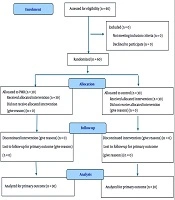
Figure 1 summarizes participant flow. All 120 randomized patients were included in the intention-to-treat (ITT) analysis, and 117 completed the 4-week assessment (59 in the Progressive Muscle Relaxation (PMR) group, 58 control). One PMR participant withdrew before day 5, one control participant withdrew before day 5, and one control participant was lost before week 4. Baseline characteristics of participants with complete follow-up (n = 117) and those with incomplete follow-up (n = 3) were compared descriptively. Completers had a mean age of 64.66 ± 9.83 years, compared with a median age of 66 years (range, 55 – 68) among non-completers. Mean baseline Barthel Index (BI) was 56.20 ± 13.28 in completers, compared with a median of 55 (range, 45 – 90) in non-completers; median baseline NIHSS was 8 (IQR, 7 – 10) and 8 (IQR, 8 – 11), respectively. Given the very small number of participants with incomplete follow-up (n = 3), formal statistical comparison was not appropriate; therefore, these data are presented descriptively.
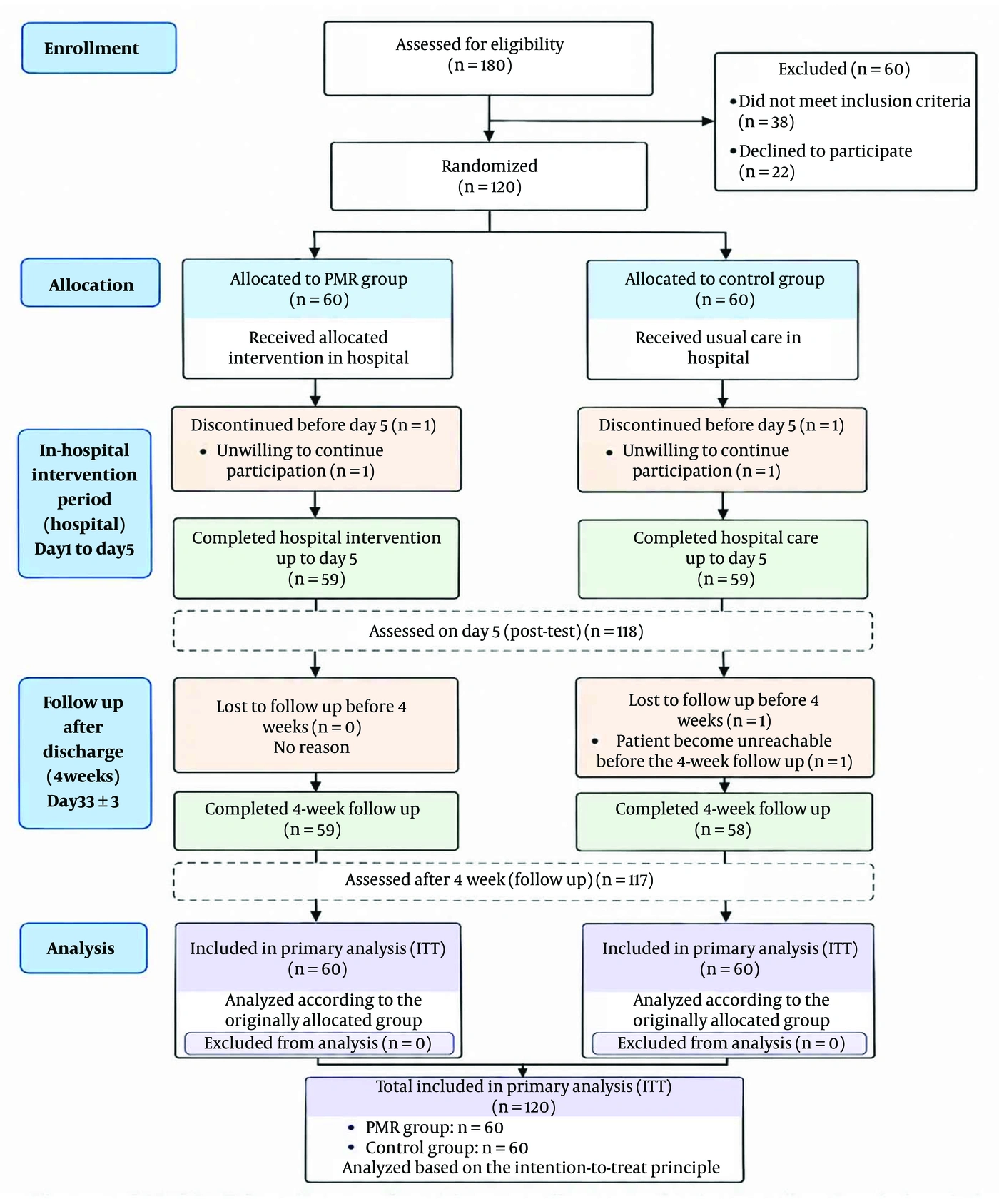
Figure 1.
CONSORT flow diagram of participant enrollment, randomization, allocation, in-hospital intervention, follow-up, and analysis. A total of 180 patients were assessed for eligibility; 60 were excluded (38 did not meet inclusion criteria and 22 declined to participate). Of the 120 randomized participants (60 PMR, 60 control), 117 completed the 4-week follow-up (PMR: n = 59; control: n = 58). Three participants did not complete the study: two discontinued before day 5 (1 PMR and 1 control), and one control participant was lost to follow-up before week 4. All 120 participants were included in the intention-to-treat (ITT) analysis.
4.2. Baseline Characteristics
Baseline characteristics are shown in Table 1; no reported comparison was statistically significant.
Table 1.
Baseline Characteristics of Participants a
| Variables | Group | P-Value | |
|---|---|---|---|
| PMR (n = 60) | Control (n = 60) | ||
| Age (years), mean ± SD | 64.48 ± 9.81 | 64.55 ± 9.74 | 0.970 b |
| BMI (kg/m²), mean ± SD | 27.16 ± 2.29 | 26.52 ± 2.29 | 0.107 b |
| Time to enrollment (min), mean ± SD | 573.55 ± 316.47 | 564.95 ± 229.48 | 0.865 b |
| Baseline BI, mean ± SD | 55.92 ± 13.48 | 57.00 ± 13.22 | 0.658 b |
| NIHSS (score) (15), median (IQR) | 8 (7 – 10) | 8 (6 – 9) | 0.710 c |
| Female | 26 (43.3) | 27 (45.0) | 0.854 d |
| Educational level | 0.690 e | ||
| No formal education | 4 (6.7) | 2 (3.3) | |
| Primary/secondary education | 47 (78.3) | 47 (78.3) | |
| Diploma/associate degree | 6 (10.0) | 9 (15.0) | |
| University degree | 3 (5.0) | 2 (3.3) | |
| Employed | 32 (53.3) | 27 (45.0) | 0.465 e |
| Current smoker | 28 (46.7) | 31 (51.7) | 0.715 e |
| Substance use | 9 (15.0) | 6 (10.0) | 0.582 e |
a Values are expressed as No. (%) unless otherwise indicated. Time to enrollment = hospital admission to randomization. Abbreviations: PMR, progressive muscle relaxation; BMI, body mass index; BI, Barthel Index; NIHSS, National Institutes of Health Stroke Scale; IQR, interquartile range; SD, standard deviation.
b P-value using the Independent-Samples t test.
c P-value using the Mann-Whitney U test.
d P-value using the uncorrected chi-square test (χ² = 0.034, df = 1).
e P-value using the chi-square or Fisher exact test.
4.3. Intervention Adherence and Delivery
Adherence information was available for 59 of the 60 participants assigned to PMR. In the PMR group, 59 of 60 participants (98.3%) completed all planned inpatient sessions, and one participant (1.7%) discontinued after two sessions. Overall, 297 of 300 planned sessions (99.0%) were delivered. No protocol deviations or crossover events were observed during the trial.
During the 28-day home period, participants practiced on a mean of 26.9 days (SD = 1.2). Mean adherence was 94.9% (SD = 4.2), and the median was 96.4%. Using the study threshold of at least 85%, 56 participants (94.9%) met the adherence criterion. Twenty-four participants (40.7%) completed all 28 days, whereas three (5.1%) fell below the 85% threshold.
4.4. Observed Changes
Observed BI scores increased in both groups, with larger unadjusted gains in the PMR arm (Table 2).
Table 2.
Observed BI and Unadjusted Effect Sizes a
| Time | Group | Mean Difference b | 95% CI | Cohen's d | |
|---|---|---|---|---|---|
| PMR | Control | ||||
| Baseline | 55.92 ± 13.48 (n = 60) | 57.00 ± 13.22 (n = 60) | -1.08 | -5.91 to 3.74 | 0.08 |
| Day 5 | 73.17 ± 10.81 (n = 59) | 61.75 ± 13.11 (n = 59) | 11.42 | 7.07 to 15.76 | 0.95 |
| Week 4 | 78.90 ± 9.83 (n = 59) | 64.31 ± 13.13 (n = 58) | 14.59 | 10.33 to 18.84 | 1.26 |
a Values are expressed as mean ± SD unless otherwise indicated. Abbreviations: BI, Barthel Index; PMR, progressive muscle relaxation; SD, standard deviation; CI, confidence interval.
b Unadjusted PMR minus control. The week 4 difference was tested with Welch's t test (t = 6.795, df = 105.62, P < 0.001). Cohen's d used pooled SDs. Data are observed (not model-based).
Table 3.
Distribution of Participants According to Barthel Index Functional Independence Categories a
| Functional Category | Baseline | Day 5 | Week 4 | |||
|---|---|---|---|---|---|---|
| PMR (n = 60) | Control (n = 60) | PMR (n = 59) | Control (n = 59) | PMR (n = 59) | Control (n = 58) | |
| Severe (0 – 20) | 0 (0) | 0 (0) | 0 (0) | 0 (0) | 1 (1.7) | 1 (1.7) |
| Moderate (21 – 60) | 28 (46.7) | 27 (45.0) | 8 (13.6) | 18 (30.5) | 4 (6.8) | 12 (20.7) |
| Mild (61 – 90) | 32 (53.3) | 33 (55.0) | 47 (79.6) | 37 (62.7) | 46 (77.9) | 39 (67.2) |
| Independent (91 – 100) | 0 (0) | 0 (0) | 4 (6.8) | 4 (6.8) | 9 (15.3) | 6 (10.3) |
| Total | 60 (100) | 60 (100) | 59 (100) | 59 (100) | 59 (100) | 58 (100) |
a Values are expressed as No. (%). Categories were defined according to Oveisgharan et al. (17): severe (0 – 20), moderate (21 – 60), mild (61 – 90), and independent (91 – 100). Percentages are based on the participants assessed at each time point. No formal statistical comparison across categories was made; data are descriptive. Abbreviations: BI, Barthel Index; PMR, progressive muscle relaxation.
4.5. LMM Results for the Barthel Index (Fixed Effects)
The group-by-time interaction was significant [F(2, 234) = 124.10, P < 0.001; Table 4]. Model-based marginal means are presented in Table 5.
Table 4.
LMM Results for the Barthel Index (Fixed Effects) a
| Effect | F | df | P-Value |
|---|---|---|---|
| Group | 15.59 | 1, 234 | < 0.001 |
| Time | 423.48 | 2, 234 | < 0.001 |
| Group × Time | 124.10 | 2, 234 | < 0.001 |
a Results from the unadjusted model. The model included fixed effects for group, time (baseline, day 5, week 4), and Group × Time, plus a participant-specific random intercept; no random slope was included. Residual covariance = AR(1); denominator df = Satterthwaite approximation. Abbreviations: LMM, linear mixed-effects model; REML, restricted maximum likelihood; AR(1), first-order autoregressive.
Table 5.
Estimated Marginal Means for the Barthel Index by Group and Time Point in Unadjusted and Adjusted Models a
| Models and Times | Group | Mean Difference (95% CI) | P-Value | |
|---|---|---|---|---|
| PMR | Control | |||
| Unadjusted | ||||
| Baseline | 55.92 ± 1.74 | 57.00 ± 1.71 | -1.08 (-5.91 to 3.74) | 0.658 |
| Day 5 | 73.17 ± 1.40 | 61.75 ± 1.69 | 11.42 (7.07 to 15.76) | < 0.001 |
| Week 4 | 78.90 ± 1.27 | 64.31 ± 1.70 | 14.59 (10.33 to 18.84) | < 0.001 |
| Adjustedb | ||||
| Day 5 | 73.45 ± 1.08 | 61.23 ± 1.09 | 12.22 (10.09 to 14.35) | < 0.001 |
| Week 4 | 79.12 ± 1.08 | 63.19 ± 1.09 | 15.93 (13.80 to 18.07) | < 0.001 |
a Values are expressed as mean ± SE or (95% CI). Unadjusted model: LMM with fixed effects for group, time (baseline, day 5, week 4), and Group × Time, plus a random intercept. Adjusted model: same fixed-effects structure, but with baseline BI entered as a covariate (not as a repeated outcome), giving two time levels (day 5 and week 4). Both models: REML with Satterthwaite denominator df and AR(1) residual covariance. Differences are PMR minus control; positive values favor PMR. Abbreviations: BI, Barthel Index; PMR, progressive muscle relaxation; LMM, linear mixed-effects model; REML, restricted maximum likelihood; AR(1), first-order autoregressive; SE, standard error; CI, confidence interval; BMI, body mass index; NIHSS, National Institutes of Health Stroke Scale.
b Adjusted for baseline BI, age, BMI, and NIHSS.
Unadjusted between-group differences were 11.42 points at day 5 (95% CI, 7.07 – 15.76) and 14.59 points at four weeks (95% CI, 10.33 – 18.84; both P < 0.001); the corresponding Cohen d values were 0.95 and 1.26.
After adjustment for baseline BI, age, BMI, and NIHSS, the estimated differences were 12.22 points at day 5 (95% CI, 10.09 – 14.35) and 15.93 points at four weeks (95% CI, 13.80 – 18.07; both P < 0.001; Table 5).
In the LOCF sensitivity analysis, the adjusted between-group differences were 12.50 points at day 5 (95% CI, 10.30 – 14.70; independent-samples t-test on LOCF-imputed scores, t = 11.14, P < 0.001) and 16.17 points at four weeks (95% CI, 13.97 – 18.36; independent-samples t-test on LOCF-imputed scores, t = 14.41, P < 0.001). The overall Group × Time interaction remained significant [F(2, 234) = 116.63, P < 0.001; equivalent Wald χ² = 233.26, df = 2]. These estimates were consistent with those of the primary analysis in both direction and magnitude.
No participant scored 0 on the BI. At week 4, 15.3% of PMR participants and 10.3% of controls scored 100, indicating no pronounced floor or ceiling effect.
Residual diagnostics were compatible with the LMM assumptions (Shapiro-Wilk W = 0.987, P = 0.312; Levene P = 0.412), and no influential observations were identified.
4.6. Adverse Events
No adverse events or intervention discontinuations attributed to PMR were reported during inpatient sessions or follow-up.
5. Discussion
Functional improvement occurred in both groups, but BI scores followed different trajectories, with larger gains in the group offered PMR in addition to usual care. The adjusted between-group differences were 12.22 points at day 5 and 15.93 points at four weeks. Improvement in the control arm is important because early recovery after ischemic stroke reflects spontaneous neurological change, medical stabilization, mobilization, and routine care, as well as any study intervention. The PMR arm also received supervised instruction, an illustrated booklet, home practice, and PMR-focused follow-up. Therefore, the contrast should be interpreted as the effect of adding this PMR support package to usual care, rather than as evidence that muscle relaxation alone produced the entire difference.
The tested unit in this trial was a multicomponent PMR support package comprising supervised instruction, an illustrated booklet, daily home practice, and weekly follow-up calls. The between-group difference of 12 – 16 BI points therefore represents the combined effect of this package rather than the isolated effect of the relaxation technique. This distinction is important because the control condition was not attention-matched, and the additional components (booklet, home practice, and follow-up) may have contributed to the observed improvement. Future trials using attention-matched controls and isolating individual components are needed to determine the specific contribution of PMR. The observed Cohen's d values (0.95 and 1.26) exceed typical effect sizes for structured exercise in acute/subacute stroke (SMD ≈ 0.3 – 0.6) (4, 6, 14), likely reflecting the multicomponent intervention and the non-attention-matched control.
The direction of our findings is broadly consistent with those of Cahyati et al., who reported greater improvement in functional ability when structured range-of-motion exercise was combined with PMR than when routine range-of-motion exercise was used (12). Their study supports the possibility that relaxation-based training can complement physical rehabilitation; however, PMR was delivered together with a modified exercise program, so its independent contribution could not be isolated. The present trial differs in that it evaluated PMR as the principal added behavioral intervention while both groups received usual care. Nevertheless, differences in stroke phase, rehabilitation setting, outcome measurement, and intervention intensity limit direct comparison of effect sizes.
Other stroke-specific reports are less consistent. Indriani and Risdiana described functional improvement in a case study using PMR together with range-of-motion exercises (10), but a single-patient design cannot separate treatment effects from natural recovery or concurrent care. In contrast, Satria et al. found no material change in muscle-strength grades after three days of PMR in two older adults with chronic non-hemorrhagic stroke, although one participant described a stronger hand grip (11). This less consistent result may reflect the chronic stage of stroke, the very small sample, the short exposure, and the use of muscle strength rather than independence in activities of daily living as the main outcome. These differences suggest that timing, duration, outcome selection, and concurrent rehabilitation may influence observed PMR effects.
The clinical meaning of the BI differences also requires caution. Chang et al. reported an MCID of 16.18 points for the 0 – 100 BI in a post-acute stroke context at 12 weeks (18). Our adjusted contrast was smaller at day 5 and close to that value at four weeks. However, the MCID was derived in a different population and assessment schedule and should not be used as a definitive threshold for this acute-stroke trial. No validated MCID is available specifically for hospitalized patients assessed at day 5 and four weeks. The BI is also bounded, although only 15.3% of PMR participants and 10.3% of controls reached the maximum score at follow-up, arguing against a pronounced ceiling effect.
Evidence from populations other than stroke offers indirect support for mechanisms that could influence rehabilitation participation. A 2026 meta-analysis of randomized trials found that PMR improved sleep quality and anxiety across heterogeneous adult clinical populations (9). In fibromyalgia, Karakoyun et al. reported improvements in pain, kinesiophobia, and functional status after an eight-week PMR program (13). In multiple sclerosis—a chronic neurological condition in which symptom burden can interfere with daily functioning—Salar et al. found that a nurse-led PMR program reduced headache impact compared with usual care (19). Although headache impact is not a measure of functional independence, this finding supports our mechanistic hypothesis that a brief relaxation intervention that can be delivered by a nurse can reduce symptom burden in a neurological population. These findings do not demonstrate improved post-stroke independence, but they are consistent with the possibility that reducing tension, anxiety, pain, or other distress may make therapeutic activity easier to tolerate. We did not measure these variables as mediators; therefore, this explanation remains hypothetical.
The randomized design, blinded outcome assessment, prospective registration, repeated measurement, retrieval of baseline NIHSS data, and intention-to-treat mixed-model analysis strengthen the study. The magnitude of the effect should nevertheless be interpreted conservatively. Recruitment used convenience sampling in two hospitals in one city; participants and the intervention provider could not be blinded, and the control condition was not fully attention-matched. Home adherence was self-reported, post-discharge safety monitoring relied on weekly contact, and follow-up lasted only four weeks. Future multicenter trials should use longer follow-up, attention-matched controls, objective adherence measures, and standardized documentation of rehabilitation exposure and co-interventions to determine whether the observed functional differences are durable and which components of the PMR support package contribute most to recovery. These design features would also allow clearer separation of PMR-specific effects from attention, usual care, and spontaneous recovery.
5.1. Limitations
Key limitations included convenience sampling in one city, the inability to blind participants or providers, a non-attention-matched control, self-reported adherence, limited post-discharge safety surveillance, and four-week follow-up. Communication between participants in different groups during the inpatient phase was not systematically recorded; therefore, contamination cannot be entirely ruled out and should be considered a limitation of this study.
5.2. Implications
Progressive Muscle Relaxation (PMR) may be a low-cost adjunct to stroke rehabilitation; larger attention-matched trials with longer follow-up and objective adherence monitoring are needed.
5.3. Conclusions
Among patients with a baseline NIHSS < 12, adding the PMR support package to usual care was associated with greater short-term BI improvement. Because the intervention was multicomponent, the observed difference should be interpreted as the combined effect of the package rather than of PMR alone. Longer, attention-matched trials are required before attributing the effect specifically to PMR or assuming that it is durable.