Full Text
Full text is available in PDF
Jundishapur Journal of Chronic Disease Care
The Official Journal of Ahvaz Jundishapur University of Medical Sciences
Authors
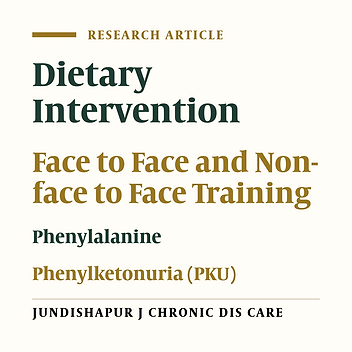
Phenylketonuria (PKU) is a congenital metabolic disorder of Phenylalanine, if which, the diet is not to be followed exactly, it can lead to progressive mental retardation. The purpose of this study was to investigate the effect of face to face and non-face to face trainings by parental on controlling serum phenylalanine levels in the children with Phenylketonuria.
In the clinical trial, 45 patients (aged 1 - 18 years) with Phenylketonuria, having the inclusion criteria, along with their parents, were divided into three groups of 15 subjects randomly; intervention 1: face to face training, intervention 2: non-face to face training using booklets and pamphlets and 3: a control group. The knowledge of parents was assessed and recorded by a questionnaire; and phenylalanine levels in children were examined by a venous blood samples before and after intervention in all households. The paired t-test, Chi-square and ANOVA and Tukey tests were used for analyzing data.
There was no significant difference for parents' knowledge prior to the intervention in the groups, but after the intervention, there was a significant difference in the intervention group compared to the control group (P = 0.006). The educational intervention (face to face and non-face to face trainings) enhanced the knowledge of the family. This increase was seen in the control group (P = 0.086). For serum phenylalanine, although both educational methods led to reduce, but this reduction was significant only in the non-face to face method (P = 0.015).
This study showed positive effects of both educational methods on the amount of parental awareness; however, the non-face to face educational effectiveness of parents on phenylalanine levels of children was showed more outcomes. Therefore, the regular non-face to face education parameter should be included to follow-up of these patients.
© 2013, Author(s). This open-access article is available under the Creative Commons Attribution 4.0 (CC BY 4.0) International License (https://creativecommons.org/licenses/by/4.0/), which allows for unrestricted use, distribution, and reproduction in any medium, provided that the original work is properly cited.
Shahpouri J, Karami S, Mohammadi S, Mollamohammadi M, Mohammadbeigi A. Efect of a controlled diet program on behavioral-emotional disorders in patients with phenylketonuria. koomesh. 2020;22(2):e153184. doi:
Khalvati M, Nafei A, Soltani M. The relation between family empowerment and metabolic control and adherence to treatment plans in children with phenylketonuria. J Kermanshah Univ Med Sci. 2014;18(8):e74043. doi: https://doi.org/10.22110/jkums.v18i8.2019
Habibi N, Basharpoor S, Fathi E, Atadokht A. Relationship Between Perceived Social Support and Distress Tolerance in Parents with Phenylketonuria Children: Mediating Role of Self-compassion. Iran J Psychiatry Behav Sci. 2023;17(4):e135963. doi: https://doi.org/10.5812/ijpbs-135963
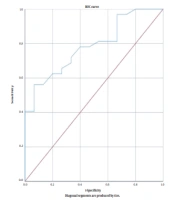
Atef Abdelsattar Ibrahim H, Fouad Ahmed G, Mohamed Abdelhamid ElKhashab K, Amin AA, Farag Attia Elsebaey A, et al. Prevalence of Overweight and Obesity in Children Diagnosed with Phenylketonuria. J Compr Ped. 2023;14(3):e136499. doi: https://doi.org/10.5812/compreped-136499
Mahmoudi-Gharaei J, Aghasi P, Setoodeh A, Sayarifard A, Rashidiyan M, et al. Intellectual and Developmental Status in Children With Hyperphenylalaninemia and PKU Who Were Screened in a National Program. Inn J Pediatr. 2015;25(6):e3033. doi: https://doi.org/10.5812/ijp.3033
Last Update: 1 week ago
Last Update: 1 week ago
Last Update: 1 week ago
Last Update: 5 hours ago
Last Update: 8 hours ago
Last Update: 5 days ago