Journal of Semnan University of Medical Sciences
Image Credit:Koomesh
Outline
Efect of a controlled diet program on behavioral-emotional disorders in patients with phenylketonuria
Authors

Abstract
Introduction: Phenylketonuria is a disorder due to deficiency of the phenylalanine hydroxylase enzyme. Delay or untreatement would cause impacts on motor-cognitive and individual-social skills. This study aimed to investigate the effect of a controlled diet program on behavioral-emotional disorders in patients with phenylketonuria. Materials and Methods: In a quasi-experimental study, 60 patients with phenylketonuria referred to Hazrate Masoumeh Hospital in Qom (the seventh largest city in Iran) were studied. The data were collected using parents;#39 strengths and difficulties questionnaire (SDQ) to assess the status of behavioral-emotional disorders in patients by one of parents. Data were collected before and after - a three-months controlled diet- intervention. Results: The mean of phenylalanine in the patients was 12.81 ± 5.89 mg/dl before intervention and was decreased to 11.88 ± 6.8 mg/dl after intervention and this difference was statistically significant (p=0.018). The most significant effect of intervention was on increase of prosocial behaviors equal to 45%, reduction of conduct problems 38.3%, reduction of hyperactivity-attention deficit problems by 35%, decrease of emotional symptoms by 35% (p
Highlights
References
- 1.Blau N, van Spronsen FJ, Levy HL. Phenylketonuria. The Lancet 2010; 376: 1417-1427.
- 2.Williams RA, Mamotte CD, Burnett JR. Phenylketonuria: an inborn error of phenylalanine metabolism. Clin Biochem Rev 2008; 29: 31-41.
- 3.Motamedi N, Goodarzi E, Pordanjani SR, Valizadeh R, Moradi Y, Sohrabivafa M, et al. Incidence of phenylketonuria in Lorestan province, West of Iran (2006-2016). Int J Pediatr 2017; 5: 4713-4721.
- 4.Golipoor Z, Kashani IR, Akbari M, Mahmoudi R, Abbasi M, Nekoonam S. Incidence of Phenylketonuria in Southern Iran. Iran J Med Sci 2010; 35: 137-139.
- 5.Habib A, Fallahzadeh MH, Kazeroni HR, Ganjkarimi AH. Incidence of phenylketonuria in Southern Iran. Iran J Med Sci 2015; 35: 137-139.
- 6.Dorosti F, Zanganeh Z, Mirzazadeh R, Zamani Z, Arjmand M, Sadeghi S. Non-invasive diagnosis of phenylketonuria by using artificial neural networking and nuclear magnetic resonance spectroscopy. Koomesh 2016; 17: 910-917. (Persian).
- 7.Waisbren SE, Noel K, Fahrbach K, Cella C, Frame D, Dorenbaum A, et al. Phenylalanine blood levels and clinical outcomes in phenylketonuria: a systematic literature review and meta-analysis. Mol Genet Metab 2007; 92: 63-70.
- 8.Ghadbeigi Z, Sajedi F, Biglariyan A, Movallali G, Nazi S. Evaluation of personal-social developmental skills levels in children with early treated phenylketonuria. Arch Rehabilit 2013; 14: 46-53.
- 9.Bilder DA, Noel JK, Baker ER, Irish W, Chen Y, Merilainen MJ, et al. Systematic review and meta-analysis of neuropsychiatric symptoms and executive functioning in adults with phenylketonuria. Dev Neuropsycho 2016; 41: 245-260.
- 10.Burlina AP, Lachmann RH, Manara R, Cazzorla C, Celato A, van Spronsen FJ, et al. The neurological and psychological phenotype of adult patients with earlytreated phenylketonuria: A systematic review. J Inherit Metab Dis 2019; 42: 209-219.
- 11.Brumm V, Bilder D, Waisbren S. Psychiatric symptoms and disorders in phenylketonuria. Mol Genet Metab 2010; 99: S59-S63.
- 12.Vockley J, Andersson HC, Antshel KM, Braverman NE, Burton BK, Frazier DM, et al. Phenylalanine hydroxylase deficiency: diagnosis and management guideline. Genet Med 2014; 16: 188-200.
- 13.Antshel KM. ADHD, learning, and academic performance in phenylketonuria. Mol Genet Metab 2010; 99: S52-S58.
- 14.Yi S, Singh RH. Protein substitute for children and adults with phenylketonuria. Cochrane Database Syst Rev 2015; 27: CD004731-CD.
- 15.Christine M. Medical nutrition therapy for metabolic Disorders. Krause's food nutrition and diet therapy 13th ed Philadelphia: Saunders. 2011; 1141-1169.
- 16.Huijbregts S, De Sonneville L, Licht R, Van Spronsen F, Sergeant J. Short-term dietary interventions in children and adolescents with treated phenylketonuria: effects on neuropsychological outcome of a well-controlled population. J Inherit Metab Dis 2002; 25: 419-430.
- 17.Hofman DL, Champ CL, Lawton CL, Henderson M, Dye L. A systematic review of cognitive functioning in early treated adults with phenylketonuria. Orphanet J Rare Dis 2018; 13: 150.
- 18.Palermo L, Geberhiwot T, MacDonald A, Limback E, Hall SK, Romani C. Cognitive outcomes in early-treated adults with phenylketonuria (PKU): A comprehensive picture across domains. Neuropsychol 2017; 31: 255.
- 19.Koch R, Burton B, Hoganson G, Peterson R, Rhead W, Rouse B, et al. Phenylketonuria in adulthood: a collaborative study. J Inherit Metab Dis 2002; 25: 333-346.
- 20.Brumm V, Azen C, Moats R, Stern A, Broomand C, Nelson M, et al. Neuropsychological outcome of subjects participating in the PKU adult collaborative study: a preliminary review. J Inherit Metab Dis 2004; 27: 549-566.
- 21.Gentile J, Ten Hoedt A, Bosch A. Psychosocial aspects of PKU: hidden disabilities-a review. Mol Genet Metab 2010; 99: S64-S67.
- 22.Marcdante K, Kliegman RM. Nelson essentials of pediatrics-E-book: First South Asia Edition: Elsevier Health Sciences; 2016.
- 23.Hendriksz C, Walter J. Update on phenylketonuria. Current Paediatr 2004; 14: 400-406.
- 24.Goodman R. The Strengths and Difficulties Questionnaire: a research note. J Child Psychol Psychiatry 1997; 38: 581-586.
- 25.Goodman R. Psychometric properties of the strengths and difficulties questionnaire. J Am Acad Child Adolesc Psychiatry 2001; 40: 1337-1345.
- 26.Mohammadi MR, Salmanian M, Ghanizadeh A, Alavi A, Malek A, Fathzadeh H, et al. Psychological problems of Iranian children and adolescents: parent report form of Strengths and Difficulties Questionnaire. J Ment Health 2014; 23: 287-291.
- 27.Shahrivar Z, Tehrani-Doost M, Pakbaz B, Rezaie A, Ahmadi F. Normative data and psychometric properties of the parent and teacher versions of the strengths and difficulties questionnaire (SDQ) in an Iranian community sample. J Res Med Sci 2009; 14: 69-77.
- 28.Ghanizadeh A, Izadpanah A, Abdollahi G. Scale validation of the strengths and difficulties questionnaire in Iranian children. Iran J Psychiatr 2007; 2: 65-71.
- 29.Goodman R, Renfrew D, Mullick M. Predicting type of psychiatric disorder from Strengths and Difficulties Questionnaire (SDQ) scores in child mental health clinics in London and Dhaka. Eur Child Adolesc Psychiatry 2000; 9: 129-134.
- 30.Goodman A, Goodman R. Strengths and difficulties questionnaire as a dimensional measure of child mental health. J Am Acad Child Adolesc Psychiatry 2009; 48: 400-403.
- 31.Croft S, Stride C, Maughan B, Rowe R. Validity of the strengths and difficulties questionnaire in preschool-aged children. Pediatrics 2015; 2014-2920.
- 32.Sajedi F, Nazi S, Rohani F, Biglarian A, Movallali G. Problem-solving skills in children with early treated Phenylketonuria. 2013.
- 33.Mahmoudi-Gharaei J, Mostafavi S, Alirezaei N. Quality of life and the associated psychological factors in caregivers of children with PKU. Iran J Psychiat 2011; 6: 66-69.
- 34.Alaei M, Asadzadeh-Totonchi G, Gachkar L, Farivar S. Family social status and dietary adherence of patients with phenylketonuria. Iran J Pediatr 2011; 21: 379-384.
- 35.MacLeod EL, Ney DM. Nutritional management of phenylketonuria. Annales Nestl (English ed). 2010; 68: 58-69.
- 36.Eshraghi P AA, Bijani A, Hosseinzadeh S. Evaluation of Nutritional Status and Growth in Phenylketonuria Patients in Mazandaran Province Iran. J Babol Univ Med Sci 2011; 13: 58-62 (Persian).
- 37.Ghanei Gheshlagh R, Parizad N, Sayehmiri K, Zamanian-Azodi M, Rashidy-Pour A. Is there a relationship between metabolic syndrome and depression? A systematic review and meta-analysis. Koomesh 2015; 488-494. (Persian).
- 38.Vieira Neto E, Maia Filho HdS, Monteiro CB, Carvalho LM, Tonon T, Vanz AP, et al. Quality of life and adherence to treatment in early-treated Brazilian phenylketonuria pediatric patients. Braz J Med Biol Res 2018; 51: e6709.
- 39.Weglage J, Pietsche M, Denecke J, Sprinz A, Feldman R, Grenzebach M, et al. Regression of neuropsychological deficits in early-treated phenylketonurics during adolescence. J Inherit Metab Dis 1999; 22: 693-705.##.
Copyright
© 2020, Author(s). This open-access article is available under the Creative Commons Attribution 4.0 (CC BY 4.0) International License (https://creativecommons.org/licenses/by/4.0/), which allows for unrestricted use, distribution, and reproduction in any medium, provided that the original work is properly cited.
Similar Articles
Comparison of Face to Face and Non-face training Methods by Parents on the Children Serum Phenylalanine Levels with Phenylketonuria
Alijani Renani H, Hemmatipour A, Hakim A, Aminzadeh M. Comparison of Face to Face and Non-face training Methods by Parents on the Children Serum Phenylalanine Levels with Phenylketonuria. Jundishapur J Chronic Dis Care. 2013;2(4):32250. doi:
The relation between family empowerment and metabolic control and adherence to treatment plans in children with phenylketonuria
Khalvati M, Nafei A, Soltani M. The relation between family empowerment and metabolic control and adherence to treatment plans in children with phenylketonuria. J Kermanshah Univ Med Sci. 2014;18(8):e74043. doi: https://doi.org/10.22110/jkums.v18i8.2019
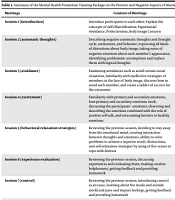
The Effectiveness of a Mental Health Promotion Training Program Based on Eating Disorder on the Positive and Negative Aspects of Mental Health in Overweight Women
Karkhanehei M, Ahmadian H, Moradi O, Karimi Q. The Effectiveness of a Mental Health Promotion Training Program Based on Eating Disorder on the Positive and Negative Aspects of Mental Health in Overweight Women. J Clin Res Paramed Sci. 2022;11(1):e123569. doi: https://doi.org/10.5812/jcrps-123569
Prevalence of Overweight and Obesity in Children Diagnosed with Phenylketonuria
Atef Abdelsattar Ibrahim H, Fouad Ahmed G, Mohamed Abdelhamid ElKhashab K, Amin AA, Farag Attia Elsebaey A, et al. Prevalence of Overweight and Obesity in Children Diagnosed with Phenylketonuria. J Compr Ped. 2023;14(3):e136499. doi: https://doi.org/10.5812/compreped-136499
Relationship Between Perceived Social Support and Distress Tolerance in Parents with Phenylketonuria Children: Mediating Role of Self-compassion
Habibi N, Basharpoor S, Fathi E, Atadokht A. Relationship Between Perceived Social Support and Distress Tolerance in Parents with Phenylketonuria Children: Mediating Role of Self-compassion. Iran J Psychiatry Behav Sci. 2023;17(4):e135963. doi: https://doi.org/10.5812/ijpbs-135963
- Scopus by DOI: 0
Last Update: 1 month ago
- Scopus by Title: 1
Last Update: 1 month ago
- Scopus by Title (Ref): 1
Last Update: 1 month ago
- CrossRef: 0
Last Update: 5 hours ago
- OpenAlex: 0
Last Update: 7 hours ago
- OpenCitations: 0
Last Update: 4 days ago
