
1. Background
Population aging is one of the most important demographic features that comes into prominence in the 21st century. Aging of the population affects all aspects of the society including health, social security, education, sociocultural activities, and family life (1). In Iran, surveys and statistical indicators indicate an accelerated growth of the elderly population. In the census 2016, about 9.3% of the Iranian population were over 60 years of age (2). According to calculations, by about 2031, an aging explosion will occur in Iran that drags approximately 20% - 25% of the population aged 60 and above into poverty (3). As the age increases, the risk of suffering from one or more chronic diseases also increases, so that most people over 60 years old have at least one chronic disease (4). One of the ways to better manage diseases in the elderly is adherence to treatment regimen. Many patients, especially the ones with chronic disease, are in trouble to follow medical advices (5). In addition, mean of medication consumption in the elderly is higher than other age groups (6). Medication adherence is one of the essential components for the effective treatment of many diseases (7). Medication compliance is defined as the degree to which patient adheres to all medical advice provided by the health care providers, as well as administration and consumption of the prescribed drugs timely and correctly (8). The World Health Organization has adopted the following definition for medication adherence: “Individual behavior -taking medication, diet, and/or lifestyle changes- in accordance with recommendations from health care providers” (5). Recent studies show that 55% of elderly people do not follow the medication regimen prescribed by their physician (9). Overall, medication adherence is about 50%, and 20% - 25% of prescriptions are never fully implemented. In addition, 20% of patients take drugs on holidays after filling the prescription, and frequent forgotten doses are common (7). Therefore, as a result of poor compliance, patients do not get the most benefit from their drug therapy. Suboptimal treatment can lead to increased use of health care services (acute care and hospitalization), reduced quality of life, and increased health care costs (drug and medical costs) (5, 10, 11). Physical impairments and cognitive dysfunctions may increase the risk for non-adherence in older adults. Poor knowledge about the disease and the reasons why medication is needed, lack of motivation, low self-efficacy, and substance abuse are associated with poor medication adherence (12). However, medication adherence depends on the active participation of patients and the voluntary acceptance of their treatment plans (13). Medication non-adherence remains a substantial public health problem. Causes of medication non-adherence are complex and include psychosocial (e g, alcohol use, depression, and stigma), structural (e g, distance from clinics, medication costs), therapy-related (e g, toxicities), and health system–related barriers (e g, lack of counselling and poor user experience in the health system) (14). However, educating patients about the importance of medication adherence, using adherence techniques such as pillboxes and reminders, and availability of support are important to promote medication adherence (15-17).
There are many studies on adherence to treatment regimen in the world (18-24), but there are few studies in this field in Iran and due to the financial burden of chronic diseases on the health and quality of life of the elderly, conducting more studies in this regard seems essential. Most of the studies examined medication adherence of patients with a certain disease, particularly diabetes; for the first time in Iran, researchers aimed at studying medication adherence of elderly people with several types of chronic diseases. Furthermore, determination of the degree of medication adherence in the elderly with chronic diseases can provide an opportunity for more systematic planning in order to increase the improvement of the health and quality of life in elderly patients.
2. Objectives
The current study aimed at determining the degree of medication adherence in the elderly with chronic diseases referring to academic medical centers in Ardabil, Iran.
3. Methods
3.1. Study Design
The current cross sectional study was conducted on 222 elderly people with chronic diseases referring to the specialized clinics of academic medical centers in Ardabil, Iran in 2018.
3.2. Sampling
After the approval of the study protocol by the Ethics Committee of Ardabil University of Medical Sciences and obtaining the required permissions, the researcher referred to the specialized clinics of Imam Khomeini, Fatemi, and Alavi hospitals in Ardabil in order to select the eligible elderly with chronic diseases (i e, musculoskeletal, diabetes, cardiovascular, and renal conditions) by convenience sampling method. The minimum sample size was determined 138 using the following sample size formula, considering the type I error at 0.05.
The prevalence of chronic diseases was 92.2% in the elderly (25) and estimated error was 0.05 of the prevalence. Finally, in order to increase the study power, 222 elderly people meeting the inclusion criteria- i e, age over 60, having chronic disease, and ability to answer questions were selected. Before distributing the questionnaires, informed consent was received from all participants and to maintain anonymity, they were told that it is not necessary to write their names on the questionnaires. In addition, in case of semiliterate or illiterate patients, the questionnaires were filled by the researcher in the interview with each participant. Patients with a clinical problem during the study, as well as the ones that did not have the ability to complete the questionnaire or refrained from completing it were excluded from the study.
3.3. Instrument
The instrument used in the current study was a two-part questionnaire. The first part included questions about the demographic characteristics of individuals as well as history of chronic diseases. The second part of the questionnaire was related to the degree of medication adherence for which the Morisky medication adherence scale (MMAS) (26) was used. The MMAS consists of eight yes/no questions. In all questions, 1 point is given for each “NO” answer, except for question 5 where 1 point is given for the “YES” answer. The total MMAS score is the sum of the eight questions scores. The total score ranges 0 to 8. In the current study, to interpret MMAS scores, total score of < 6 was considered unsatisfactory medication adherence (non-adherent), score 6 - 7 as moderate, and score 8 as satisfactory medication adherence (adherent). The validity and reliability of MMAS were assessed by Morrisky et al. (27).
3.4. Ethical Considerations
The study protocol was approved by the Ethics Committee of Ardabil University of Medical Sciences (ethics code: IR.ARUMS REL-1396-64). Formal permission was obtained from the Ardabil University of Medical Sciences for the sampling and the implementation of the study. The study objectives and the method of answering the questionnaire were explained to participants and written informed consent was obtained from all of them to participate in the study.
3.5. Data Analysis
The data were analyzed with SPSS version 16 using descriptive statistics and multivariate logistic regression analysis. In all cases of analysis, odds ratio was calculated with 95% confidence interval and P value less than 0.05 was considered statistically significant. Medication adherence was distributed to both satisfactory and unsatisfactory degrees; that is, medication adherence score 6 was considered as the cutoff point and logistic regression analysis was performed on it.
4. Results
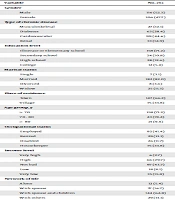
The mean ± SD age of the elderly in the current study was 68.25 ± 7.65 years; ranged 60-94. Other demographic characteristics of the elderly along with the type of chronic disease are presented in Table 1. Table 2 shows the frequency of the elderly based on the expressed items of medication adherence.
Table 1.
Demographic Characteristics of the Study Participants and the Type of Chronic Disease
| Variable | No. (%) |
|---|---|
| Gender | |
| Male | 116 (52.3) |
| Female | 106 (47.7) |
| Type of chronic disease | |
| Musculoskeletal | 27 (12.1) |
| Diabetes | 63 (28.4) |
| Cardiovascular | 99 (44.6) |
| Renal | 33 (14.9) |
| Education level | |
| Illiterate or Elementary school | 158 (71.2) |
| Secondary school | 24 (10.8) |
| High school | 28 (12.6) |
| College | 12 (5.4) |
| Marital status | |
| Single | 7 (3.1) |
| Married | 182 (82.0) |
| Divorced | 8 (3.6) |
| Widow | 25 (11.3) |
| Place of residence | |
| Town | 147 (66.2) |
| Village | 75 (33.8) |
| Age group, y | |
| > 70 | 158 (71.2) |
| 70 - 80 | 43 (19.4) |
| > 80 | 21 (9.4) |
| Occupational status | |
| Employed | 92 (41.4) |
| Retired | 29 (13.1) |
| Disabled | 26 (11.7) |
| Housekeeper | 75 (33.8) |
| Income level | |
| Very high | 6 (2.7) |
| High | 66 (29.7) |
| Not bad | 97 (43.7) |
| Low | 18 (8.1) |
| Very low | 35 (15.8) |
| Network of life | |
| Alone | 12 (5.4) |
| With spouse | 37 (16.7) |
| With spouse and children | 144 (64.8) |
| With others | 29 (13.1) |
Table 2.
Frequency of Participants Based on Items of Medication Adherence
| Item | Yes | No |
|---|---|---|
| Do you sometimes forget to take your health concern pills? | 106 (47.7) | 116 (52.3) |
| Thinking over the past two weeks, were there any days when you did not take your health concern medicine? | 71 (32) | 151 (68) |
| Have you ever cut back or stopped taking your medication without telling your doctor, because you felt worse when you took it? | 69 (31.1) | 153 (68.9) |
| When you travel or leave home, do you sometimes forget to bring along your health concern medication? | 83 (37.4) | 139 (62.6) |
| Did you take your health concern medicine yesterday? | 53 (23.9) | 169 (76.1) |
| When you feel like your health concern is under control, do you sometimes stop taking your medicine? | 50 (22.5) | 172 (77.5) |
| Do you ever feel hassled about sticking to your health concern treatment plan? | 113 (50.9) | 109 (49.1) |
| Do you sometimes have difficulty remembering to take all of your medicine? | 95 (42.8) | 127 (57.2) |
aValues are expressed as No. (%).
The distribution of elderly patients referring to Ardabil academic medical centers according to the degree of medication adherence showed that 187 (84%) elderly patients had unsatisfactory medication adherence (score < 6), 10 (5%) subjects had moderate (score 6 - 7), and only 25 (11%) participants had satisfactory medication adherence (score 8). According to logistic regression model, 187 (84%) elderly patients had unsatisfactory medication adherence (score < 6) and only 35 (16%) had satisfactory medication adherence (score > 6). Based on the results of the present study, the items “When you feel like your health concern is under control, do you sometimes stop taking your medicine?”, “Have you ever cut back or stopped taking your medication without telling your doctor, because you felt worse when you took it?” and “Thinking over the past two weeks, were there any days when you did not take your health concern medicine?” accounted for the highest percentages, respectively. The lowest percentage (< 50%) of true response was related to the items “Did you take your health concern medicine yesterday?” and “Do you ever feel hassled about sticking to your health concern treatment plan?” respectively (Table 2).
The results of multivariate logistic regression analysis showed that secondary school, high school, and college education had a significant and direct effect on the likelihood of satisfactory medication adherence (> 6). On the other hand, the probability of satisfactory medication adherence in the elderly with secondary school, high school, and college education compared with the illiterates or the ones with elementary education was 4.025, 3.220, and 5.257, respectively, which meant that high level of education was among the factors that increased the medication adherence (Table 3). It should be noted that other variables such as age, gender, occupational status, income level, network of life, place of residence, marital status, and type of chronic disease had no significant effect on medication adherence.
Table 3.
Multivariate Analysis of Factors Associated with Medication Adherence
| Education Level | Medication Adherence | ||||
|---|---|---|---|---|---|
| Ba | SE | Wald | P Value | OR (95% CI) | |
| Secondary school | 1.393 | 0.528 | 6.944 | 0.008 | 4.025 (1.429 - 11.339) |
| High school | 1.169 | 0.516 | 5.126 | 0.024 | 3.220 (1.170 - 8.861) |
| College | 1.660 | 0.683 | 5.901 | 0.015 | 5.257 (1.378 - 20.058) |
Abbreviation: SE, standard error.
aB: regression coefficient.
5. Discussion
According to the current study results, 84% of the elderly referring to the specialized clinics of academic medical centers of Ardabil had unsatisfactory medication adherence (score < 6) and only 16% had satisfactory medication adherence (score > 6). In a study by Rajpura and Nayak on the factors influencing medication adherence in the elderly with hypertension, 18.8% of the study participants had satisfactory medication adherence (28), which was consistent with the current study results. Also, in the study by Gholamaliei et al. on medication adherence and its related factors in patients with type 2 diabetes in Tuyserkan city, Iran, results showed that 59.4% of patients had poor medication adherence (29). The study by Kooshyar et al. on health literacy and its relationship with medical adherence and health-related quality of life in diabetic community-residing elderly in Mashhad, Iran, indicated that only 12.3% of patients had high medication adherence and the remaining patients (87.7%) followed their medication regimen moderately and poorly (30). More studies reported medication non-adherence in patients by 50% (18-20).
The study by Bezerra et al. showed that 87% of patients had satisfactory medication adherence (21). In another study by Sweileh et al. on 405 patients with diabetes in Nablus, Palestine, approximately 57.3% of the participants were considered adherent (22). Also, Hochhalter et al. found that 56% of participants had high medication adherence (23). In a study by Jannuzzi et al. on 100 elderly outpatients with diabetic retinopathy in Brazil, adherence to medication therapy was estimated 58% (24). In the study by Mashrouteh et al. on patients with diabetes in Kerman, Iran, it was indicated that 74.6% of patients had good compliance (90% and more) with drug regimens (31). Omar and San in their study on 147 inpatients aged 60 years and above reported a high medication adherence (66%) (32). Dashtian et al. also revealed that medication adherence was good in 76% of patients (33). The controversy in reviewed findings might be attributed to different cultural, social, and economic conditions, or the variety of tools utilized to assess medication adherence.
Based on the current study findings, the item “When you feel that your health concern is under control, do you sometimes stop taking your medicine?” accounted for the highest true response (77.5%); similarly, in the study by Sweileh et al. 83% of participants gave true responses (no) to the same item (22). Findings of the study by Omar and San also supported those of the current study indicating that only 15.6% of the participants stated that they stopped taking their medicine when they felt that their problem was under control (32). Gholamaliei et al. revealed that 30% of the patients decided to stop taking their medication due to feeling recovery (29). In addition, in the current study, 68.9% of the participants reported that they did not stop taking their medication without consulting their doctors; Sweileh et al. also reported the same results in 83% of patients (22). In the present study, at least 23.9% of true responses were related to the item “Did you take your health concern medicine yesterday?”, but in the study by Sweileh et al. 91.4% of the participants stated that they received their medicine yesterday (22).
In the present study, one of the factors related to the degree of medication adherence was the high level of education, which meant that high education level was one of the factors increasing medication adherence. It was in accordance with the findings of the study by Mashrouteh et al. indicating that the level of education was significantly related to the level of compliance of patients with drug regimens (31). According to the results of the study by Minaiyan et al. on 213 patients with asthma, cancer, or kidney transplantation, education level was positively correlated with adherence to medicines in patients with asthma and the ones with kidney transplantation, but not in patients with cancer (34). Other studies by Gholamaliei et al. and Mardby et al. also indicated a significant correlation between education level and compliance with drug regimen (18, 29), but some investigations did not show any statistically significant relationship between education level and medication adherence (22, 35).
The current study showed that variables such as age, gender, occupational status, income level, network of life, place of residence, marital status, and type of chronic disease had no significant effect on medication adherence. In consistent with this finding, the study by Mashrouteh et al. showed no statistically significant relationship between the level of compliance with drug regimen, and age, gender, marital status, occupation, and place of residence (31). Minaiyan et al. found a significant reverse relationship between age and compliance with drug regimen, but no significant relationship between gender and compliance with treatment (34). Alkatheri et al. stated that gender had a significant correlation with medication adherence; therefore, males were significantly more likely to be adherent than females (36). Also, Awodele and Osuolale indicated a significant relationship between patient’s age and gender, and adherence to medication (35). Briesacher et al. in a study on patients with at least one of the seven medical conditions showed that the effect of age was different on drug adherence in patients with various chronic diseases. For example, in patients with hypertension, drug adherence in the ones aged 70 years and older was higher than those with lower ages, but adherence was not associated with age in patients with seizure disorders (37). This controversy in results could be interpreted by the difference in the disease type or other characteristics of the participants.
The strength point of the study was that it was conducted on elderly people with several types of chronic diseases; therefore, the results can be generalized to all elderly patient populations. Also, it addressed a high level of medication non-adherence in the elderly that some educational and supportive measures should be taken to promote their medication adherence. A limitation of the present research was that the data collection was performed through self-report method, and some people may not answer the questions correctly and really for some reasons. The results of the present study indicated that medication non-adherence in the elderly with chronic diseases is a serious problem. To control it, preventive measures such as training on complications and consequences of medication non-adherence and stopping medication without consulting doctor for elderly patients, training for health care providers on effective education about timely consumption of drugs to patients and implementation of follow-up programs for medication adherence of patients with chronic diseases are essential. It is strongly recommended that further studies should be conducted regarding barriers to adherence to the drug regimen in the elderly with chronic diseases in order to take actions for identifying and removing barriers.
5.1. Conclusions
The high level of medication non-adherence in the elderly with chronic diseases and consequences of medication non-adherence is a matter of concern and it seems necessary to conduct studies to identify the effective factors on increasing the degree of medication adherence in the elderly. It is also important to plan for training on the importance of medication adherence and possible consequences of medication cessation without consulting doctor.