1. Background
Aging is the final period of all organisms’ life span and is more relevant than ever. However, as physical and mental aging vary among individuals, it is impossible to determine a specific cut-off for being old or specify exactly when a person can be considered elderly. Nevertheless, aging is a chronological process that generally starts at 65 years (1). Aging is a phenomenon that generally initiates as changes in the biology, physiology, biochemistry, and anatomy of the body’s cells; these changes affect the performance of cells over time (2). The physical and mental changes caused by aging include gastrointestinal disorders (i.e. poor digestion/constipation), genitourinary problems (i.e. urinary incontinence), loss of teeth, bone problems (i.e. back and knee pain), osteoporosis, eye and ear diseases (i.e. loss of vision, hearing, etc.), cardiovascular diseases, eating disorders, psychiatric disorders (i.e. depression, anxiety, sleep disorders, dementia, poor memory, etc.), and inactivity (3).
The global elderly population is expected to reach to two billion in 2050. The elderly population in Iran is predicted to nearly triple in the 20 years spanning 2006 - 2026. Therefore, the country will face the social phenomenon of aging in the future decades (4). Considering the unique characteristics of the elderly period, many aged people frequently experience hospitalization for various reasons; the main causes are cardiovascular diseases such as hypertension, coronary artery diseases, and valvular heart diseases (5, 6). Cardiovascular diseases, the most common diseases in aging people, are progressive diseases that begin in childhood; however, their clinical manifestations mainly occur in adulthood and beyond. The rapid economic and social changes in recent decades in many Eastern Mediterranean and Middle Eastern countries including Iran have resulted in cardiovascular diseases being a major health and social problem. These diseases are the leading cause of death worldwide (one out of every three deaths), killing approximately 17 million people annually. If no special preventive action is taken by 2020, this will increase to 24.8 million deaths annually (7).
The appropriate use of prescription medications is an effective way to treat both acute and chronic diseases. Unfortunately, medications are not used as regularly as they are prescribed. One of the factors affecting the incidence of cardiovascular diseases is non-adherence (or non-compliance) to prescribed medications, which has been identified as a clinical problem with serious economic, social, and health-related consequences (8). The World Health Organization (WHO) defines adherence (or compliance) as the extent to which a patient follows drug use behaviors, suggested diet, or lifestyle changes in accordance with the healthcare providers’ recommendations (9).
Non-adherence to medications causes approximately 125000 deaths in the United States annually; 10% of these fatalities occur in hospitalized patients and 23% occur in people receiving in-home hospice care (10). Only half of patients adhere to their medications (11). However, 47 - 100% of elderly people are reported to adhere to medications (9).
Studies in this area emphasize that when the aging process begins, the prevalence of chronic diseases generally associated with pain, disability, and reduced quality of life incur the increasing need for medication use (12). Accordingly, a 75-year-old person is normally affected by 3.5 chronic diseases and is in need of using several medicines (13). Despite extensive research about adherence/non-adherence to medications in the past five decades, little progress has been made towards solving this health problem; they report that 30 - 50% of medications are not used as prescribed, which leads to decreased effectiveness and increased side effects and costs (14). The economic costs associated with non-adherence to medications is estimated to be 400 billion dollars worldwide (15).
Cardiovascular diseases are also considered among the first and most prevalent causes of death in Iran, resulting in high treatment costs. For example, in 1999, approximately 500 million dollars were spent on the treatment of cardiovascular disease patients (16). However, despite the pervasiveness of cardiovascular diseases, relatively little research has been conducted on medication adherence. Among the few studies in this area, Parsa-Yekta et al. examined 150 patients with coronary heart disease and found that only 28% used their medications appropriately (17).
Because of the importance of this problem, additional studies are urgently required to understand the severity of the problem and its related factors.
2. Objectives
The present study assessed the demographic variables related to medication adherence in elderly patients with cardiovascular diseases admitted to a teaching hospital as well as outpatients referred to treatment centers in Bushehr, Iran in 2013.
3. Patients and Methods
The present study was a descriptive-analytic cross-sectional study. The participants were elderly patients with cardiovascular diseases admitted to a teaching hospital as well as outpatients referred to treatment centers in Bushehr. The patients were selected by a simple random sampling method. To assure the patients’ medical diagnoses, the medical records and self-reports of inpatients and outpatients, respectively, were used. The inclusion criteria were age over 60 years, a history of cardiovascular disease for more than 6 months, and a lack of cognitive or awareness problems. Patients with any other diseases such as diabetes, asthma, kidney failure, etc. were excluded.
Data about adherence to medications were collected through the Medication Adherence Questionnaire by Morisky; the reliability and validity (Cronbach α = 0.67) of the questionnaire have already been demonstrated in other Iranian investigations.
Morisky’s questionnaire consists of four questions with five possible responses for each: 0, always; 1, often; 2, sometimes; 3, rarely; or 4, never. The sum of the points is used as an indicator of patients’ adherence to their medications. Patients with scores ≥ 14 and < 14 are considered to have high and low adherence to medications, respectively.
The Cronbach α coefficient in the present study was 0.886, confirming the reliability of the questionnaire. Moreover, information including age, sex, income, education level, history of hospitalization, number of medicines, daily medicine use frequency, and disease duration was collected through demographic questionnaires. All patients completed the questionnaires and were interviewed individually.
The Kolmogorov-Smirnov test was used to test the normality of the distribution of the data. The data were analyzed by using descriptive statistics (i.e. frequency, frequency percentage, mean, and standard deviation). Pearson’s correlation coefficients were calculated to investigate the relationship between age and adherence, and χ2 and Cramer’s V coefficients were calculated to examine other demographic variables and adherence. The level of significance was set at (P < 0.05).
Assuming an α of 5%, test power of 90%, and correlation of 0.3 between the patients’ beliefs and their medication adherence, a required sample size of 112 was calculated by the following formula using Gpower software (Equation 1). Assuming a 10% loss, 125 patients were required for the analysis. The collected data were analyzed by using SPSS version 18.
4. Results
A total of 125 patients with cardiovascular diseases in Bushehr were analyzed; 57.6% (N = 72) were female, and 42.4% (N = 53) were male. The patients were 63 - 89 years old, with an average age of 74 ± 6.4 years.
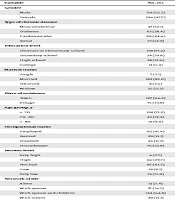
Concerning medication adherence, 37.6% (N = 47) and 62.4% (N = 78) had low and high adherence to medications, respectively. Age was not significantly correlated with medication adherence (R = 0.009, P value = 0.92). The relationships between medication adherence and demographic variables are presented in Table 1. Medication adherence was significantly associated with the frequency of medication use, history of hospitalization, and sex. The strongest relationship was observed between sex and medication adherence (Cramer’s V = 0.63).
Table 1.
Relationships between demographic variables and adherence to medications a
| Variable | High Adherence | Low Adherence | P- value | Phi or Cramer’s V |
|---|---|---|---|---|
| Gender | 0.0001 b | 0.63 | ||
| Female | 64 (88.9) | 8 (11.1) | ||
| Male | 14 (26.4) | 39 (73.6) | ||
| History of hospitalization | 0.001 b | 0.30 | ||
| Yes | 60 (73.2) | 22 (26.8) | ||
| No | 18 (41.9) | 25 (58.1) | ||
| Income | 0.23 | 0.15 | ||
| < 500 USD | 30 (68.2) | 14 (31.8) | ||
| 500 – 1000 USD | 42 (62.7) | 25 (37.3) | ||
| > 1000 USD | 6 (42.9) | 8 (57.1) | ||
| Number of daily medicines | 0.07 | 0.20 | ||
| < 3 | 3 (42.9) | 4 (57.1) | ||
| 3 – 5 | 54 (58.7) | 38 (41.3) | ||
| > 5 | 21 (80.8) | 5 (19.2) | ||
| Frequency of medicine use | 0.001 b | 0.30 | ||
| 1 or 2 | 34 (49.3) | 35 (50.7) | ||
| 3 | 44 (78.6) | 12 (21.4) | ||
| Disease duration, y | 0.17 | 0.16 | ||
| < 5 | 44 (56.4) | 34 (43.6) | ||
| 5 – 9 | 20 (69) | 9 (31) | ||
| > 9 | 14 (77.8) | 4 (22.2) | ||
| Education level | 0.79 | 0.06 | ||
| Illiterate | 59 (63.4) | 34 (36.6) | ||
| Elementary | 12 (63.2) | 7 (36.8) | ||
| Above elementary | 7 (53.8) | 6 (46.2) |
a Values are presented as No. (%).
b Indicates the significance of the relationship.
5. Discussion
In the present study, 62.4% and 37.6% of the patients had high and low medication adherence, respectively, which is consistent with the study of Abbasi et al. (18) in which 60% of the patients with hypertension had high adherence to medications. In contrast, Parsa-Yekta et al. (17) report 56% of patients who suffer from heart diseases do not properly follow their medication use instructions. Similarly, in the other cohort study, only one-third of patients showed adherence to medications (15). Self-reports were one of the tools used to collect data in the present study; therefore, one reason for this lack of consistency among studies might be due to patients reporting better adherence to their medications than reality. Another possible reason is the cross-sectional design of the present study. Among the demographic variables analyzed, sex, history of hospitalization, and frequency of medication use were significantly associated with medication adherence. Accordingly, 88.9% of female patients had high adherence to medications compared to only 26.4% of male patients. This finding is concordant with that of Emilsson et al. (19), who report that male patients with asthma have poorer adherence to medications than female patients. However, the present finding is inconsistent with that of Minaiyan et al. (20), who report no significant relationship between sex and medication adherence. This discrepancy among studies confirms that patients’ adherence to medications can be influenced by their disease as well as demographic factors.
Regarding the relationship between history of hospitalization and medication adherence, patients with a history of hospitalization showed better adherence to their medications, which does not support the hypothesis discussed in the review of van der Wal et al. (21) , i.e. heart failure patients with a history of hospitalization have poorer adherence to medications than patients without any history of hospitalization; however, the authors also mention that this hypothesis is not generalizable to all patients. Nevertheless, more research is required for clarification because of the lack of investigations regarding the relationship between history of hospitalization and medication adherence. One possible explanation for the findings of the present study is that patients with a history of hospitalization, who may have experienced pain (especially severe angina pain), tolerated aggressive procedures, experienced hospitalization-related complications, etc., better adhere to their medications to prevent experiencing these issues again.
In the present study, increasing frequency of daily medication use was associated with better medication adherence. For example, patients who used medications three times per day (i.e. morning, noon, and night) showed better adherence. However, this finding contrasts with that of Iskedjian et al. (22), who report that patients who took medications once per day showed better adherence. Considering most elderly people live with their children or close relatives owing to physical limitations, this discrepancy between the present and previous studies might be due to greater attention paid by patients and their family members to the use of daily medications. Moreover, as medications are usually prescribed to be taken after meals, medications used three times per day (after each meal) are less likely to be ignored than those taken only once per day (e.g. at 09:00).
In the present study, no significant relationship was observed between medication adherence and other demographic variables such as age, income, and education level. Conversely, Gottlieb et al. (23) report a significant negative relationship between age and medication adherence, and Kennedy and Morgan (8) report a significant relationship between income and medication adherence.
This study has some limitations. First, because of a lack of available patients, the present study was conducted on both inpatients and outpatients; therefore, it is possible the hospitalized patients showed better adherence to their medications than reality because of their current health situation in the hospital as well as the attention paid by nurses and their families about their use of prescribed medications. Second, because of the limited sample size, it is difficult to generalize the findings of the present study; therefore, similar studies with larger sample sizes are strongly recommended. Moreover, analyzing the separated samples of inpatients and outpatients groups will be useful.
In conclusion, demographic factors including sex, frequency of daily medication use, and history of hospitalization are associated with medication adherence in elderly patients with cardiovascular diseases. Given the importance and negative consequences of the issue of non-adherence to medication, it is necessary to consider factors influencing adherence/non-adherence to medication to improve patients’ health and family situations. It is very important that doctors and nurses, who play significant roles in disease prevention and treatment, consider these factors. By considering the importance of these factors, it will be possible to promote patients’ adherence to medications and consequently improve their lives.