
1. Background
Blood Stream Infections (BSI) are major causes of morbidity and mortality in burn patients (1). Microorganisms responsible for BSI are generally bacteria; however, Candida spp. are the infection agents in as many as 8% of all cases (2). Burn wound colonization and infections are generally the first steps to systemic infection (1). Candidemia in burn patients has been associated with high mortality and a prolonged hospital stay (3, 4). Disruption of skin barrier in burn is a major risk factor for invading fungi. The necrotic tissue resulting burn injury is an excellent medium for colonizing and growing various microorganism including fungi. Administration of broad-spectrum antibiotics, glucocorticosteroid treatment, mechanical ventilation, parenteral nutrition, trachstomy tubing, burn-induced hyperglycemia, renal failure, persistent neutropenia, immune dysfunction, multiple sites of colonization, and hemodialysis and prolonged hospital stay are also thought to be predisposing factors for candidemia (5-7).
Candidaalbicans has been described as the most common cause of candidemia. However, the number of non-albicans species has increased during recent decades, and C. glabrata has emerged as the second most common cause, followed by C.parapsilosis, C. tropicalis and C. krusei (8). The latest study about candidemia in Iran unexpectedly revealed the higher rate of C. parapsilosis (34.4%), followed by C. glabrata (28.1%) and C. albicans (25%). The predisposing factor in these patients was surgery, cancer, hematological malignancy, diabetes, renal filature, premature birth and pancreatitis. Voriconazole was the most active drug and fluconazole was associated with high Minimum Inhibitory Concentration (MIC) results (9). Reduced susceptibility of non-albicans Candida species to antifungal agents has been reported (10, 11). It is known that C. glabrata exhibits intrinsically low susceptibility to azoles and develops resistance after exposure to these drugs (12). Inherent and emerging resistance to antifungal agents represents a major challenge for empirical therapeutic and prophylactic strategies (13).
Effective therapeutic management of patients with candidemia requires early identification of the infecting agent. Appropriate antifungal therapy guided by antifungal susceptibility testing improves the outcome for severely injured burn victims susceptible to fungal infection. In Iran, there is a lack of extensive studies regarding candidemia in burn and the antifungal susceptibility patterns of the isolated Candida strains.
2. Objectives
The aim of this study was to identify the Candida species involved in candidemia in burn patients, and determine the susceptibility patterns of the isolated Candida species to the antifungal agents including amphotericin B, fluconazole, voriconazole and caspofungin.
3. Patients and Methods
3.1. Patients
A cross-sectional study was conducted from June 2011 to March 2012 at the Burn Center of Zare Hospital in Sari, Iran. Post-burn reconstructive surgery and debridement were carried out for patients based on the depth of the injury. The study protocol was approved by the medical research ethics committee of the Mazandaran University of Medical Sciences (ethical no. 92-3-8 90-159) and a written informed consent was obtained from the patients. The patients who were not willing to participate were excluded from the study.
3.2. Clinical Data
Demographic and clinical data included age, gender, percentage of the Total Body Surface Area affected by the burn (TBSA; Lund-Browder charts were used to estimate burn sizes), duration of the hospital and Intensive Care Unit (ICU) stay, the number of items prescribed as antibiotic treatment (for > 7 days), necessity for Total Parenteral Nutrition (TPN), and Central Venous Catheter (CVC), or mechanical ventilation, and outcomes of surgical procedures collected.
3.3. Fungal Cultures
Samples from peripheral blood were obtained aseptically when the persistent fever refractory to broad-spectrum antibiotics was present for more than 96 hours or sepsis was clinically suspected.
The blood samples were inoculated onto biphasic fungal blood culture media containing Brain heart infusion (BHI) broth and BHI Agar (Kusha Faravar Giti, Karaj, Iran) and incubated for 10 days at 37°C. The blood culture bottles vented with a needle and incubated in a shaking incubator for the first day and the agar slants were washed with the broth mixture once each day for 5 days (14). All blood cultures including positive and negative ones were subcultured onto Sabouraud’s dextrose agar (Scharlau Chemie, Barcelona, Spain) medium with chloramphenicol and CHROM agar Candida (bioMérieux, Marcy l’Etoile, France).
More than two blood culture sets obtained over a 24-hour period were included for detecting low level candidemia and increasing the sensitivity. Episodes of candidemia were counted once, irrespective of the number of sets of blood cultures that were positive, with the same organism within 14 days for the same patient. If the same species was grown more than 14 days later it was regarded as a new episode. Candidemia was defined as at least 1 set of positive blood cultures for Candida species in patients with compatible clinical signs and symptoms of infection (15). The yeasts isolates were identified to the species level using conventional procedures; i.e. morphological examination on a cornmeal agar plate (CMA, BBL Sparks, Maryland, USA ), germ tube formation, and carbon-nitrogen assimilation test using the API 20C yeast identification system (bioMerieux, Marcy l’Etoile, France).
3.4. In Vitro Antifungal Susceptibility
In vitro antifungal susceptibility of the Candida isolates to amphotericin B, fluconazole, voriconazole and caspofungin was performed using Etest (bioMerieux, Marcy l'Etoile, France) according to the manufacturer’s instructions. The Etest strips for amphotericin B, voriconazole, and caspofungin contained concentration gradients of 32 - 0.002 µg/mL of the respective drug. The fluconazole strips contained gradients of 256 - 0.016 µg/mL. The yeast inocula were adjusted by spectrophotometer to 1 × 10⁶ to 5 × 10⁶ which matched an optical density of 0.5 McFarland in saline. An agar medium containing RPMI-1640 (GIBCO/Life Technologies, Grand Island, NY) with 2% glucose was flooded with the cell suspension (16).
3.5. Statistical Analysis
Clinical data were analysed using GraphPad Prism version 5.00 (GraphPad Software, San Diego) for the Mann-Whitney U test. P < 0.05 was considered statistically significant.
4. Results
4.1. Clinical Features Associated With Candidemia
Clinical data characterizing the 13 patients with candidemia are summarized in Table 1. Statistical analysis of these data revealed that the incidence of candidemia was significantly correlated with an increased duration of hospitalization, a longer stay in the ICU and higher mortality (Table 2).
| Patient ID | Age, y | Gender | TBSA, % | Hospital DOS, d | ICU DOS, d | Antibiotic treatment | Mechanical ventilation | Isolated Candida (n) | Outcome |
|---|---|---|---|---|---|---|---|---|---|
| 1 | 18 | F | 37 | 34 | 18 | + | + | C. tropicalis (1) | survived |
| 2 | 81 | M | 23 | 82 | 75 | + | + | C. guilliermondii (2) | died |
| 3 | 16 | F | 36 | 43 | 40 | + | _ | C. parapsilosis (4) | survived |
| 4 | 54 | F | 21 | 57 | 55 | + | _ | C. parapsilosis (5) | survived |
| 5 | 62 | M | 25 | 50 | 30 | + | _ | C. albicans (1) | died |
| 6 | 27 | F | 54 | 31 | 31 | + | + | C. guilliermondii (2) | died |
| 7 | 8 | M | 66 | 41 | 41 | + | + | C. parapsilosis (2) | survived |
| 8 | 70 | F | 17.5 | 73 | 73 | + | + | C. tropicalis (1) | died |
| 9 | 27 | M | 66 | 29 | 29 | + | + | C. parapsilosis (1); C. tropicalis (1) | died |
| 10 | 26 | M | 52 | 15 | 15 | + | _ | C. tropicalis (2) | died |
| 11 | 30 | F | 25 | 24 | 24 | + | + | C. parapsilosis (1) | died |
| 12 | 18 | F | 60 | 32 | 32 | + | + | C. tropicalis (2) | died |
| 13 | 2 | F | 38 | 25 | 25 | + | _ | C. albicans (2) | died |
a All patients had TPN administration and CVC.
b Abbreviations: DOS, duration of stay; ICU, intensive care unit; TBSA, total body surface area; y, years; d, days.
Table 2.
Characteristics and Outcomes for Burn Patients a
| Characteristics | Patients With Candidemia (n = 13) | Without Patients Candidemia (n = 100) | P Value |
|---|---|---|---|
| Age, y | 33.8 ± 24.8 | 34.4 ± 19.5 | 0.51 |
| TBSA, % | 39.9 ± 17.6 | 41.5 ± 18.7 | 0.73 |
| Hospital DOS, d | 41.2 ± 19.7 | 22.9 ± 11.7 | 0.0003 |
| ICU DOS, d | 37.5 ± 19.2 | 16.2 ± 12.9 | < 0.0001 |
| CVC | 13 (100) | 83 (83) | 0.13 |
| No. antibiotics | 4.8 | 4 | 0.07 |
| Mechanical ventilation | 8 (61.5) | 40 (40) | 0.07 |
| TPN | 13 (100) | 81 (81) | 0.1 |
| Mortality | 9 (69.2) | 36 (36) | 0.04 |
a Abbreviations: CVC, central venous catheter; DOS, duration of stay; ICU, intensive care unit; TBSA, total body surface area; TPN, total parenteral nutrition; y, years; d, days.
4.2. Candida In Blood
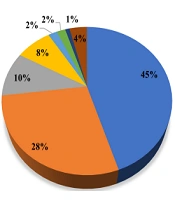
During the study period a total of 405 blood samples were collected from 113 burn patients who had persistent fever refractory to broad-spectrum antibiotics for more than 96 hours or were clinically suspected to have sepsis. The median age of the patients was 34 years (range 1 - 88 years). Twenty-seven (6.7%) of the blood cultures from 13 (12%) patients were positive for yeasts. Identification of the isolated yeasts revealed that patients were infected with C. parapsilosis 38% (n = 5), C. tropicalis 38% (n = 5), C. albicans 15% (n = 2), and C. guilliermondii 15% (n = 2). One patient (patient 8) was infected with two Candida species (C. tropicalis and C. parapsilosis (Table 1). The mean duration of hospital and ICU stay in patients with candidemia were 41 and 37 days, respectively which were greater than those without candidemia (23 and 16 days respectively). In addition, higher mortality rate among patients with candidemia (69%) was observed (Table 2).
4.3. Antifungal Susceptibility Testing
The isolated Candida species grew well on the RPMI agar plates, with detectable Etest endpoints. The MIC ranges and geometric means are summarized in Table 3. Amphotericin B and voriconazole exhibited the lowest MICs followed by fluconazole. Caspofungin appeared to have poor antifungal activity against all C. parapsilosis isolates and two isolates of C. guilliermondii (Table 3).
Table 3.
In vitro Susceptibility to Amphotericin B, Voriconazole, Fluconazole and Caspofungin According to Etests Performed on 27 Candida Species Isolated From Blood of Burn Patients With Candidemia a
| Candida Species | No. (%) | MIC, µg/mL b | |||
|---|---|---|---|---|---|
| Amphotericin B | Voriconazole | Fluconazole | Caspofungin | ||
| C. parapsilosis | 13 (48) | 0.002 - 0.38 (0.06) | 0.125 - 0.047 (0.06) | 0.064 - 3 (1.17) | > 32 |
| C. tropicalis | 7 (26) | 0.016 - 0.032 (0.01) | 0.016 - 0.032 (0.04) | 0.125 - 0.25 (0.22) | 1 (0.96) |
| C. guilliermondii | 4 (15) | 0.002 - 0.094 (0.01) | 0.04 - 0.064 (0.02) | 0.38 - 6 (1.92) | 0.38 - 32 < (4.51) |
| C. albicans | 3 (11) | 0.002 - 0.047 (0.064) | 0.004 - 0.125 (0.03) | 0.19 - 0.38 (0.3) | 0.5 - 1.5 (1) |
a Abbreviation: MIC, minimal inhibitory concentration.
b Range (Geometric Mean).
5. Discussion
Bloodstream infections are among the most common complications occurring in severe burn patients. In fact, most burn-related deaths in modern burn units occur because of septic shock and organ dysfunction rather than osmotic shock and hypovolemia (17). Candida albicans have been described as the fourth most common pathogen isolated from blood in ICU patients (18, 19). The incidence of infections caused by Candida spp. other than C. albicans has increased markedly during recent years (9, 20-22). In this study, we found that non-albicans Candida was the most common yeast isolated from burn patients. The high incidence of non-albicans Candida in patients with candidemia has been reported before (9, 21). Ghahri et al. reported C. parapsilosis as the most common Candida species isolated from blood of patients with candidemia in Iran (9).
Miranda et al. have suggested that C. parapsilosis candidemia is more likely to be from an exogenous source than from the patients themselves and highly associated with medical device such as CVC, TPN, mechanical ventilation, and urine catheter (23). These aggressive procedures and prolonged broad-spectrum antibiotics increase the risk of candidemia in burn patients (23, 24). Candida parapsilosis has been reported as a frequent colonizer fungal species of the hands of hospital personnel and that may be a predisposing condition for nosocomial infections transmitted with the hands of hospital personnel (25). Education of hospital personnel for regular hand washing practice may prevent Candida colonization and nosocomial transmission of fungemia.
The incidence of candidemia in our study was 12% in burn patients, which was higher than those reported before (1- 5 %) (26); these differences might be due to the population size and duration of the study, or differences in the underlying disease. We found that the incidence of candidemia in burn patients was significantly associated with increased duration of hospitalization and time of stay in the ICU. This is in agreement with previous studies that have shown a high incidence of systemic Candida infections in ICU patients (27). In our study, the mortality rate among burn patients with candidemia was significantly higher than in other patients, which is in agreement with previous studies (6). Moore et al. have reported that mortality among burn patients with candidemia is almost four times higher than in those without candidemia (15).
The in vitro antifungal susceptibility testing revealed that amphotericin and voriconazole were the most active agents against isolated Candida species. This is in agreement with the results of a study by Aydin et al., who reported that isolates of C. albicans, C. parapsilosis, C. tropicalis and C. guilliermondii were susceptible to amphotericin B, voriconazole and fluconazole (28). We found that caspofungin had poor antifungal activity against C. parapsilosis. The activity of caspofungin and other echinocandins (anidulafungin and micafungin) against C. parapsilosis was also found to be unsatisfactory in vivo in a study by Canton et al. (29).
In conclusion, C. parapsilosis is the most common Candida species isolated from blood of burned patients with candidemia in north part of Iran. Transmission through the hands of healthcare workers may play an important role in the spread of C. parapsilosis, contributing to the high isolation rate of this fungus. Identification and antifungal susceptibility testing of yeasts isolated from blood cultures is crucial, since the echinocandins are less active against C. parapsilosis.