Full Text
Full text is available in PDF
Jundishapur Journal of Microbiology
Ahvaz Jundishapur University of Medical Sciences
Authors
Introduction and objective: Increasing number of people are using mouthwashes for general and oral health care. Few of these mouthwashes, however, have undergone rigorous testing, as evidenced by the limited amount of information on their safety and efficacy in the literature. The aim of this study was to determine the antimicrobial properties of ten commonly available mouthwashes against four oral pathogens related to caries and to oral fungal infections, to verify the claims made by the manufacturers to provide information to dental professionals about the efficacy of their products in vitro and to use these mouthwashes as a base for the evaluation of antimicrobial plant products.
Materials and methods: The authors used two different techniques: microbial growth in nutrient broth by turbidity measurement and an agar well diffusion method to evaluate the antimicrobial effectiveness of ten often used mouthwashes against four microorganisms: Streptococcus mutans and Staphylococcus aureus (bacteria), Candida albicans and Saccharomyces cerevisiae (fungi). Nutrient broth without mouthwash and sterile distilled water served as the control respectively in the two techniques.
Results: Hexidine mouthwash emerged as the most effective mouthwash [maximum mean diameter of inhibition zone against S. aureus (28.3mm to 33.9mm) followed by S. mutans (23.6mm to 26mm), S. cerevisiae (20.6mm to 26.3mm) and minimum against C. albicans (11.9mm to 22.9mm)] followed by Chlohex and Triguard, all of which had excellent level of activity. Following Triguard were Zytee, Chlohexplus, Hexnor and Chlorhexidine that showed good antimicrobial activity and finally, displaying very little antimicrobial activity was Listerine while Toss-K and Senquel-AD totally lacked antimicrobial activity.
Conclusion: Hexidine mouthwash (ICPA Health Products Ltd., Ankleshwar, India) showed excellent antimicrobial activity against the four dental caries causing microorganisms in vitro. The six mouthwashes found to be effective against all the four tested microorganisms at all the four concentrations, comprising of Chlorhexidine gluconate as the basic constituent, presented different antimicrobial activities.
© 2010, Author(s). This open-access article is available under the Creative Commons Attribution 4.0 (CC BY 4.0) International License (https://creativecommons.org/licenses/by/4.0/), which allows for unrestricted use, distribution, and reproduction in any medium, provided that the original work is properly cited.
Yousefimanesh H, Amin M, Robati M, Goodarzi H, Otoufi M. Comparison of the Antibacterial Properties of Three Mouthwashes Containing Chlorhexidine Against Oral Microbial Plaques: An in vitro Study. Jundishapur J Microbiol. 2015;8(2):e17341. doi: https://doi.org/10.5812/jjm.17341
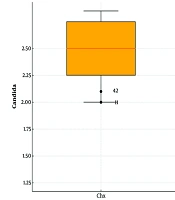
Ghafari K, Shoorgashti R, Lesan S, Rezaei M, Farrokhnia T. Comparative Efficacy of Chlorhexidine and Fluorine Total Mouthwashes Against Candida albicans and Streptococcus sanguinis. Arch Clin Infect Dis. 2024;19(5):e154742. doi: https://doi.org/10.5812/archcid-154742
Saadatzadeh A, Ameri A, Moghimipour E, Bahmani B, Gholipour S. Comparison of Antibacterial Efficacy of Probiotic Mouthwash with Chlorhexidine Against Common Oral Pathogens: An In-Vitro Study. Jundishapur J Nat Pharm Prod. 2018;13(1):e65029. doi: https://doi.org/10.5812/jjnpp.65029
Marya CM, Chopra M, Oberoi SS, Nagpal R, Dhingra C. Comparison of Antimicrobial Efficacy of Brazilian Propolis With Chlorhexidine and Sodium Fluoride Against Common Oral Pathogens: An In Vitro Study. Jundishapur J Nat Pharm Prod. 2015;10(2):e19069. doi: https://doi.org/10.17795/jjnpp-19069
Talebi S, Sabokbar A, Riazipour M, Saffari M. Comparison of the in vitro Effect of Chemical and Herbal Mouthwashes on Candidaalbicans. Jundishapur J Microbiol. 2014;7(12):e12563. doi: https://doi.org/10.5812/jjm.12563
More by these authors
Last Update: 3 weeks ago
Last Update: 3 weeks ago
Last Update: 3 weeks ago
Last Update: 4 hours ago
Last Update: 1 day ago
Last Update: 4 days ago