Full Text
Full text is available in PDF
Jundishapur Journal of Microbiology
Ahvaz Jundishapur University of Medical Sciences
Authors
Chlorhexidine gluconate (CHX) is the most common antimicrobial agent used against oral pathogens, however information on its ability to inhibit and disrupt anaerobic single and multispecies biofilms is relatively unknown.
The purpose of this study was to test the efficacy of CHX for its biofilm inhibition and disruption properties using crystal violet assay.
Biofilm assays were carried out on single and multispecies of four oral pathogens:
Streptococcus mutans, Fusobacterium nucleatum and multi-species biofilm formation were inhibited in more than 90% of cases at concentrations of 3-12 mg/L. CHX exhibited strong disruptive activity (> 65%) on one-day old biofilms of
In conclusion, CHX was a high effective biofilm inhibitor on
© 2012, Author(s). This open-access article is available under the Creative Commons Attribution 4.0 (CC BY 4.0) International License (https://creativecommons.org/licenses/by/4.0/), which allows for unrestricted use, distribution, and reproduction in any medium, provided that the original work is properly cited.
Ebrahimi A, Hemati M, Habibian Dehkordi S, Bahadoran S, Khoshnood S, et al. Chlorhexidine Digluconate Effects on Planktonic Growth and Biofilm Formation in Some Field Isolates of Animal Bacterial Pathogens. Jundishapur J Nat Pharm Prod. 2014;9(2):e14298. doi: https://doi.org/10.17795/jjnpp-14298
Yousefimanesh H, Amin M, Robati M, Goodarzi H, Otoufi M. Comparison of the Antibacterial Properties of Three Mouthwashes Containing Chlorhexidine Against Oral Microbial Plaques: An in vitro Study. Jundishapur J Microbiol. 2015;8(2):e17341. doi: https://doi.org/10.5812/jjm.17341
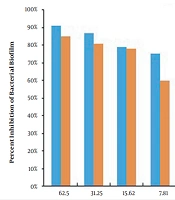
Tavafi H. In vitro Evaluation of Synergistic Inhibitory Effect of Propolis and Chlorhexidine on Biofilm Cells of Oral Pathogens. Jentashapir J Cell Mol Biol. 2021;12(4):e122091. doi: https://doi.org/10.5812/jjcmb.122091
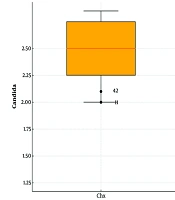
Ghafari K, Shoorgashti R, Lesan S, Rezaei M, Farrokhnia T. Comparative Efficacy of Chlorhexidine and Fluorine Total Mouthwashes Against Candida albicans and Streptococcus sanguinis. Arch Clin Infect Dis. 2024;19(5):e154742. doi: https://doi.org/10.5812/archcid-154742
Vahabi S, Aliali R. Cytotoxic effects of chlorhexidine on L929 mouse fibroblasts. J Inflamm Dis. 2007;11(1):e155275. doi:
Last Update: 2 weeks ago
Last Update: 2 weeks ago
Last Update: 2 weeks ago
Last Update: 11 hours ago
Last Update: 12 hours ago
Last Update: 5 days ago