Cover image of the article: Clinical and Non-Clinical Characteristics of Pulmonary Aspergillosis in Non-Neutropenic Patients

Image Credit:pixabay.com

Clinical and Non-Clinical Characteristics of Pulmonary Aspergillosis in Non-Neutropenic Patients

Authors

Tingting Chen1, Wenfang Tang1, Yimin Chen2, Jun Zhang1, Xinyou Xie1,*
1Sir Run Run Shaw Hospital, Zhejiang University School of Medicine, Hangzhou, China
2Zhejiang Provincial Hospital of Traditional Chinese Medicine, Hangzhou, China
*Corresponding Author: Sir Run Run Shaw Hospital, Zhejiang University School of Medicine, Hangzhou, China. Email: scottxie@zju.edu.cn

Jundishapur Journal of Microbiology:Vol. 12, issue 5; e90448
Published online:May 25, 2019
Article type:Letter
Received:Feb 08, 2019
Accepted:May 17, 2019
How to Cite:Chen T, Tang W, Chen Y, Zhang J, Xie X. Clinical and Non-Clinical Characteristics of Pulmonary Aspergillosis in Non-Neutropenic Patients. Jundishapur J Microbiol. 2019;12(5):e90448. doi: https://doi.org/10.5812/jjm.90448

Dear Editor,
Aspergillus is a genus of filamentous, ubiquitous, and opportunistic pathogenic fungi. Patients with underlying lung disease are susceptible to Aspergillus due to their immunodeficiency, but the symptoms become atypical as other lung diseases are contracted (1-3). Aspergillus fumigatus, A. flavus, and A. niger are the primary pathogenic species in most literatures (4, 5). The principal forms of pulmonary aspergillosis (PA) are allergic bronchopulmonary aspergillosis (ABPA), chronic (and saprophytic) pulmonary aspergillosis (CPA), and invasive pulmonary aspergillosis (IPA). In non-neutropenic patients, various forms are considered a semi-continuous spectrum of aspergillosis (4). The analysis of the clinical features can deepen our understanding of the spectrum of clinical manifestations of Aspergillus infection and provide references for its diagnosis.
Forty-two PA patients (30 males and 12 females) in the Respiratory Department of our hospital were enrolled in the present study from January 2016 to December 2017. Patients with a hematological disease or granulocytic deficiency were excluded. The average age ± standard deviation (SD) was 62.45 ± 16.09 years. All patients were divided into three groups, including CPA, ABPA, and IPA, according to the consensus on the diagnosis and treatment of pulmonary mycosis (6). Proven IPA was dependent on the histological analysis or positive Aspergillus cultures in sterile sites. Probable IPA met the criteria for a host factor, a clinical criterion, and a mycological criterion, according to the criteria of the European Organization for Research and Treatment of Cancer/Mycoses Study Group (EORTC/MSG) (7). Only cases of proven and probable IPA were included in the IPA group. Clinical features, chest CT, total serum IgE, and Aspergillus species-specific IgE were employed in combination to diagnose ABPA. The underlying lung diseases were comprised of COPD (11/42), bronchiectasis (11/42), TB (6/42), lung cancer (3/42), and interstitial lung disease (3/42).
Beta-Glucan (BG) test was performed using a 1-3-β-D- Glucan test kit (Zhanjiang A&C Biological Ltd, China), galactomannan (GM) test was conducted with the Platelia Aspergillus EIA test kit (Bio-rad Laboratories, USA), and C-reactive protein (CRP) was detected with the CRP test kit (QuikRead go, Finland). Aspergillus was identified by the mass spectrometry (Bruke MALDI Biotype) after being cultured in Sabouraud dextrose agar. Clinical symptoms, chest CT, BG test, GM test, CRP, and fungal cultures were analyzed. Tests were defined as positive when the GM index ≥ 0.5 and the 1-3-β-D-Glucan (BG test) ≥ 100 pg/mL. Differences between the groups were analyzed using one-way ANOVA test. A P < 0.05 was the threshold for statistical significance.
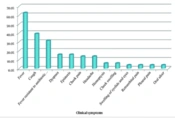
The majority of the PA patients presented with cough, expectoration, and chest tightness. Hemoptysis was primarily present in CPA and presumed to be associated with aspergilloma, invading the intercostal artery. Wheezing was primarily present in ABPA and was likely to be associated with a complex hypersensitivity reaction. The IPA patients had the highest rate of fever. The CT findings in CPA, ABPA, and IPA consisted of bronchiectasis (66.67%, 50.00%, and 43.48%), nodular or mass shadow (66.67%, 60.00%, and 34.78%), flake shadow (44.44%, 70.00%, and 43.48%), cavity (33.33%, 10.00%, and 21.74%), pleural thickening (88.89%, 20.00%, and 56.52%), lung obstruction collapse (44.44%, 0.00%, and 0.00%), pulmonary emphysema (55.56%, 40.00%, and 21.74%), and pulmonary bullae (44.44%, 0.00%, and 13.04%).
Serum G and GM tests were performed in all CPA cases, 8 ABPA (8/10), and 22 IPA (22/23). bronchoalveolar lavage fluid (BALF) BG and GM tests were carried out in the remaining patients. No statistically significant differences were established in the serum BG and GM test values in CPA, ABPA, and IPA patients (χ2 = 2.676, P = 0.262 and χ2 = 3.166, P = 0.205), but the CRP values were statistically different (χ2 = 7.913, P = 0.019) (Table 1). The BALF BG and GM tests were performed in 11 PA patients. Eight patients with negative serum GM underwent BALF GM simultaneously, six of them were positive.
Table 1.
Analysis of BG, GM, and CRP in CPA, ABPA, and IPA patients
CPA (n = 9)ABPA (n = 8)IPA (n = 22)Totalχ2P Value
Serum GM test ODI3.1660.205
Median0.490.240.290.30
Minimum value0.190.180.130.13
Maximum value2.503.304.184.18
Serum BG test (pg/mL)2.6760.262
Median37.2024.6078.2053.55
Minimum value24.8018.2017.4017.40
Maximum value528.03538.905000.05000.00
CRP (mg/L)7.9130.019a
Median10.931.0020.708.40
Minimum value1.000.380.500.38
Maximum value59.6744.62319.58319.58
Abbreviations: ABPA: allergic bronchopulmonary aspergillosis; BG test: 1-3-β-D-Glucan; CPA: chronic pulmonary aspergillosis; CRP: C-reactive protein; GM: galactomannan; IPA: invasive pulmonary aspergillosis; ODI: optical density index.
aP < 0.05, statistically significant.
Fungal cultures were positive in none of the CPA cases (0/9), 6 ABPA (6/10), and 14 IPA (14/23). One case of A. flavus and five cases of A. fumigatus were identified in the ABPA patients, whereas A. fumigatus was isolated in 14 cases of IPA patients. The number of males was higher than that of females, and the age range was from 50 to 70 years. The clinical characteristics were non-specific. Although the CT findings facilitated an improved PA diagnosis, the imaging results were diverse and non-specific.
The sensitivity of BG and GM tests for the diagnosis of PA in non-neutropenic patients was insufficient. Consistent with Zhou et al. (8), GM antigen levels were greater in BALF as this represented the site of infection. Neutrophils eliminated GM antigens in the serum, which reduced the available levels of detection. Similar to previous studies (9), the median of CRP in IPA patients was the highest, followed in a descending order by that in CPA and ABPA. These findings suggest that CRP could be used in combination with other tests to identify PA.
Sputum fungal cultures were unsuitable for the diagnosis of CPA due to the presence of hyphae that restricted the release into sputum, but the positive rates of the sputum fungal cultures were higher than those of the serum BG and GM in IPA and ABPA. In conclusion, our findings revealed that the symptoms were non-specific. Additionally, the imaging results were diverse, and the microbiological indices were insufficiently sensitive. Therefore, the development and implementation of new indicators or methods to facilitate PA diagnosis are required.
Footnotes

  • Authors’ Contribution:Jun Zhang and Xinyou Xie conceived and designed the experiments. Tingting Chen and Wenfang Tang performed the experiments. Tingting Chen and Yimin Chen analyzed the data. Tingting Chen contributed to the provision and exploitation of reagents/materials/analysis tools and wrote the manuscript.

  • Conflict of Interests:The authors declare that they have no conflict of interests.

  • Ethical Approval:The Ethics Committee of Zhejiang Provincial Hospital of Traditional Chinese Medicine approved this study (Ethical code: 2019-K-300-01).

  • Financial Disclosure:The authors have no relevant financial interests.

  • Funding/Support:No funding support.

References

  • 1.
    Zarrinfar H, Makimura K, Satoh K, Khodadadi H, Mirhendi H. Incidence of pulmonary aspergillosis and correlation of conventional diagnostic methods with nested PCR and real-time PCR assay using BAL fluid in intensive care unit patients. J Clin Lab Anal. 2013;27(3):181-5. [PubMed ID: 23686776]. https://doi.org/10.1002/jcla.21580.
  • 2.
    Zarrinfar H, Mirhendi H, Fata A, Khodadadi H, Kordbacheh P. Detection of aspergillus flavus and a. Fumigatus in bronchoalveolar lavage specimens of hematopoietic stem cell transplants and hematological malignancies patients by real-time polymerase chain reaction, nested PCR and mycological assays. Jundishapur J Microbiol. 2015;8(1). e13744. [PubMed ID: 25763133]. [PubMed Central ID: PMC4344768]. https://doi.org/10.5812/jjm.13744.
  • 3.
    Zarrinfar H, Mirhendi H, Makimura K, Satoh K, Khodadadi H, Paknejad O. Use of mycological, nested PCR, and real-time PCR methods on BAL fluids for detection of Aspergillus fumigatus and A. flavus in solid organ transplant recipients. Mycopathologia. 2013;176(5-6):377-85. [PubMed ID: 24045934]. https://doi.org/10.1007/s11046-013-9657-9.
  • 4.
    Kosmidis C, Denning DW. The clinical spectrum of pulmonary aspergillosis. Thorax. 2015;70(3):270-7. [PubMed ID: 25354514]. https://doi.org/10.1136/thoraxjnl-2014-206291.
  • 5.
    Zarrinfar H, Saber S, Kordbacheh P, Makimura K, Fata A, Geramishoar M, et al. Mycological microscopic and culture examination of 400 bronchoalveolar lavage (BAL) samples. Iran J Public Health. 2012;41(7):70-6. [PubMed ID: 23113213]. [PubMed Central ID: PMC3469012].
  • 6.
    The Society of Respiratory Medicine CSOM. consensus on diagnosis and treatment of pulmonary mycosis. Chin J Tuberc Respir Dis. 2007;11(30):821-34.
  • 7.
    De Pauw B, Walsh TJ, Donnelly JP, Stevens DA, Edwards JE, Calandra T, et al. Revised definitions of invasive fungal disease from the European Organization for research and treatment of cancer/invasive fungal infections cooperative group and the national institute of allergy and infectious diseases mycoses study group (EORTC/MSG) consensus group. Clin Infect Dis. 2008;46(12):1813-21. [PubMed ID: 18462102]. [PubMed Central ID: PMC2671227]. https://doi.org/10.1086/588660.
  • 8.
    Zhou W, Li H, Zhang Y, Huang M, He Q, Li P, et al. Diagnostic value of galactomannan antigen test in serum and bronchoalveolar lavage fluid samples from patients with nonneutropenic invasive pulmonary aspergillosis. J Clin Microbiol. 2017;55(7):2153-61. [PubMed ID: 28446576]. [PubMed Central ID: PMC5483917]. https://doi.org/10.1128/JCM.00345-17.
  • 9.
    Roques M, Chretien ML, Favennec C, Lafon I, Ferrant E, Legouge C, et al. Evolution of procalcitonin, C-reactive protein and fibrinogen levels in neutropenic leukaemia patients with invasive pulmonary aspergillosis or mucormycosis. Mycoses. 2016;59(6):383-90. [PubMed ID: 26931315]. https://doi.org/10.1111/myc.12487.

Copyright

Copyright © 2019, Author(s). This is an open-access article distributed under the terms of the Creative Commons Attribution-NonCommercial 4.0 International License (http://creativecommons.org/licenses/by-nc/4.0/) which permits copy and redistribute the material just in noncommercial usages, provided the original work is properly cited.

Similar Articles

9
Feb
2024
Clinical Characteristics of Patients with Hematologic Malignancies and Invasive Aspergillosis: A Cross-sectional Clinical Report from Iran

Clinical Characteristics of Patients with Hematologic Malignancies and Invasive Aspergillosis: A Cross-sectional Clinical Report from Iran

Mohammadreza Salehi,
Nafiseh Shahrbaf,
Farhad Shahi,
Sadegh Khodavaisy,
Seyed Ali Dehghan Manshadi,
Zahra Rafat
,et al.

Salehi M, Shahrbaf N, Shahi F, Khodavaisy S, Dehghan Manshadi SA, et al. Clinical Characteristics of Patients with Hematologic Malignancies and Invasive Aspergillosis: A Cross-sectional Clinical Report from Iran. Jundishapur J Microbiol. 2023;16(12):e142306. doi: https://doi.org/10.5812/jjm-142306

7
Aug
2016
Clinical Manifestation and Diagnosis of Invasive Fungal Sinusitis in Patients with Hematological Malignancy

Clinical Manifestation and Diagnosis of Invasive Fungal Sinusitis in Patients with Hematological Malignancy

Masoud Mardani,
Yazdanali Faghani,
Mahdi Tabarraee,
Sara Abolghasemi

Mardani M, Faghani Y, Tabarraee M, Abolghasemi S. Clinical Manifestation and Diagnosis of Invasive Fungal Sinusitis in Patients with Hematological Malignancy. Arch Clin Infect Dis. 2016;11(4):e36566. doi: https://doi.org/10.5812/archcid.36566

2
Nov
2022
Evaluation of Empirical Antifungal Treatments in Patients with Neutropenic Fever in Imam Hossein Hospital, Tehran, 2017 - 2018

Evaluation of Empirical Antifungal Treatments in Patients with Neutropenic Fever in Imam Hossein Hospital, Tehran, 2017 - 2018

Fahimeh Hadavand,
Simin Dokht Shoaei,
Hamid Noroozi

Hadavand F, Shoaei SD, Noroozi H. Evaluation of Empirical Antifungal Treatments in Patients with Neutropenic Fever in Imam Hossein Hospital, Tehran, 2017 - 2018. J Arch Mil Med. 2022;10(4):e122775. doi: https://doi.org/10.5812/jamm-122775

11
May
2024
Invasive Fungal Infections Among Patients with Hematological Malignancies: A Two-Year Multicentric Study from Tehran, Iran

Invasive Fungal Infections Among Patients with Hematological Malignancies: A Two-Year Multicentric Study from Tehran, Iran

Davod Sheikh-Hoseini,
Saeed Soleiman-Meigooni,
Hassan Jalaeikhoo,
Jalil Rajabi,
Mohammad Hassan Kazemi-Galougahi,
Taher Azimi
,et al.

Sheikh-Hoseini D, Soleiman-Meigooni S, Jalaeikhoo H, Rajabi J, Kazemi-Galougahi MH, et al. Invasive Fungal Infections Among Patients with Hematological Malignancies: A Two-Year Multicentric Study from Tehran, Iran. Jundishapur J Microbiol. 2024;17(4):e144500. doi: https://doi.org/10.5812/jjm-144500

31
Jul
2011
The Spectrum of Diseases Caused by Aspergillus fumigates

The Spectrum of Diseases Caused by Aspergillus fumigates

Nariman Shahhosseini,
Alireza Khabiri,
Farideh Bagheri

Shahhosseini N, Khabiri A, Bagheri F. The Spectrum of Diseases Caused by Aspergillus fumigates. Arch Clin Infect Dis. 2011;6(3):. doi:

More by these authors

Tingting ChenPubMedScholar
Wenfang TangPubMedScholar
Yimin ChenPubMedScholar
Jun ZhangPubMedScholar
Xinyou XiePubMedScholar
Share
Cited by
Metrics