Fulltext
Fulltext is available in pdf file.
Jundishapur Journal of Microbiology
Ahvaz Jundishapur University of Medical Sciences
Image Credit:Jundishapur J Microbiol
Authors
Background: Helicobacter pylori is responsible for one of the most common human infections and is a major risk factor for stomach ulcer disease and gastric cancer. H. pylori infection has been reported to be associated with generation and development of coronary artery disease (CAD). Moreover, diabetic patients positive for H. pylori infection showed a higher prevalence of CAD compared to H. pylori-negative patients. The main association between H. pylori infection and CAD seems to be generation of chronic low-grade inflammation.
Objectives: The current study aimed toinvestigate H. pylori’s capability to induce low-grade inflammation in the host; therefore H. pylori was compared to E. coli in its ability to activate neutrophils. Furthermore, H. pylori’s capability to induce apoptosis in peripheral blood lymphocytes was studied.
Materials and Methods: Peripheral blood neutrophils were treated with bacterial cells and the expression of the integrin CD11b that is critical for neutrophils adhesion, migration, and immune functions was assessed by flow cytometry. Additionally, peripheral blood lymphocytes were treated with H. pylori or E. coli then bacterial-induced apoptosis was examined by Annexin-V and Propidium Iodide (PI) staining.
Results: The obtained data showed that CD11b expression on cells treated with H. pylori was significantly lower than cells treated with E. coli. Furthermore, H. pylori induced apoptosis in lymphocytes significantly more than E. coli. Conclusions: Diminished neutrophilic activation along with enhanced lymphocytic apoptosis could explain enhanced predisposition to CAD through induced chronic low-grade inflammation.
© 2013, Author(s). This open-access article is available under the Creative Commons Attribution 4.0 (CC BY 4.0) International License (https://creativecommons.org/licenses/by/4.0/), which allows for unrestricted use, distribution, and reproduction in any medium, provided that the original work is properly cited.
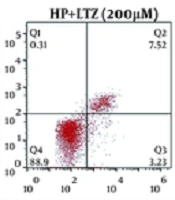
Li Y, Chen Q, Wang S, Zhang S. Ligustrazine Attenuates Gastric Inflammation and Apoptosis in Helicobacter pylori-induced Gastric Epithelial Cells. Jundishapur J Microbiol. 2021;14(4):e116612. doi: https://doi.org/10.5812/jjm.116612
Romero-Adriàn TB, Leal-Montiel J. Helicobacter pylori Infection: Regulatory T Cells and Their Participation in the Immune Response. Jundishapur J Microbiol. 2013;6(4):e5183. doi: https://doi.org/10.5812/jjm.5183
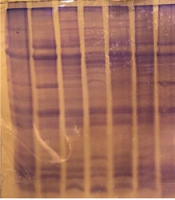
Safikhani Mahmoodzadeh A, Moazamian E, Shamsdin SA, Kaydani GA. Prevalence of Virulence Genes and Antigen Pattern in Helicobacter pylori-Infected Patients and the Level of Some Inflammatory Cytokines Compared with Non-infected Individuals. Jundishapur J Microbiol. 2022;15(2):e121144. doi: https://doi.org/10.5812/jjm-121144
Sayyah S, Akbarian M, AbdollahSalimi S, Tavakoli M, AA P. Coexistence of gastric Helicobacter pylori infection and coronary artery diseases in Qazvin (Iran). J Inflamm Dis. 2024;16(1):e155679. doi:

Yousefi B, Eslami M, Kokhaei P, ValiZadeh S, Ghasemian A. Role of autophagy associated with Helicobacter pylori CagA and VacA toxins in gastric cancer. koomesh. 2019;21(2):e153059. doi:
More by these authors
Last Update: 1 week ago
Last Update: 1 week ago
Last Update: 1 week ago
Last Update: 7 hours ago
Last Update: 7 hours ago
Last Update: 5 days ago