1. Background
Malaria is one of the major threats concerning world public health, accounting for 214 million cases and 438,000 deaths in year 2015, according to the world health organization (WHO) estimation (1). The burden is disproportionately high in Sub-Saharan Africa, there by accounting for 90% of the cases and 92% of deaths related to malaria (2). In addition to human toll, funding for the control and elimination of malaria totaled $2.5 billion in 2015, indicating the economic impact of the disease (3). In general, the societal and economic burden of the disease is mountainous.
Previously, in Ethiopia, low-lands have always been regarded as areas of high malaria transmission yet nowadays this appears to be changing, and highlands, where a large proportion of the population lives, are also becoming malaria epidemic areas (4). Accordingly, it is estimated that about three-fourths of the land is malarious (5). Different intervention strategies have been scaled up since 2005 to prevent and control the disease, which has brought reduction in the burden of the disease by half (6). However, the disease still remains one of the top causes of outpatient visits in the country (7).
Associated with poor compliance, the threat of drug resistance is also an emerging challenge (8). In addition to resistance against existing drugs, no new drugs have reached the market during the last decade (9). Generally, the inability to create efficient vaccines, adverse side-effects of the existing drugs together with the resistance profile indicate the need for development of new antimalarial drugs (10).
The use of traditional medicine for treatment of malaria and other diseases is a common practice among African populations (11). About 80% of Ethiopians are estimated to use traditional medicine, mainly including plant sources (12). A broad diversity of secondary metabolites in medicinal plants, selected based on ethnobotany and traditional practices, may represent an attractive source for novel drugs.
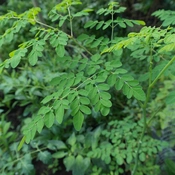
Different parts of Moringa oleifera Lam (Moringaceae), small deciduous tree of 2.5 to 10 m in height, are reported to have many important activities, including antioxidant, antinociceptive, antihypertensive, hypocholesterolemic, antifungal, Anthelmintic, radio-protective and wound healing activities in the leaves, central inhibitory effect, antispasmodic, diuretic and antiepileptic activities in the roots and barks while the seeds possess in vivo antimalarial, antipyretic and anti-inflammatory activities (13). In vitro studies of leaf extracts of the plant also revealed antimalarial activity (14, 15). Even though the plant, known by the local name “Shiferaw”, has traditional antimalarial activity claim in the Afar region, Ethiopia, (16) there is no in vivo antimalarial test done on this plant.
2. Methods
2.1. Materials
2.1.1. Plant Materials
Enough amounts of leaves of Moringa oleifera Lam was collected from Afar, Ethiopia. The taxonomic identity of the plant was verified and a voucher specimen of the plant material (number EM002) was deposited at the national herbarium, college of natural and computational sciences, Addis Ababa University (AAU). The material was brought to the laboratory, where the study was conducted.
2.1.2. Animals
Swiss albino mice of either genders with the age of 6 to 8 weeks and weighing 27 to 32 g were used in the experiment. The mice were purchased from Ethiopian public health institute (EPHI) and housed in standard cages at room temperature, fed with the pelleted diet, and received water ad libitum. Ethical approval of the study protocol was obtained from the Ethical Review Board of college of health sciences.
2.1.3. Parasites
Chloroquine-sensitive Plasmodium berghei, a rodent malaria parasite, was obtained from Ethiopian Public Health Institute (EPHI).
2.2. Methods
2.2.1. Preparation of Plant Material and Crude Extracts
The leaves were air-dried at room temperature, ground to powder and the extract was prepared by refluxing 700 g of plant material in acetone. Finally, it was filtered using cotton and Whatman filter paper and concentrated in a rotary evaporator.
2.3. Pharmacologic Screening
2.3.1. Activity on Early Infection (Four-Day Test)
The screening was conducted according to the method of David, Thurston, and Peters (17). Donor mice were killed by head blows and the blood was collected in heparinized syringes from heart puncture. The collected blood was diluted with Trisodium Citrate medium in such a way that every 0.2 mL contained approximately 1 x 10⁷ of infected red cells.
On day 0 (before treatment), test animals were infected intraperitoneally with 0.2 mL of infected blood. The plant extract was administered orally to the test groups once daily for 4 days, while standard and control groups received chloroquine and vehicle, respectively (Table 1).
Table 1.
Experimental Design of the Study for Each of the Three Tests (Suppressive, Curative and Prophylactic Tests)
| Group (Control) | Number of Mice | Extract/Drug/Vehicle (Negative) |
|---|---|---|
| I | 6 | Negative control (NG) |
| II | 6 | Extract (200 mg/kg) |
| III | 6 | Extract (400 mg/kg) |
| IV | 6 | Extract (600 mg/kg) |
| V | 6 | Drug (10 mg/kg) |
2.3.2. Determination of Parasitemia
On day 4 after infection, peripheral blood was collected from the tail of each mouse and thin smears were made on the microscopic slides. After fixing with methanol, the smears were stained with Giemsa stain and parasitized red blood cells were examined under the microscope. Number of parasitized cells out of 200 red blood cells in random fields of the microscope were counted and then the parasitemia was determined. Finally, percentage parasitemia was calculated according to Fidock et al. (17):
2.3.4. Determination of Mean Survival Time
During the follow up period, mortality was monitored and recorded daily for each mouse in the treatment and control groups; and the mean survival time (MST) was calculated (12).
2.4. Activity on Established Infection (Curative test)
On the first day, standard inoculums of Plasmodium berghei infected erythrocytes were injected intraperitoneally to the mice and the infection was allowed to be established for 72 hours. Then, the infected mice were randomly divided to groups of 5 with 6 mice in each group. Three of the groups were orally administered with acetone extract of the plant and the other groups were administered with chloroquine and solvent as positive and negative control groups. Parasitaemia level was monitored daily from day 3 to day 7, through thin blood films stained with Giemsa from tail blood of each mouse (18).
2.5. Activity on Residual Infection (Repository Test)
Prior to infection, mice in the test groups (3 groups) were administered with a daily dose of the plant extract orally for 3 days. The remaining 2 groups were administered with standard drug and vehicle.
On the fourth day, each mouse was administered with a standard inoculum of Plasmodium berghei infected-erythrocytes, intraperitoneally. On the seventh day of infection, thin blood smears were prepared from the tail blood of each mouse. Percentage parasitemia as well as the chemo-suppression was calculated (17).
2.6. Acute Oral Toxicity Test
Acute toxicity test was done according to standard guidelines (19). The limit test dose of 2000 mg/kg was used to determine lethality and other gross behavioral changes, due to toxicity, were also observed as per the guideline.
2.7. Data Analysis
All data obtained during the experiment were analysed using windows SPSS version 16 and analysis of variance (ANOVA) followed by Post Hoc Tukey’s HSD, used to compare results between groups. P values of < 0.05 were considered statistically significant at 95% confidence level.
3. Result
3.1. Acute Toxicity
The extract didn’t result in death of animals with a dose of 2000 mg/kg. This implies that the lethal dose (LD50) of the extract was above 2000 mg/kg body weight. Physical and behavioural observations also revealed no visible signs of acute toxicity.
3.2. Effect of the 4-Day Suppressive Test
The extract produced dose-dependent suppression of parasitaemia (Table 2). In all mice treated with the extract, the level of parasitaemia was significantly reduced in comparison with the control group (P < 0.001) and the difference was very significant in comparison with the standard drug treated group (P < 0.0001), specially with lower doses. Chemo suppression displayed by higher doses was considerably high, which significantly decreased parasitaemia when compared with the control group (P < 0.01).
Table 2.
Parasitemia Profile with Different Doses of Acetone Extract of M. oleifera in Mice Infected with P. berghei (4-Day Suppressive Test)
| Group | Parasitemia | Chemo Suppression (%) |
|---|---|---|
| NG | 44.4 ± 2.73 | 00 |
| M200 | 30.6 ± 1.50 | 31.1a |
| M400 | 19.60 ± 1.80 | 55.9a,b |
| M600 | 10.20 ± 1.32 | 77.0a,c,d |
| CQ | 1.2 ± 0.58 | 97.3e,f |
aP ≤ 0.001vs NG.
bVs M200 at P ≤ 0.01.
cVs M400 at P ≤ 0.05.
dVs M200 at P ≤ 0.001.
eVs NG, M200, M400 at P ≤ 0.0001.
fVs M600 at P ≤ 0.05.
3.3. Mean Survival Time with 4-Day Suppressive Dose
These treated groups of mice also had longer survival times. Mean survival time was significantly increased at all treatment doses, which ranged between 13.8 ± 0.12 days and 25.8 ± 1.90 days in comparison with the control group, 8.2 ± 0.66 days. The higher doses displayed very significant (P < 0.01) increase and the lowest dose displayed significant increase (P < 0.05) in survival time as compared with the control group (Table 3). The chloroquine-treated group had the longest mean survival time, 27.8 ± 0.5 days.
3.4. Curative Test
The extract reduced parasitemia in a dose-dependent manner as compared with the control group in the curative test (Table 4) and the decrement was statistically significant (P < 0.05). The parasitaemia in the control group displayed daily increase from day 3 to day 7 unlike daily increase in chemo suppression with the extract treated groups.
Table 4.
Parasitemia Profile with Different Doses of Acetone Extract of M. oleifera in Mice Infected with P. berghei (Curative Test)
| Group | 3rd Day Parasitemia | 4th Day Parasitemia | 5th Day Parasitemia | 6th Day Parasitemia | 7th Day Parasitemia |
|---|---|---|---|---|---|
| Negative | 60.40 ± 1.08 | 61.6 ± 2.23 | 67.60 ± 3.12 | 72.4 ± 2.70 | 78.0 ± 2.60 |
| M200 | 60.0 ± 1.00 | 57.20 ± 2.40 | 44.00 ± 3.67 | 34.40 ± 3.10 | 26.00 ± 2.10 |
| M400 | 59.80 ± 1.46 | 55.60 ± 1.25 | 39.40 ± 4.11 | 21.80 ± 2.73 | 18.00 ± 2.41 |
| M600 | 60.60 ± 1.75 | 54.40 ± 3.90 | 25.80 ± 2.8 | 13.40 ± 1.21 | 9.80 ± 0.73 |
| CQ | 60.20 ± 2.22 | 49.0 ± 2.74 | 17.60 ± 2.5 | 4.40 ± 1.54 | 0.80 ± 0.37 |
3.5. Prophylactic Anti-Malarial Activity
Dose-dependent prophylactic activity was observed with all doses of the extract resulting in significant (P < 0.05) reduction of parasitaemia in the extract-treated groups in comparison with the control group. The standard drug chloroquine caused a chemosuppression of 98.5%, which is even higher than the suppression from the highest treatment dose (Table 5).
Table 5.
Parasitemia Profile with Different Doses of Acetone Extract of M. oleifera in Mice Infected with P. berghei (Prophylactic Test)
| Group | Parasitemia | Chemo Suppression, % |
|---|---|---|
| NG | 50.2 ± 1.81 | 00 |
| M200 | 21.6 ± 1.42 | 56.9 |
| M400 | 14.0 ± 1.53 | 72.1 |
| M600 | 8.8 ± 1.95 | 82.5 |
| CQ | 0.74 ± 0.10 | 98.5 |
4. Discussion
The phytochemical screening from different studies revealed the presence of several secondary metabolites in the extracts of M. oleifera. Some of the reported metabolites were saponins, tannins, terpenes, steroids, triterpenoids, alkaloids, polyphenolic compounds, flavonoids, carbohydrates, and cardiac glycosides and anthraquinones (20, 21). The presence of alkaloids may be responsible for the antimalarial activity of this plant. There are reports of flavonoids being promising anti-plasmodial compounds within clinically tolerant and non-toxic concentrations owing to their anti-inflammatory and antioxidant activities (22). The anti-plasmodial effect of acetone extract of M. oleifera leaves may therefore be due to the synergistic effect of phytochemical components.
According to this study, the extract did not show mortality up to a dose of 2000 mg/kg of body weight indicating that the extract is safe. Further physical and behavioural observations also revealed no visible signs of acute toxicity with the same dose. The current study findings are in agreement with the other studies, which were done on the same plant. According to these studies signs of acute toxicity were observed at 4000 mg/kg of the seed extract and 3200 mg/kg leaf extract, yet no adverse effect was observed at concentrations lower than 3000 mg/ kg, and mortality was recorded at 5000 mg/kg (23, 24). In general, this substance is considered as a good candidate for further studies if its lethal dose (LD50) is 3 times more than the minimum effective dose (24).
Mean survival time of the study mice was prolonged by the extract indicating reduced pathologic effect of the parasite on the study mice due to suppression of P. berghei. However, both of the 2 substances, the extracts and the standard drug, failed to cure the infection. Even the lowest dose, 200 mg/kg, of the extract pronged survival time up to 13 days. As a principle compound that prolonged survival time beyond 12 days, it is regarded as active (25).
Antimalarial studies usually employ in vivo models since the possible prodrug effect as well as probable interference of the immune system in eradication of the pathogen are involved in these models (26). Non-primate animal models are not infected by Plasmodium species that cause human disease. As a result, the rodent malaria parasite called P. berghei, which is sensitive to CQ, is employed for in vivo evaluation of antimalarial activities in rodents (27). Three recommended methods were employed to determine the most important parameter, parasitaemia inhibition rate, including the Peter’s 4-day suppressive test, Rane’s test, employed to investigate curative effect in already established infection, and the repository test for prophylactic activity test.
The current study showed that the extract displayed significant suppressive effect against all test protocols. Though less effective when compared to that of the standard drug, the extract significantly reduced parasitaemia in a 4-day test. To be considered active, a given compound should reduce parasitemia at least by 30%, which supports the result of parasite inhibition in the present study (28). Almost comparable reduction of parasitaemia count was observed in the curative test in relation with the values recorded for parasitaemia count in the suppressive test.
In conclusion, the extract displayed significant antimalarial activity in the mice model with a good toxicity profile. It also prolonged survival time of the mice. This promising result from the crude extract can be a starting point to seek for bioactive constituents through fractionation and development of new drugs. The present study confirmed the traditional practitioners’ claim for the use of the plant against malaria.