Cover image of the article: New Challenges of COVID-19 Vaccine Booster Dose Hesitancy in Iran

Image Credit:J Kermanshah Univ Med Sci

New Challenges of COVID-19 Vaccine Booster Dose Hesitancy in Iran

Authors

Sam HajianSam Hajian ORCID1, Mehran RostamiMehran Rostami ORCID1,*
1Kermanshah University of Medical Sciences, Kermanshah, Iran
*Corresponding Author: Kermanshah University of Medical Sciences, Kermanshah, Iran. Email: m.rostami@kums.ac.ir

Journal of Kermanshah University of Medical Sciences:Vol. 27, issue 1; e137412
Published online:May 31, 2023
Article type:Letter
Received:May 07, 2023
Accepted:May 09, 2023
How to Cite:Hajian S, Rostami M. New Challenges of COVID-19 Vaccine Booster Dose Hesitancy in Iran. J Kermanshah Univ Med Sci. 2023;27(1):e137412. doi: https://doi.org/10.5812/jkums-137412

Dear Editor,
Vaccination is one of the most successful and cost-effective interventions, which has primarily contributed to eliminating or controlling several infectious diseases in the 20th century (1, 2). Previous experiences have confirmed that community acceptance and high vaccination coverage are essential elements in the success of immunization programs (1, 2).
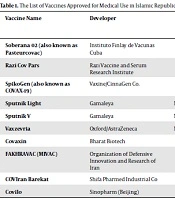
Since the middle of March 2023, the eighth wave of COVID-19 has started in Iran. By the end of April 2023, more than 7.6 million were infected in Iran alone, and nearly 146 thousand people died due to COVID-19 (3). A total of 155,194,752 vaccine doses have been administered as of April 15, 2023 (3). Considering the maximum efficiency, full-dose vaccination coverage of approximately 75% of the population is needed to control the corona epidemic (2). Some studies have been conducted to estimate the acceptance rate of the COVID-19 vaccine and indicated that about 70% had accepted the vaccine at the country level (4). In addition, a global study reported that the opposition to receiving in Iran is roughly 28% (2). Several reasons for COVID-19 vaccine hesitancy have been reported in Iran (4). Moreover, studies on accepting COVID-19 vaccine booster doses in Iran are scarce. The acceptance of booster doses differed significantly between countries of the East Mediterranean Region (EMR), with Iran having the lowest acceptance rate at 17% (1). Iran’s COVID-19 vaccine hesitancy rate can be considered high (2).
COVID-19 vaccine booster acceptance in the Iranian population needs special attention. Lack of paying enough attention to this challenge can create high economic, political, and social threats for the country at the regional and global levels. The protection of some vaccines used in Iran has not been very high, and the infection rate after vaccination for COVID-19 has been relatively high (5). Therefore, more efficient and effective vaccines into the national vaccination program for COVID-19 can be considered by health policymakers (5). Media and social networks' context should be strengthened to increase trust and resolve some of the concerns. For example, a media program should be prepared where people who have already been infected with the novel coronavirus and those who have lost a loved one due to this disease can attend and share their experiences with others in a tangible way.
Although COVID-19 vaccines are available in Iran, hesitancy to accept booster doses persists. COVID-19 booster vaccine hesitance can negatively affect the efforts to control the pandemic. Increasing vaccine booster coverage across the country is essential. There are other vaccines with better efficacy than COVID-19, but the general public should have higher levels of trust. COVID-19 vaccination should be presented as a social duty. Doing social responsibility by promoting the belief of protecting others by vaccinating yourself can be a critical motivational strategy. Lack of attention to the discussed items can increase the duration of the pandemic and has a high cost for the health system and society. Iran's health policymakers should take measures to ensure that rejecting the COVID-19 vaccine booster dose is not considered civil disobedience in the current social situation. In other words, there is concern that hesitation to take the COVID-19 vaccine booster dose may be considered an act of civil disobedience.
Footnotes

  • Authors' Contribution: Conceptualization: M.R. Writing-original draft: S.H., M.R.

  • Conflict of Interests: The authors declare that they have no conflict of interest in this letter.

  • Funding/Support: This letter received no specific grant from any funding agency in public, commercial, or not-for-profit sectors.

References

  • 1.
    Ghazy RM, Abdou MS, Awaidy S, Sallam M, Elbarazi I, Youssef N, et al. Acceptance of COVID-19 Vaccine Booster Doses Using the Health Belief Model: A Cross-Sectional Study in Low-Middle- and High-Income Countries of the East Mediterranean Region. Int J Environ Res Public Health. 2022;19(19). [PubMed ID: 36231447]. [PubMed Central ID: PMC9566578]. https://doi.org/10.3390/ijerph191912136.
  • 2.
    Wong LP, Alias H, Danaee M, Ahmed J, Lachyan A, Cai CZ, et al. COVID-19 vaccination intention and vaccine characteristics influencing vaccination acceptance: a global survey of 17 countries. Infect Dis Poverty. 2021;10(1):122. [PubMed ID: 34620243]. [PubMed Central ID: PMC8496428]. https://doi.org/10.1186/s40249-021-00900-w.
  • 3.
    Iran (Islamic Republic of), WHO (COVID-19) dashboard. World Health Organization; 2023. Available from: https://covid19.who.int/region/emro/country/ir.
  • 4.
    Omidvar S, Firouzbakht M. Acceptance of COVID-19 vaccine and determinant factors in the Iranian population: a web-based study. BMC Health Serv Res. 2022;22(1):652. [PubMed ID: 35578251]. [PubMed Central ID: PMC9108146]. https://doi.org/10.1186/s12913-022-07948-w.
  • 5.
    Hosseinzadeh A, Sahab-Negah S, Nili S, Aliyari R, Goli S, Fereidouni M, et al. COVID-19 cases, hospitalizations and deaths after vaccination: a cohort event monitoring study, Islamic Republic of Iran. Bull World Health Organ. 2022;100(8):474-83. [PubMed ID: 35923277]. [PubMed Central ID: PMC9306382]. https://doi.org/10.2471/BLT.22.288073.

Copyright

Copyright © 2023, Journal of Kermanshah University of Medical Sciences. This is an open-access article distributed under the terms of the Creative Commons Attribution-NonCommercial 4.0 International License (http://creativecommons.org/licenses/by-nc/4.0/) which permits copy and redistribute the material just in noncommercial usages, provided the original work is properly cited.

Similar Articles

25
May
2022
COVID-19 Vaccines in Iran

COVID-19 Vaccines in Iran

Pouya Safarzadeh Kozani,
Pooria Safarzadeh Kozani,
Seyed Mohamad Javad Mirarefin,
Sara Sheikhi,
Narges Baharifar,
Mehdi Sheikhi
,et al.

Safarzadeh Kozani P, Safarzadeh Kozani P, Mirarefin SMJ, Sheikhi S, Baharifar N, et al. COVID-19 Vaccines in Iran. J Adv Immunopharmacol. 2022;2(2):e127067. doi: https://doi.org/10.5812/tms-127067

1
Feb
2023
The Effectiveness of COVID -19 Vaccine for Immunocompromised Adults During Omicron Predominance

The Effectiveness of COVID -19 Vaccine for Immunocompromised Adults During Omicron Predominance

Masoud Mardani

Mardani M. The Effectiveness of COVID -19 Vaccine for Immunocompromised Adults During Omicron Predominance. Arch Clin Infect Dis. 2023;17(6):e135133. doi: https://doi.org/10.5812/archcid-135133

13
Mar
2021
Achieving Vaccine for COVID-19: Hope for AIDS and Hepatitis C Vaccine?

Achieving Vaccine for COVID-19: Hope for AIDS and Hepatitis C Vaccine?

Mousa Ghelichi-Ghojogh,
Rohollah Valizadeh,
Payam Nozad,
Rozhan Khezri

Ghelichi-Ghojogh M, Valizadeh R, Nozad P, Khezri R. Achieving Vaccine for COVID-19: Hope for AIDS and Hepatitis C Vaccine?. J Cell Mol Anesth. 2021;6(1):e151497. doi: https://doi.org/10.22037/jcma.v6i1.34265

1
Apr
2020
Opportunities and Threats: The Necessity of Research in Dealing with the Rapid Spread of Coronavirus disease 2019 (COVID-19) in Iran

Opportunities and Threats: The Necessity of Research in Dealing with the Rapid Spread of Coronavirus disease 2019 (COVID-19) in Iran

Abdorreza Naser Moghadasi

Naser Moghadasi A. Opportunities and Threats: The Necessity of Research in Dealing with the Rapid Spread of Coronavirus disease 2019 (COVID-19) in Iran. Arch Clin Infect Dis. 2020;15(COVID-19):e102809. doi: https://doi.org/10.5812/archcid.102809

13
Oct
2020
The Impact of COVID-19 Immunity in Vaccine Development

The Impact of COVID-19 Immunity in Vaccine Development

Masoud Mardani

Mardani M. The Impact of COVID-19 Immunity in Vaccine Development. Arch Clin Infect Dis. 2020;15(3):e109880. doi: https://doi.org/10.5812/archcid.109880

More by these authors

Sam HajianPubMedScholar
Mehran RostamiPubMedScholar
Share
Cited by
Metrics
Indexed in