
1. Background
Adolescence is a critical period in human growth and development between ages 10 and 19 (1). World Health Organization estimates that it is the second most important transition in a person's life after infancy due to its rapid pace of growth and change (1), which is characterized by rapid physical, physiological, psychological, and social development, making it especially vulnerable to malnutrition (2). Nutrition is the science of food, its nutrients, their action, interaction, and balance concerning health and disease. Nutritional status is the body's condition resulting from food substance intake, absorption, and utilization (3). Nutrition-related disorders can be caused by insufficient food or certain nutrients, an inability of the body to absorb and use nutrients, or over-consumption of certain foods (3). However, malnutrition is a severe public health issue affecting 1.4 billion people worldwide, most of whom live in developing nations (4, 5). Newborns and school-age children are also negatively affected by it, negatively impacting their development, health, and academic performance (6).
In developing countries, nutrition initiatives often neglect adolescents, especially disabled ones. The nutritional status of individuals, particularly those with disabilities, is crucial to their overall health, well-being, and quality of life (7). People with disabilities are prone to malnutrition due to the challenges they face in maintaining a balanced diet, accessing nutritious foods, and observing dietary habits (8). In-school adolescents with disabilities are particularly vulnerable to nutritional issues, as they navigate factors such as peer influence, media messages, and social norms while also managing their disability-related needs (9). Understanding the food preferences, eating practices, and nutritional status of in-school adolescents with disabilities is essential for developing targeted interventions and support systems to promote their health and optimal growth (10-12).
The focus is on exploring the specific challenges faced by adolescents with disabilities in maintaining a healthy diet and achieving optimal nutritional status. A major objective of this study is to identify gaps in current practices, identify areas for improvement, and ultimately contribute to developing targeted strategies to improve the nutritional well-being of adolescents with disabilities in school. The project seeks to shed light on the complex interplay between disability status among adolescents in Minna, Niger State through a cross-sectional study design and the administration of structured questionnaires tailored to accommodate diverse disabilities. This comprehensive approach can provide valuable insights into factors influencing the nutritional status of individuals with disabilities and facilitate the development of evidence-based interventions to support their well-being.
2. Objectives
This research objective is to assess the food preferences, eating practices, and nutritional status among in-school abled and disabled adolescents of ages 10 - 19 in Minna, Niger State, Nigeria.
3. Methods
3.1. Study Area
The study area was Bosso local government area in Niger State, Nigeria, with a population of 254,100 and a population growth rate of 2.5%. Bosso LGA consists of 9 districts and ten wards. The Niger State School of Special Education, established in 1983, provides day and boarding houses for deaf and dumb students in Bosso. The Government Vocational Training College Minna, established in 1988, is a school for both male and female students in the Abdulsalam quarters of Minna, Niger State. Both schools cater to the needs of deaf and dumb students.
3.2. Study Design
A cross-sectional survey was conducted to assess the nutritional status and dietary intake of adolescents studying in two selected schools in Minna metropolis, Niger state.
3.3. Study Population
Adolescent girls and boys of ages 10 - 19 years attending Government Vocational and Technical College and Niger State School of Special Education in Minna from JSS1- SS3
3.4. Inclusion and Exclusion Criteria
3.4.1. Inclusion Criteria
Students aged 10 - 19 years, studying in Government Vocational College/School of Handicap Minna. Students whose permanent residence is in Minna and who were willingly to sign the consent form were included in the study.
3.4.2. Exclusion Criteria
Students below age ten and above 19 were excluded from the study. Students whose permanent residence is outside Minna metropolis and those who were absent from school and ill when the survey was conducted were also excluded.
3.5. Sample Size Estimation
The sample size was determined using a simple proportional formula, assuming a 50% prevalence rate of malnutrition and a 5% margin of error. The confidence interval was taken as 95% with a 5% non-response rate.
For comparative study:
Where; n0= minimum sample size to be estimated; Zα = Critical ratio at a significance level of 5%; Zβ = Statistical power at 90%;
From the data taken from both schools, number of adolescents studying in JSS1-SS3 in Government Vocational and Technical College and Niger State School of Special Education in Minna is 11845. Hence the population size (N) is 11845.
The sample size (n) for finite population is calculated as shown below; using
n = 192.91
3.6. Sampling Technique
During the study period, eligible individuals who expressed interest and agreed to participate were enrolled using a non-probability sampling (total sampling) technique at each school visit. In this study, all eligible students from both schools were purposefully selected at the study time. This sampling technique makes it possible to get deep insights into the phenomenon we are interested in and also makes it possible to make analytical generalizations about the population being studied. There is also a reduced risk of missing potential insights from omitted members with such comprehensive coverage of the population of interest.
3.7. Definition of Variables
The study chose the following operational terms, which served as the foundation for developing the instrument.
3.7.1. Deafness (Hearing Impairment)
(a) Type: Deafness is characterized by a partial or complete inability to hear sounds, which can be congenital or acquired later in life.
(b) Severity: Deafness can range from mild to profound, with profound deafness indicating little to no hearing ability. The degree of impairment can impact communication skills, speech development, and social interaction.
3.7.2. Muteness (Speech Impairment)
(a) Type: Muteness, or selective mutism, refers to the inability or unwillingness to speak or communicate verbally in certain situations.
(b) Severity: Muteness can vary in severity, with some individuals being completely nonverbal, while others may selectively speak in specific environments or with certain people. This speech impairment can affect the ability to express oneself verbally and engage in typical communication.
3.7.3. Combined Deafness and Muteness
(a) Type: In some cases, individuals may experience both deafness and muteness concurrently. The dual sensory and communication impairment can create unique challenges in daily interactions and educational settings.
(b) Severity: The severity of combined deafness and muteness can significantly impact communication abilities, social interactions, and access to information. Students with this dual impairment often require specialized support to communicate effectively and navigate their environment.
3.7.4. Challenges in Communication
(a) Deaf and mute students face significant communication challenges, as they may rely on alternative means such as sign language, written communication, or assistive devices to convey their thoughts and understand others.
(b) The severity of these communication challenges can vary based on the degree of deafness and muteness, impacting the student's ability to express their needs, preferences, and emotions, including food and nutrition.
3.7.5. Educational and Social Implications
(a) The combined disabilities of deafness and muteness can present barriers in educational settings, where verbal communication is often central to learning and interaction.
(b) The severity of these disabilities can affect the student's access to educational materials, engagement in classroom activities, and participation in social interactions, potentially impacting their nutritional understanding and dietary choices.
Note: The types and severity of the disabilities experienced by deaf and speech-impaired (deaf and mute) adolescents should be considered when analyzing their dietary habits and overall wellbeing.
3.8. Instrument for Data Collection
The data were collected using a pre-tested semi-structured self-administered questionnaire, and the authors developed the instrument. The questionnaire has three sections. Appendix 1 has socio-economic and demographic characteristics. In this section, the age, sex, family structure, religion, and other personal data of the respondents and their parents were collected, which were of use in the assessment of nutritional status. Appendix 2 has a dietary intake assessment. The purpose of this section of the questionnaire was to collect data on the pattern and frequency of dietary intake to assess the present nutritional status of the respondents. At the same time, Appendix 3 had anthropometric measurements. In this section, the height and weight measurements of the respondents were taken. The data collected in this section assessed their current (weight for age) and past (height for age) nutritional status. The data obtained from this section was analyzed using WHO Anthro Plus.
Other instruments used include a Stadiometer, Digital weighing balance, Food frequency questionnaire and 24-hour dietary recall sheet, Standardized utensils (glass and bowls), and photos of different foods.
3.9. Validity and Reliability of the Instrument
Validity was ensured through several steps. Firstly, the questionnaire was developed based on a thorough review of existing literature on food preferences, eating practices, and nutritional status among adolescents, ensuring that the questions were relevant and appropriate for the study population. Additionally, nutrition and disability experts were consulted to review and provide feedback on the questionnaire to enhance its content validity. This process helped confirm that the questionnaire accurately measured the constructs of interest and effectively captured the experiences of in-school adolescents with disabilities concerning their dietary habits.
Reliability was established by pilot testing the questionnaire with a small sample of participants before the primary data collection phase. The pilot study helped identify any ambiguities or inconsistencies in the questionnaire, allowing for revisions to improve the items' clarity and coherence. In addition, internal consistency reliability was assessed using statistical methods such as Cronbach's alpha to ensure that the items within the questionnaire were measuring the same underlying constructs consistently. The alpha coefficient for the pre-test was 0.83, which affirms the reliability of the questionnaire.
3.10. Data Management and Statistical Analysis
Questionnaires were sorted out to check for errors and omissions at the end of data collection. The data were imported into the computer and analyzed using IBM Statistical Product and Service Solutions (IBM SPSS statistics) version 27.0 software. Frequency distribution tables, charts, and graphs were generated from variables, while cross-tabulation and test statistics were done where applicable. Chi-square was used to compare rates, ratios, and proportions, while Fisher's exact test was used when cells had expected values less than 5. Student t-test was used to determine the association between the continuous variables. The level of significance was set with a P-value less than 0.05.
3.11. Ethical Consideration
The study was carried out in conformity with the Declaration of Helsinki. Ethical approval for the study was obtained from the Principal of Government Vocational and Technical College and the Principal of the School of the Handicap in Minna. Informed consent was obtained from individual participants before the commencement of data collection. Participants were told that participation is voluntary and that they will not suffer any consequences if they do not take part. All information gathered was kept confidential. Participants were identified using serial numbers.
4. Results
A total of 400 questionnaires were administered, and all were completed, correctly filled, returned, and subsequently analyzed, giving a response rate of 100%.
4.1. Socio-demographic Characteristics of Respondents
Table 1 shows the socio-demographic characteristics of participants, categorized by age, gender, class, religion, and ethnicity. No significant differences (P < 0.05) were found between able and disabled adolescents in terms of gender and age, while religion, class, and ethnicity show a significant statistical difference (P < 0.05).
Table 1.
Socio-demographic Characteristics of the Participants a
| Variables and Categories | Able | Disable | Pearson Chi-square | df | P-Value |
|---|---|---|---|---|---|
| Age group | 4.317 | 2 | 0.115 | ||
| < 12 | 24 (12.0) | 27 (13.5) | |||
| 12 - 15 | 92 (46.0) | 109 (54.5) | |||
| Above 15 | 84 (42.0) | 64 (32.0) | |||
| Overall mean age | 15.20 ± 1.93 | 14.39 ± 2.26 | |||
| Gender | 5.762 | 1 | 0.016 | ||
| Male | 86 (43.0) | 110 (55.0) | |||
| Female | 114 (57.0) | 90 (45.0) | |||
| Class | 59.310 | 5 | 0.000 | ||
| JSS1 | 61 (30.5) | 55 (27.5) | |||
| JSS2 | 55 (27.5) | 87 (43.5) | |||
| JSS3 | 78 (39.0) | 24 (12.0) | |||
| SSS1 | 6 (3.0) | 14 (7.0) | |||
| SSS2 | 0 (0.0) | 15 (7.5) | |||
| SSS3 | 0 (0.0) | 5 (2.5) | |||
| Religion | 3.463 | 3 | 0.326 | ||
| Islam | 114 (57.0) | 118 (59.0) | |||
| Christianity | 45 (22.5) | 36 (18.0) | |||
| Traditional | 34 (17.0) | 32 (16.0) | |||
| Others | 7 (3.5) | 14 (7.0) | |||
| Ethnicity | 46.353 | 3 | 0.000 | ||
| Yoruba | 72 (36.0) | 17 (8.5) | |||
| Igbo | 33 (16.5) | 33 (16.5) | |||
| Hausa | 67 (33.5) | 107 (53.5) | |||
| Others | 28 (14.0) | 43 (21.5) |
a Values are expressed as mean ± SD or No. (%).
4.2. Respondents’ Dietary Intake and Food Habits
Table 2 presents the results of the study on participants' dietary intake and food habits, comparing able and disabled subjects. For the variable "meal size affected by the presence of friends or family members," the results show that 44.3% of disabled participants reported that their meal size was affected by others, compared to 25% of able participants. This difference was statistically significant (P < 0.001). Regarding skipping meals, 28.3% of disabled participants reported skipping meals, compared to 22.8% of able participants. The difference was statistically significant (P = 0.028). However, the groups had no significant difference when asked which meal they skipped. When asked how often they skipped meals, 24% of disabled participants reported skipping meals 2 - 4 times a week, compared to 15.7% of able participants. This difference was statistically significant (P = 0.005). There was no significant difference between the groups regarding water intake. For receiving daily pocket money, 22.8% of disabled participants reported receiving daily pocket money, compared to 16.8% of able participants. The difference was statistically significant (P = 0.026). Finally, the groups had no significant difference regarding buying food from the canteen/vendor/food shops.
Table 2.
Dietary Intake and Food Habits Among the Participants a
| Variables and Categories | Able | Disable | Pearson Chi-square | df | P-Value |
|---|---|---|---|---|---|
| Meal size is affected by the presence of friends or family members. | 69.608 | 1 | 0.000 b | ||
| Yes | 100 (50.0) | 177 (88.5) | |||
| No | 100 (50.0) | 23 (11.5) | |||
| Do you skip any meal? | 4.842 | 1 | 0.028 b | ||
| Yes | 91 (45.5) | 113 (56.5) | |||
| No | 109 (54.5) | 87 (43.5) | |||
| If yes, which meal do you skip? | 2.212 | 2 | 0.331 | ||
| Breakfast | 47 (51.6) | 69 (61.1) | |||
| Lunch | 39 (42.9) | 37 (32.7) | |||
| Dinner | 5 (5.5) | 7 (6.2) | |||
| How often do you skip this meal? | 10.457 | 2 | 0.005 b | ||
| 1 - 2 times a week | 59 (64.8) | 55 (48.7) | |||
| 2 - 4 times a week | 32 (35.2) | 49 (43.4) | |||
| Five times and more a week | 0 (0.0) | 9 (8.0) | |||
| How many glasses (300 mL) of water do you drink/day? | 2.055 | 3 | 0.561 | ||
| 1 | 27 (13.5) | 23 (11.5) | |||
| 2 - 4 | 37 (18.5) | 34 (17.0) | |||
| 5 - 7 | 59 (29.5) | 52 (26.0) | |||
| Eight or more | 77 (38.5) | 91 (45.5) | |||
| Do you receive daily pocket money? | 7.295 | 2 | 0.026 b | ||
| Yes | 67 (33.5) | 91 (45.5) | |||
| No | 78 (39.0) | 56 (28.0) | |||
| sometimes | 55 (27.5) | 53 (26.5) | |||
| Do you buy food from the canteen/vendor /food shops? | 1.690 | 1 | 0.194 | ||
| Yes | 93 (46.5) | 106 (53.0) | |||
| No | 107 (53.5) | 94 (47.0) |
a Values are expressed as No. (%).
b Statistically significant at P < 0.05.
4.3. Patterns of Food Bought Among Respondents
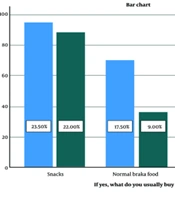
Figure 1 shows the pattern of food purchases, with three variables: Snacks, normal break food, and food and snacks. Out of 400 respondents, 45.5% usually buy snacks, with 23.5% of respondents able to purchase snacks and 22.0% unable to buy snacks. 26.5% of respondents buy generally normal break food, with 17.5% able to buy and 9.0% unable to buy. Finally, 28.0% of respondents usually buy food and snacks, with 9.0% able to purchase and 19.0% unable to buy.

Figure 1.
Patterns of food bought
4.4. Respondents Dietary Patterns
Table 3 presents the frequency of consumption of different food items among the study participants. The categories are divided into able and disabled individuals. Most participants consume cereals, milk & milk products, and fast foods daily, whereas green leafy vegetables, other vegetables, and fruits are relatively low. The consumption of pulses and legumes, green leafy vegetables, other vegetables, and fruits is higher among able individuals than disabled individuals. On the other hand, disabled individuals consume fast foods more frequently than able individuals. These results suggest a need for interventions to promote the consumption of healthy food items among disabled individuals.
Table 3.
Dietary Patterns Among the Participants
| Variables and Categories | Able | Disable | Total |
|---|---|---|---|
| Cereals | |||
| Daily | 164 | 105 | 269 |
| 4 - 5 times a week | 12 | 51 | 63 |
| 2 - 3 times a week | 24 | 44 | 68 |
| Pulses and Legumes | |||
| Daily | 35 | 43 | 78 |
| 4 - 5 times a week | 46 | 51 | 97 |
| 2 - 3 times a week | 100 | 63 | 163 |
| Once in a week | 12 | 36 | 48 |
| Once in 15 days | 7 | 7 | 14 |
| Milk & milk Products | |||
| Daily | 53 | 27 | 80 |
| 4 - 5 times a week | 34 | 77 | 111 |
| 2 - 3 times a week | 99 | 96 | 195 |
| Once in a week | 14 | 0 | 14 |
| Green leafy Vegetables | |||
| Daily | 44 | 37 | 81 |
| 4 - 5 times a week | 47 | 26 | 73 |
| 2 - 3 times a week | 57 | 112 | 169 |
| Once in a week | 52 | 25 | 77 |
| Other Vegetables | |||
| Daily | 49 | 35 | 84 |
| 4 - 5 times a week | 83 | 57 | 140 |
| 2 - 3 times a week | 60 | 69 | 129 |
| Once in a week | 8 | 39 | 47 |
| Fruits | |||
| Daily | 45 | 77 | 122 |
| 4 - 5 times a week | 28 | 8 | 36 |
| 2 - 3 times a week | 74 | 74 | 148 |
| Once in a week | 45 | 18 | 63 |
| Once in 15 days | 8 | 23 | 31 |
| Egg, Meat, Fishes | |||
| Daily | 79 | 50 | 129 |
| 4 - 5 times a week | 40 | 78 | 118 |
| 2 - 3 times a week | 66 | 63 | 129 |
| Once in 15 days | 12 | 9 | 21 |
| Never | 3 | 0 | 3 |
| Tea/Coffee | |||
| Daily | 53 | 48 | 101 |
| 4 - 5 times a week | 66 | 80 | 146 |
| 2 - 3 times a week | 38 | 19 | 57 |
| Once in a week | 38 | 44 | 82 |
| Once in 15 days | 5 | 9 | 14 |
| Fast foods | |||
| Daily | 109 | 94 | 203 |
| 4 - 5 times a week | 78 | 58 | 136 |
| 2 - 3 times a week | 12 | 29 | 41 |
| Once in a week | 1 | 19 | 20 |
4.5. Anthropometric Parameter (Body Mass Index) of Respondents
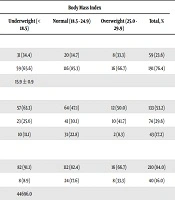
Figure 2 presents anthropometric parameters among the subjects based on Body Mass Index; in the figure, 23.5% were stunted/thin, 60.8% were normal, 5.0% were overweight, and 10.8% were obese. There was a significant difference in the distribution of Body Mass Index (BMI) groups between the able and disabled subjects (pearson chi-square = 26.984, df = 3, P = 0.000).

Figure 2.
Anthropometric parameter among the subject based on Body Mass Index (BMI)
4.6. Relationship Between Socio-demographic and Anthropometric Parameters Among the Abled Subjects Based on Body Mass Index
Table 4 shows the bivariate analysis between socio-demographic variables (age group, gender, class, religion, and ethnicity) and anthropometric parameters (stunted/thin, normal, overweight, obese) based on BMI. For age group, the results showed a significant association between age group and BMI categories (χ2 = 88.908, df = 6, P = 0.000*). The highest proportion of normal BMI was found in the age group 12 - 15 (40.4%), while the highest proportion of obese BMI was in the age group above 15 (47.1%). For gender, there is a significant association between gender and BMI categories (χ2 = 14.379, df = 3, P = 0.002*). The proportion of overweight and obese BMI was higher in females (5.9% and 5.5%, respectively) than in males (0.0% and 5.5%, respectively).
Table 4.
Bivariate Analysis Between Socio-demographic and Anthropometric Parameter Among the Able Subject Based on Body Mass Index a
| Variables and Categories | Stunted /tThin | Normal | Overweight | Obese | Total | Statistics |
|---|---|---|---|---|---|---|
| Age group | χ2 = 88.908; df = 6, P = 0.000 b | |||||
| < 12 | 6 (2.4) | 12 (4.7) | 0 (0.0) | 14 (5.5) | 32 (12.5) | |
| 12 - 15 | 34 (13.3) | 55 (21.6) | 0 (0.0) | 14 (5.5) | 103 (40.4) | |
| Above 15 | 10 (3.9) | 95 (37.3) | 15 (5.9) | 0 (0.0) | 120 (47.1) | |
| Gender | χ2 = 14.379; df = 3, P = 0.002 b | |||||
| Male | 27 (10.6) | 77 (30.2) | 0 (0.0) | 14 (5.5) | 118 (46.3) | |
| Female | 23 (9.0) | 85 (33.3) | 15 (5.9) | 14 (5.5) | 137 (53.7) | |
| Class | χ2 = 94.775; df = 12, P = 0.000 b | |||||
| JSS1 | 18 (7.1) | 51 (20.0) | 0 (0.0) | 0 (0.0) | 69 (27.1) | |
| JSS2 | 10 (3.9) | 57 (22.4) | 15 (5.9) | 14 (5.5) | 96 (37.6) | |
| JSS3 | 10 (3.9) | 54 (21.2) | 0 (0.0) | 14 (5.5) | 78 (30.6) | |
| SSS1 | 6 (2.4) | 0 (0.0) | 0 (0.0) | 0 (0.0) | 6 (2.4) | |
| SSS2 | 6 (2.4) | 0 (0.0) | 0 (0.0) | 0 (0.0) | 6 (2.4) | |
| Religion | χ2 = 53.324; df = 9, P = 0.000 b | |||||
| Islam | 22 (8.6) | 73 (28.6) | 15 (5.9) | 28 (11.0) | 138 (54.1) | |
| Christianity | 18 (7.1) | 34 (13.3) | 0 (0.0) | 0 (0.0) | 52 (20.4) | |
| Traditional | 10 (3.9) | 43 (16.9) | 0 (0.0) | 0 (0.0) | 53 (20.8) | |
| Others | 0 (0.0) | 12 (4.7) | 0 (0.0) | 0 (0.0) | 12 (4.7) | |
| Ethnicity | χ2 = 169.403; df = 9, P = 0.000 b | |||||
| Yoruba | 3 (1.2) | 41 (16.1) | 0 (0.0) | 28 (11.0) | 72 (28.2) | |
| Igbo | 16 (6.3) | 31 (12.2) | 0 (0.0) | 0 (0.0) | 47 (18.4) | |
| Hausa | 19 (7.5) | 74 (29.0) | 0 (0.0) | 0 (0.0) | 93 (36.5) | |
| Others | 12 (4.7) | 16 (6.3) | 15 (5.9) | 0 (0.0) | 43 (16.9) |
a Values are expressed as No. (%).
b Statistically significant at P < 0.05.
For class, there is a significant association between class and BMI categories (χ2 = 94.775, df = 12, P = 0.000*). The highest proportion of normal BMI was found in JSS2 (22.4%), while the highest proportion of overweight and obese BMI was found in JSS1 (7.1% and 0.0%, respectively). For religion, there is a significant association between religion and BMI categories (χ2 = 53.324, df = 9, P = 0.000*). The highest proportion of overweight and obese BMI was found in Islam (5.9% and 11.0%, respectively). For ethnicity, there is a significant association between ethnicity and BMI categories (χ2 = 169.403, df = 9, P = 0.000*). The highest proportion of obese BMI was found in Hausa (36.5%), while the highest proportion of stunted/thin BMI was found in Yoruba (1.2%).
In summary, the results suggest that age group, gender, class, religion, and ethnicity are associated with different BMI categories. These findings can be useful in the design of targeted interventions to address malnutrition and overweight/obesity in specific subgroups of the population.
4.7. The Relationship Between Socio-demographic and Anthropometric Parameter Among the Disabled Subject Based on BMI
In Table 5 there were no subjects in the stunted/thin category for those above 12 years old, 30.3% of subjects in the 12 - 15 age group were stunted/thin, and 6.9% of those above 15 years old were obese. The chi-square test statistic for age group was 84.648, with df = 6 and a p-value of 0.000, indicating a significant association between age group and BMI category.
Similarly, for gender, 18.6% of male subjects were stunted/thin, while 53.8% were normal. The chi-square test statistic was 8.164, with df = 3 and a P-value of 0.043, indicating a significant association between gender and BMI category.
Table 5.
Bivariate Analysis Between Socio-demographic and Anthropometric Parameters Among the Disabled Subject Based on Body Mass Index a
| Variables and Categories | Stunted/Thin | Normal | Overweight | Obese | Total | Statistics |
|---|---|---|---|---|---|---|
| Age group | χ2 = 84.648; df = 6, P = 0.000 b | |||||
| < 12 | 0 (0.0) | 9 (6.2) | 0 (0.0) | 10 (6.9) | 19 (13.1) | |
| 12 - 15 | 44 (30.3) | 49 (33.8) | 0 (0.0) | 5 (3.4) | 98 (67.6) | |
| Above 15 | 0 (0.0) | 23 (15.9) | 5 (3.4) | 0 (0.0) | 28 (19.3) | |
| Gender | χ2 = 8.164; df = 3, P = 0.043 b | |||||
| Male | 27 (18.6) | 41 (28.3) | 0 (0.0) | 10 (6.9) | 78 (53.8) | |
| Female | 17 (11.7) | 40 (27.6) | 5 (3.4) | 5 (3.4) | 67 (46.2) | |
| Class | χ2 = 102.578; df = 15, P = 0.000 b | |||||
| JSS1 | 26 (17.9) | 21 (14.5) | 0 (0.0) | 0 (0.0) | 47 (32.4) | |
| JSS2 | 0 (0.0) | 36 (24.8) | 5 (3.4) | 5 (3.4) | 46 (31.7) | |
| JSS3 | 0 (0.0) | 19 (13.1) | 0 (0.0) | 5 (3.4) | 24 (16.6) | |
| SSS1 | 9 (6.2) | 0 (0.0) | 0 (0.0) | 5 (3.4) | 14 (9.7) | |
| SSS2 | 9 (6.2) | 0 (0.0) | 0 (0.0) | 0 (0.0) | 9 (6.2) | |
| Religion | χ2 = 34.589; df = 9 | |||||
| Islam | 27 (18.6) | 47 (32.4) | 5 (3.4) | 15 (10.3) | 94 (64.8) | |
| Christianity | 17 (11.7) | 12 (8.3) | 0 (0.0) | 0 (0.0) | 29 (20.0) | |
| Traditional | 0 (0.0) | 13 (9.0) | 0 (0.0) | 0 (0.0) | 13 (9.0) | |
| Others | 0 (0.0) | 9 (16.1) | 0 (0.0) | 0 (0.0) | 9 (6.2) | |
| Ethnicity | χ2 = 88.459; df = 9, P = 0.000 b | |||||
| Yoruba | 0 (0.0) | 7 (4.8) | 0 (0.0) | 10 (6.9) | 17 (11.7) | |
| Igbo | 9 (6.2) | 5 (3.4) | 0 (0.0) | 5 (3.4) | 19 (13.1) | |
| Hausa | 26 (17.9) | 55 (37.9) | 0 (0.0) | 0 (0.0) | 81 (55.9) | |
| Others | 9 (6.2) | 14 (9.7) | 5 (3.4) | 0 (0.0) | 28 (19.3) |
a Values are expressed as No. (%).
b Statistically significant at P < 0.05.
Overall, the results suggest significant associations between certain socio-demographic factors and BMI categories among disabled subjects, which can have important implications for interventions and policies aimed at improving the health outcomes of this population.
5. Discussion
This study explored the nutritional status, factors affecting nutritional status, food preferences, and eating practices among able and disabled adolescents attending Government Vocational College and the School of Handicapped, focusing on the impact on meal size and dietary habits.
In this study, the frequency of skipping meals was found to be higher among disabled adolescents (43.4%) than able adolescents (35.2%), which is associated with poor dietary habits and increased risk of obesity (13, 14). In addition, disabled adolescents received daily pocket money more frequently than able adolescents (45.5% vs. 33.5%), which was positively associated with unhealthy eating habits and obesity among adolescents (14-16). In addition, an adolescent with disabilities was more likely to buy snacks with high fat and high sugar compared to their able-bodied counterparts, increasing the risk of obesity. These poor dietary habits are influenced by culture, education, socioeconomic background, health status, life stage, lifestyle, and social engagement (16, 17). Peer influence also plays a significant role in determining food choices, with disabled adolescents more likely to consume unhealthy foods when with friends compared to alone (18). Researchers found that frequent snacking was associated with a lower likelihood of having a normal weight status in this study, which supports the notion that frequent snacking may adversely affect adolescents' health and highlights the need for intervention to prevent negative consequences. The school food environment has been shown to encourage the intake of unhealthy foods, frequently offered to students in school cafeterias, convenience stores, and street vendors outside of buildings (19). Additionally, marketing for pastries, candies, and beverages with added sugar—many of which feature presents or special promotions—remains prevalent outside of schools, especially state schools, and has the power to affect children's choices for food and beverages (20). Concerns over the effects of these diets on people's health are growing. Although the rise in overweight and obesity receives most of the attention, contemporary diets are also linked to under-nutrition and are currently thought to be the single most significant risk factor for the global burden of illness (19, 21). Wars and armed conflicts are associated with increased food insecurity, the leading cause of malnutrition in low- and middle-income countries, further predisposing and aggravating poor feeding practices among disabled people because they are more disadvantaged in food accessibility vis-à-vis their abled counterparts (22, 23).
Furthermore, able adolescents consumed cereals, milk, eggs, meat, and fish daily, while disabled adolescents consumed pulses, legumes, green leafy vegetables, and tea/coffee. Both groups frequently consumed fast foods, and disabled adolescents had a lower intake of fruits, vegetables, and whole grains and higher fast-food consumption, which corresponds with Leung et al. (24), based on which disabled adolescents had a lower intake of fruits, vegetables, and whole grains, and higher intake of fast foods compared to their non-disabled peers (24-26).
Nutritional assessment is a systematic process of collecting and interpreting information to decide on nutrition-related health issues that affect an individual or community (27). This growth determinant largely determines Adolescents' global well-being (28). An in-depth knowledge of the nutritional assessment of adolescents has far-reaching implications for promoting the health of future generations (28). The ultimate objective of nutritional assessment is to improve human health. Nutritional assessment is recommended to map out malnutrition's magnitude and geographical distribution as a public health problem. Identifying the factors responsible for the nutritional status of a community will allow us to suggest appropriate corrective interventions, with continued community participation, to improve the nutritional status (29). Adolescents with disabilities often lack access to health, nutritional, and social welfare services, making them more vulnerable to health disorders (30). Economic, social, demographic, and environmental factors influence their nutritional and health status. Poverty contributes to a vicious cycle of poverty and disability, leading to undernutrition and overnutrition (31). Adolescents, both able and disabled, often suffer chronic health issues due to physiological changes, physical activity, and dietary habits influenced by peers, mass media, social norms, and lack of nutrition knowledge (32, 33). Therefore, promoting healthy dietary patterns among adolescents, including disabled ones, is crucial to preventing chronic diseases and improving overall health. Raising awareness about healthy eating habits and making food options accessible is also essential.
This novel study in Nigeria assessed food preferences, dietary habits, and nutritional status relative to BMI in a sample of able and disabled young adults. The findings of this study serve as a basis for future studies. The study also contributes to the knowledge of malnutrition and overweight/obesity risk factors in countries undergoing nutritional transition. One of the limitations of this study is that it is cross-sectional, and causality cannot be inferred from cross-sectional analyses because the data were collected at a single point in time. The direction of the association cannot be determined. Additionally, self-reporting may have contributed to social desirability bias. Some subjects, realizing they are part of a study, may have reported ideal eating habits rather than their actual habits. Recall bias cannot be excluded as some information was based on past practices.
5.1. Conclusions and Recommendation
The study revealed that disabled adolescents often skip meals and receive pocket money, with meal size influenced by their social circle. Government Vocational College and School of the Handicapped students have different food preferences and eating practices. The study emphasized the importance of promoting healthy dietary patterns among all adolescents to prevent chronic diseases and improve overall health. Interventions should consider socio-demographic factors, promote healthy food options, offer nutrition education programs, and involve parents in meal planning.