Fulltext
The full text of this article is available on PDF
Journal of Kermanshah University of Medical Sciences
Peer-reviewed Medical Quarterly

Image Credit:J Kermanshah Univ Med Sci
Authors
Background: Low adherence to the treatment regimen in tuberculosis patients has been recognized as a major threat for tuberculosis (TB) control program. Thus, the present study was conducted to assess the factors affecting adherence to the treatment regimen of TB patients via Health Belief Model (HBM).
Methods: In this cross-sectional study,110 tuberculosis patients attending anti-TB center in Zabol were selected and included in the study using census method. Data were collected using Health Belief Model (HBM) questionnaire and reviewing the patients' medical files. The collected data were analyzed by SPSS software using t-test, ANOVA and multiple regression analysis with 95 % confidence level.
Results: The mean age of the participants was 55.7±18.6 years. 89% of the patients had pulmonary tuberculosis and 11% had extra-pulmonary tuberculosis. The multiple regression analysis showed knowledge, self-efficacy, perceived benefits and perceived threat were significant predictors of adherence to the treatment regimen. The HBM constructs accounted for 29% of the variance observed in adherence to the treatment regimen.
Conclusion: The findings of the study highlight the need to increase awareness and change the patients’ beliefs about the risks of low adherence to the treatment regimen in patients.
© 2014, Journal of Kermanshah University of Medical Sciences. This open-access article is available under the Creative Commons Attribution-NonCommercial 4.0 (CC BY-NC 4.0) International License (https://creativecommons.org/licenses/by-nc/4.0/), which allows for the copying and redistribution of the material only for noncommercial purposes, provided that the original work is properly cited.
Sadeghi N, Ahmadipour H. Treatment Adherence in Patients with Hypertension: A Cross Sectional Study from Southeast of Iran. Shiraz E-Med J. 2018;20(3):e74125. doi: https://doi.org/10.5812/semj.74125
Bakhshi S, Heidari S, Zanjirani S, Zakeri MA. The Effect of Health Belief Model-based Education on Empowering Cardiovascular Patients for Medication Adherence. J Nurs Midwifery Sci. 2023;10(1):e134214. doi: https://doi.org/10.5812/jnms-134214
Hazavehei MM, Dashti S, Moeini B, Faradmal J, Shahrabadi R, et al. Factors related to self-care behaviors in hypertensive individuals based on Health Belief Model. koomesh. 2015;17(1):e150764. doi:
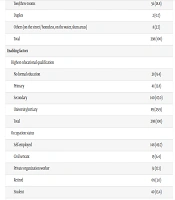
Olayemi OM, Michael JP, Adeneye AK. Socio-demographic Characteristics of Tuberculosis Patients in Public Health Facilities in Lagos State, Nigeria. J Health Rep Technol. 2026;12(1):e167610. doi: https://doi.org/10.5812/jhrt-167610

Karimy M, Zareban I. Predictors of HIV-Preventive Behavior Changes Among HIV-Infected Patients in Iran: Application of the Extended Health Belief Model. Int J High Risk Behav Addict. 2018;7(4):e58145. doi: https://doi.org/10.5812/ijhrba.58145
Last Update: 1 week ago
Last Update: 1 week ago
Last Update: 1 week ago
Last Update: 6 days ago
Last Update: 2 days ago
Last Update: 4 days ago