Journal of Kermanshah University of Medical Sciences
Peer-reviewed Medical Quarterly
e-ISSN 2588-2570
p-ISSN 2588-2562
Image Credit:J Kermanshah Univ Med Sci
Outline
The efficacy of couple therapy based on representing parental pattern upon lapse of divorce among couples on the brink of divorce
Authors
1Dept. of counseling, Faculty of Humanities and Social Sciences, Islamic Azad University Branch of Science and Research, Tehran, Iran
2Dept. of counseling, Faculty of Psychology and Educational Sciences, Allameh Tabatabaei, Tehran, Iran
3Dept. of Psychology, Faculty of Humanities and Social Sciences, Islamic Azad University Branch of Science and Research, Tehran, Iran
*Corresponding Author: Corresponding author: Omid Moradi, Dept. of counseling, Faculty of Humanities and Social Sciences, Islamic Azad University Branch of Science and Research, Tehran, Iran, Tel: +98 9188721606 Email: moradioma@gmail.com
Published online:Aug 29, 2013
Article type:Research Article
Received:Jan 14, 2013
Accepted:Apr 16, 2013
How to Cite:Moradi O, Esmaeli M, Shafieabadi A, Kiamanesh AR. The efficacy of couple therapy based on representing parental pattern upon lapse of divorce among couples on the brink of divorce. J Kermanshah Univ Med Sci. 2013;17(5):e77057. doi:
Abstract
Background: Divorce in most countries, especially Third World Countries such as Iran has an over rising trend. Clearly the impact on couples and families, and especially children, can be very destructive. This study examined the effectiveness of couple therapy models based on parental pattern on lapse of couples on the brink of divorce
Methods: The method of this study was a quasi-experimental method, in the form of pre-test - post-test that was administered to a non-equivalent control group. The population of the research included all couples applicant of divorce referred to Justice’s Family Counseling Center of Sanandaj city in 2011. The subjects were 16 couples who applied for treatment sessions chosen by voluntary sampling and assigned randomly into two groups of control and experimental (each group consisted of 8 couples). Experimental group couples participated in 7 sessions of 90 minutes under treatment based on representing parental pattern. In order to analyze data x2 was used.
Results: 5 couples (62.5) out of 8 couples of experimental group and one couple (12.5) out of 8 couples of control group canceled divorce. The change of decision in divorce rate of couples participating in this program is more than control group (P≤0.01).
Conclusion: The findings of this study confirmed the role and effectiveness of couple therapy based on parental patterns in reducing divorce rate.
Highlights
References
- 1.The references of this article is available on PDF.
Copyright
© 2013, Journal of Kermanshah University of Medical Sciences. This open-access article is available under the Creative Commons Attribution-NonCommercial 4.0 (CC BY-NC 4.0) International License (https://creativecommons.org/licenses/by-nc/4.0/), which allows for the copying and redistribution of the material only for noncommercial purposes, provided that the original work is properly cited.
Similar Articles
30
Jul
2026
Compassion-Focused Therapy Versus Schema Therapy: A Comparative Analysis of Their Impact on Relationship Beliefs in Women Seeking Divorce
Mozhdeh Sadat Hamidian,
Alireza Manzari Tavakoli,
Arsalan Khanmohammadi Otaghsara
Hamidian MS, Manzari Tavakoli A, Khanmohammadi Otaghsara A. Compassion-Focused Therapy Versus Schema Therapy: A Comparative Analysis of Their Impact on Relationship Beliefs in Women Seeking Divorce. J Health Rep Technol. 2026;12(3):e172660. doi: https://doi.org/10.5812/jhrt-172660
13
Jan
2024
Effectiveness of Emotionally Focused Therapy for Couples in Improving Emotion Regulation and Relationship Distress of Emotionally Divorced Couples
Khadijeh Bazyari,
Farzaneh Hooman,
Marzieh Talebzadeh Shoushtari,
Zahra Eftekhar Saadi
Bazyari K, Hooman F, Talebzadeh Shoushtari M, Eftekhar Saadi Z. Effectiveness of Emotionally Focused Therapy for Couples in Improving Emotion Regulation and Relationship Distress of Emotionally Divorced Couples. Zahedan J Res Med Sci. 2024;26(2):e142128. doi: https://doi.org/10.5812/zjrms-142128
2
Aug
2022
A cross sectional study of divorce causes in divorce applicants in the Iranian population
Nemat Sotodeh Asl,
Raheb Ghorbani,
Ali Darini
Sotodeh Asl N, Ghorbani R, Darini A. A cross sectional study of divorce causes in divorce applicants in the Iranian population. koomesh. 2022;24(3):e152742. doi:
6
Nov
2023
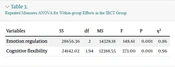
The Effects of Integrative Behavioral Couple Therapy on Emotion Regulation and Cognitive Flexibility of Emotionally Divorced Couples
Khadijeh Bazyari,
Farzaneh Hooman,
Marzieh Talebzadeh Shoushtari,
Zahra Eftekhar Saadi
Bazyari K, Hooman F, Talebzadeh Shoushtari M, Eftekhar Saadi Z. The Effects of Integrative Behavioral Couple Therapy on Emotion Regulation and Cognitive Flexibility of Emotionally Divorced Couples. J Health Rep Technol. 2023;9(4):e140142. doi: https://doi.org/10.5812/jhrt-140142
2
Oct
2016
Effectiveness of Solution-Focused Therapy on Married Couples’ Burnout
Abdolreza Mirzavand,
Mousa Riahi,
Ali Mirzavand,
Mahmoud Malekitabar
Mirzavand A, Riahi M, Mirzavand A, Malekitabar M. Effectiveness of Solution-Focused Therapy on Married Couples’ Burnout. Iran J Psychiatry Behav Sci. 2016;10(4):e4983. doi: https://doi.org/10.17795/ijpbs-4983
Cited by
- Scopus by DOI: 0
Last Update: 1 week ago
- Scopus by Title: 0
Last Update: 1 week ago
- Scopus by Title (Ref): 0
Last Update: 1 week ago
- CrossRef: 0
Last Update: 5 hours ago
- OpenAlex: 0
Last Update: 8 hours ago
- OpenCitations: 0
Last Update: 5 days ago
Comments
Number of Comments:0