Fulltext
The full text of this article is available on PDF
Journal of Kermanshah University of Medical Sciences
Peer-reviewed Medical Quarterly
Authors
Background & Objectives: Upper gastrointestinal bleeding is a medical emergency. Patients over 60 years constitute about 30%-40% of upper gastrointestinal bleeding. Traditionally, bleeding in elderly, compared to younger patients, has been accompanied by high mortality and need for more surgery. In recent years, new insights to management of gastrointestinal bleeding with use of proton pump inhibitors and I.C.U ward admission has been emerged. This study was conducted to evaluate the efficacy of these new strategies in the natural course of bleeding in patients over and under the age 60.
Materials and Methods: The study was a descriptive and cross-sectional type conducted in 200 patients_100 consecutive patients aged over 60 and 100 others under 60_ admitted with a diagnosis of upper gastrointestinal bleeding at Taleghani and Imam hospitals affiliated of Kermanshah University between 1999-2000. Diagnostic endoscopy was performed about 72 hours after admission. Older patients with co-morbid diseases and those having high risk endoscopic stigmata of recent hemorrhage (active bleeding and visible vessel) were admitted in intensive care unit/ICU, proton pump inhibitor (Omeprazole) 40 mg twice daily was given to patients. Information collected included history of associated diseases, vital signs, laboratory data, endoscopic findings and length of hospitalization days, amount of blood required, number of surgery and mortality rates. Statistical analysis was carried out by SPSS software version 11.5, for qualitative variables x², and for quantitative variables student t-test (P value, equal or less than 0.05) was used and considered as significant.
Results: Mean age of patients over 60 was 70.48±0.66 and under 60 was 37/±1.27 (p=0.0008). 73% of patients over 60 and 80% of patients under 60 were male. History of taking NSAIDs was more among patients over 60 years of age (p=0.003), but they showed less dyspepsia (p=0.05). Cardiovascular (p=0.0008) and arthritis (p=0.05) were more among patients under 60 years of age. Endoscopy findings included more duodenal ulcers in younger patients (p=0.0096)) and gastric ulcers among older ones (p=0.009). Hospitalization in the two groups was not different with regard to mean duration of hospital stay: 3.8±0.19 days in patients over 60 vs 3.77±0.21 in patients under 60 (p=0.19), mean number of blood units transfused: 4.52±0.30 units in patients over 60 vs 4.49±0.36 units in patients under 60 (p=0.64), number of surgery (3 patients in each group) or mortality (2 patients in each group).
Conclusion: According to this study, with application of modern therapeutic management in gastrointestinal bleeding in recent decade, the duration of hospital stay, in the old and young patients has became the same. We conclude that use of proton pump inhibitors and I.C.U admission for elderly patients or those with high risk endoscopic stigmata of recent hemorrhage to be done routinely in medical centers.
© 2007, Journal of Kermanshah University of Medical Sciences. This open-access article is available under the Creative Commons Attribution-NonCommercial 4.0 (CC BY-NC 4.0) International License (https://creativecommons.org/licenses/by-nc/4.0/), which allows for the copying and redistribution of the material only for noncommercial purposes, provided that the original work is properly cited.

Shahraki T, Shahraki M, Miri-Aliabad G. The Importance of Endoscopy as a Useful Method for Diagnosis of Upper Gastrointestinal Bleeding in Children. J Compr Ped. 2018;9(1):e55022. doi: https://doi.org/10.5812/compreped.55022
Moravej H, Dehghani SM, Nikzadeh H, Malekpour A. Lower Gastrointestinal Bleeding in Children: Experiences From Referral Center in Southern Iran. J Compr Ped. 2013;4(2):e8423. doi: https://doi.org/10.17795/compreped-8423
Nezam S, Borjian Boroojeny S, Rahati O. The effect of prophylaxis therapy on prevention from gastrointestinal bleeding in ICU in patients. Zahedan J Res Med Sci. 2005;7(3):e94935. doi:
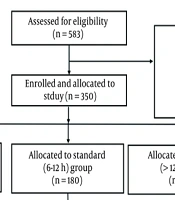
Li H, Chen Z, Chen G, Tan W, Mai S. Predicting Mortality and Rebleeding in Acute Variceal Hemorrhage: A Real-World Study of Endoscopy Timing in Cirrhosis. Hepat Mon. 2026;26(1):e168590. doi: https://doi.org/10.5812/hepatmon-168590
Salehi MG. The Current Diagnostic and Treatment Options for Managing Hemobilia. I J Radiol. 2017;14(Special Issue):e48399. doi: https://doi.org/10.5812/iranjradiol.48399
Last Update: 3 weeks ago
Last Update: 3 weeks ago
Last Update: 3 weeks ago
Last Update: 5 hours ago
Last Update: 1 day ago
Last Update: 4 days ago