Fulltext
The full text of this article is available on PDF
Journal of Kermanshah University of Medical Sciences
Peer-reviewed Medical Quarterly
Authors
Introduction: Evaluating patient with acute scrotum is based on medical history (e.g. age), physical examination, blood tests, urine analysis and imaging studies. Differential diagnosis may be difficult. Efficacy of serum acute phase proteins in patients with acute scrotum was assessed in this study.
Materials and Methods: 45 patients were recruited and allocated within three sub-groups; acute epididimitis & epididmorchitis (n=26), torsion of testis (n=9),and other disorders that presented with acute scrotum such as miscellaneous, varicocele ,hydrocele ,scrotal trauma and torsion of testicular appendages (n=10) and a group of non-acute, non-inflammatory referrals were selected as a control (n=20). Level of α1 antitrypsin, haptogloubin, CRP and fibrinogen was measured in all cases. Results were compared with standard clinical findings and routine blood or urine testes levels using ANOVA statistic.
Results: There was no significant difference for mean level of α1 antitrypsin between the groups according to ANOVA statistical analysis (P=0.234). Mean haptogloubin level in the groups one, two, three and four was 1347.92, 418.33, 525.60 and 973.5 mg/l respectively and there was significant difference between the groups (P<0.001). Group one had significantly higher level of haptogloubin level than groups two and three (P<0.001 and p=0.001). There was no significant difference between group two and three also between all patient groups with control. Mean CRP level in groups one, two, three and four was 102.47, 12.45, 17.57 and 1.59 mg/l respectively and difference between the groups were statistically significant (P=0.001). With respect to CRP level comparison of the groups, in group one it was significantly higher than groups two, three and four (P<0.001). There was no significant difference for CRP level between other groups. Mean fibrinogen level in groups one, two, three and four was 3.06, 3.07, 2.14 and 2.9 g/l respectively and there was no significant difference with each other (P=0.533). Fibrinogen and α1 antitrypsin could not help differentiating patients from each other as well as control group.
Conclusion:Findings confirmed that CRP, and haptogioubin are useful biomarkers in differential diagnosis of acute scrotum. In the presence of any doubt, irrespective to imaging result and acute phase proteins level, surgical operation for ruling out of torsion is necessary. In conclusion the greatest value of these biomarkers is for confirmation of the absence of testicular torsion, which in this condition surgical intervention seems will not be necessary.
© 2006, Journal of Kermanshah University of Medical Sciences. This open-access article is available under the Creative Commons Attribution-NonCommercial 4.0 (CC BY-NC 4.0) International License (https://creativecommons.org/licenses/by-nc/4.0/), which allows for the copying and redistribution of the material only for noncommercial purposes, provided that the original work is properly cited.
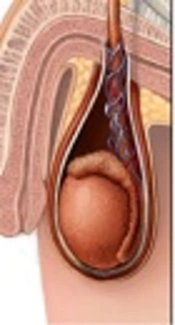
Mortazavi R, Alamdaran SA, Mohamadipour A, Feyzi laein A. Epididymal or Testicular Ultrasonic Findings: Which One is More Reliable for Differentiation of Testicular Torsion from Epididymitis?. Nephro-Urol Mon. 2018;10(4):e68292. doi: https://doi.org/10.5812/numonthly.68292

Rasuli S, Mobarak S, Radmanesh E, Maghsoudi F, Kanani K, et al. Laboratory Diagnostic Tests in Patients with Sepsis. Int J Infect. 2022;9(4):e135791. doi: https://doi.org/10.5812/iji-135791
Yu Y, Zhang F, An Q, Wang L, Li C, et al. Scrotal Exploration for Testicular Torsion and Testicular Appendage Torsion: Emergency and Reality. Inn J Pediatr. 2015;25(1):-. doi: https://doi.org/10.5812/ijp.248
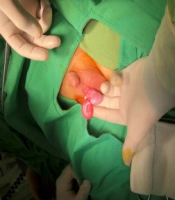
Mohseni Rad H, Mohseni AR. Torsion of Spermatic Cord Cyst; a Case Report. Nephro-Urol Mon. 2022;14(4):e120682. doi: https://doi.org/10.5812/numonthly-120682
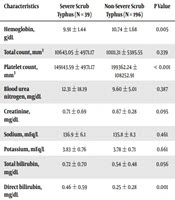
Sivaprakasam E, Rajan M, Pasupathy U, Ravichandran L. Clinical Characteristics and Predictors of Severity of Pediatric Scrub Typhus in a Tertiary Level Hospital in South India. Arch Pediatr Infect Dis. 2020;8(1):e92752. doi: https://doi.org/10.5812/pedinfect.92752
Last Update: 3 weeks ago
Last Update: 3 weeks ago
Last Update: 3 weeks ago
Last Update: 5 hours ago
Last Update: 8 hours ago
Last Update: 4 days ago