Fulltext
Full-text is available in the PDF file.
Journal of Nursing and Midwifery Sciences
The Official Journal of Mazandaran University of Medical Sciences
Authors
Context: Although spouses play the main role as caregivers, few intervention studies have been performed on the psychological health of breast cancer patients’ spouses.
Aims: To determine Mindful‑Centered Self‑care Empowerment Training Program (MScETP) influencing the breast cancer patients’ spouses’ depression and their family functioning.
Setting and Design: A quasi‑experimental study with one‑group pre-and post-test design.
Material and Methods: The sample included 46 randomly selected cancer patients’ spouses meeting the inclusion criteria, referring to the specialized clinics of Mazandaran University of Medical Sciences, Sari, Iran. Firstly, the pretest was conducted and then the posttest was done a week following the intervention. Data collection was done by Beck Depression Inventory-II and Family Assessment Device-60 Questionnaire before and after implementing the MScETP.
Statistical Analysis: by ANOVA and dependent t-test by SPSS-22 at significance level as P < 0.05.
Results: The results reported the pre‑ and post-intervention mean (±SD) of the spouses’ depression as 15.65 (±6.79) and 12.95 (±4.99), respectively. The mean (± SD) of six FAD subscales was calculated as it follows: problem‑solving 2.30 (±0.33) and 2.15 (±0.29), communication 2.33 (±0.29) and2.27 (±0.19), roles 2.21 (±0.23) and2.31 (±0.19), affective responsiveness2.08(±0.32) and2.28(±0.32), affective involvement2.62 (±0.40) and 2.27 (±0.29), and behavior control 2.60 (±0.31) and 2.33 (±0.27), and General Functioning Scale 2.35 (±0.27) and 2.11 (±0.23) (P < 0.05). As the findings showed, the training significantly affected the breast cancer sufferers’ spouses’ depression and their family functioning (P < 0.05).
Conclusion: The study findings revealed MScETP meaningfully reduced the breast cancer patients’ spouses’ depression and improved their family functioning.
© 2022, Author(s). This open-access article is available under the Creative Commons Attribution 4.0 (CC BY 4.0) International License (https://creativecommons.org/licenses/by/4.0/), which allows for unrestricted use, distribution, and reproduction in any medium, provided that the original work is properly cited.
Rahmani S, Talepasand S, Ghanbary-Motlagh A. Comparison of Effectiveness of the Metacognition Treatment and the Mindfulness-Based Stress Reduction Treatment on Global and Specific Life Quality of Women with Breast Cancer. Int J Cancer Manag. 2014;7(4):e80555. doi:
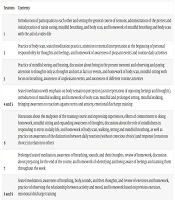
Bagherzadeh Z, Kalantari F. The Effectiveness of Mindfulness Training on Resilience and Quality of Life in Spouses of Veterans with Depressive Disorder. J Arch Mil Med. 2025;13(2):e161351. doi: https://doi.org/10.5812/jamm-161351
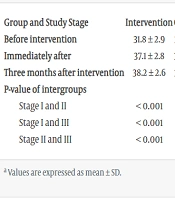
Moazeni M, Aliakbari F, Kheiri S, Salehi Tali S. The Effect of Family-Centered Empowerment Program on Husbands' Understanding of Illness, Perceived Stress and Self-care Behaviors of Type 2 Diabetes Patients. Jundishapur J Chronic Dis Care. 2024;13(4):e143656. doi: https://doi.org/10.5812/jjcdc-143656
Enjezab B, Zarehosseinabadi M, Farzinrad B, Dehghani A. The Effect of Mindfulness-Based Cognitive Therapy on Quality of life in Perimenopausal Women. Iran J Psychiatry Behav Sci. 2019;13(1):e86525. doi: https://doi.org/10.5812/ijpbs.86525
Khodabakhshi Koolaee A, Falsafinejad MR, Akbari ME. The Effect of Stress Management Model in Quality of Life in Breast Cancer Women. Int J Cancer Manag. 2015;8(4):e3435. doi: https://doi.org/10.17795/ijcp-3435
Last Update: 3 weeks ago
Last Update: 3 weeks ago
Last Update: 3 weeks ago
Last Update: 6 hours ago
Last Update: 9 hours ago
Last Update: 4 days ago

