
Fulltext
Full-text is available in PDF format.
Journal of Nursing and Midwifery Sciences
The Official Journal of Mazandaran University of Medical Sciences
Authors
Context: Hospitals usually are at risk of potential hazards, which may necessitate emergency hospital evacuation (EHE). Deciding about hospital evacuation is of the critical task and is affected by numerous factors.
Aims: The aim of this study then was to explore the factors behind the decision for EHE in disasters.
Setting and Design: This is a qualitative study that was conducted from May 2014 to February 2015, employing conventional content analysis.
Materials and Methods: This is a qualitative study (conventional content analysis). Data were collected through in‑depth semi‑structured interviews with 25 key participants, who were selected using purposeful sampling. Data were analyzed using conventional content analysis according to the technique described by Graneheim and Lundman.
Statistical Analysis Used: No statistical methods were used in this study.
Results: Factors behind the decision for EHE in disasters merged into three main categories, including risk assessment and estimation, the possibility of continuing service provision, and the necessary prerequisites for evacuation. The seven subcategories of these three main categories were hospital population density, hospital characteristics, accident characteristics, vulnerability of the hospital, potential capabilities of the hospital, administrative adjustments, and the possibility of safe patient transfer.
Conclusion: Many different factors can contribute to the decision for EHE. The findings of this study can help hospital administrators to develop plans for making better evacuation‑related decisions.
© 2021, Author(s). This open-access article is available under the Creative Commons Attribution 4.0 (CC BY 4.0) International License (https://creativecommons.org/licenses/by/4.0/), which allows for unrestricted use, distribution, and reproduction in any medium, provided that the original work is properly cited.
Ojaghi S, Nourizad S, Mahboobi M, Khazaei M, Najafi G. Disaster crisis handling preparedness level of hospitals in Kermanshah. J Kermanshah Univ Med Sci. 2009;13(3):e79603. doi:
Masoumi G, Rezai M, Dehghani A, Hasanpor S, Fatemi SK. Emergency Medicine Specialists’ Knowledge of Hospital Emergency Department Indicators and Their Role in Patient Treatment: A Qualitative Study. Shiraz E-Med J. 2023;24(3):e130697. doi: https://doi.org/10.5812/semj-130697
Ameriyon A, aghighi A, Tofighi S, Sadeghi AA, shahedi A, et al. Assess the disaster preparedness of the selected military hospitals. Ann Mil Health Sci Res. 2013;11(4):e64965. doi:
Dadmehrnia A, Faghihi SAA, Koohestani HR, Pourbairamian G, Keshavarzi MH. An Elucidation on the Challenges of Pre-hospital Emergency Technicians: A Study on Emergency Medical Technicians in Shiraz, Iran. Shiraz E-Med J. 2023;24(8):e137606. doi: https://doi.org/10.5812/semj-137606
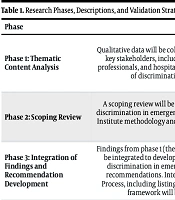
Yarahmadi S, Sepahvand E, Shahidi Delshad E. Dimensions of Discrimination in Health Service Delivery in Hospital Emergency Departments and Proposed Solutions: A Sequential Qualitative Multi-Method Study Protocol. J Arch Mil Med. 2026;14(2):e172246. doi: https://doi.org/10.69107/jamm-172246
Last Update: 1 month ago
Last Update: 1 month ago
Last Update: 1 month ago
Last Update: 6 days ago
Last Update: 1 day ago
Last Update: 4 days ago

