
Fulltext
Full-text is available in PDF format.
Journal of Nursing and Midwifery Sciences
The Official Journal of Mazandaran University of Medical Sciences
Authors
Background and Purpose: Subjective well-being plays a crucial role in human life given the positive impacts it has on mental and
physical health, longevity, and quality of life. Therefore, it is important to evaluate and promote subjective well-being and its relevant
factors. This study aimed to assess the role of social capital in subjective well-being among Iranian adolescents.
Methods: This cross-sectional, analytical study was performed on high school students (10th to 12th grades) residing in Birjand city,
center of the Southern Khorasan Province, Iran, in 2015. The main inclusion criteria were being a student of public high schools
and living with parents. Using multi-stage cluster sampling, 400 students were selected. A demographic characteristics form, the
Social Capital Index, and the Adolescent Subjective Well-Being Scale were employed for data collection. The data were analyzed
using descriptive statistics (including mean, frequency, and standard deviation) and inferential statistics (e.g., Pearson and Spearman’s
coefficients, step-wise multiple regression, Mann-Whitney U test, and Kruskal-Wallis test).
Results: The participants reported a high level of social capital (89.06±12.87) and a moderate level of subjective well-being (29.82±6.91).
There was a significant positive correlation between social capital and subjective well-being scores (r=0.5, P<0.001). Furthermore, 32%
of the variance of subjective well-being was explained by social capital and gender (girls; R2=0.32, F=95.24, P <0.001).
Conclusion: Improving social capital among social institutions such as family, school, and other youth-related networks can result in
enhanced subjective well-being in adolescents.
2022 Journal of Nursing and Midwifery Sciences. This work is licensed under a Creative Commons Attribution-NonCommercial 3.0 Unported License which allows users to read, copy, distribute and make derivative works for non-commercial purposes from the material, as long as the author of the original work is cited properly. https://jnms.mazums.ac.ir/ https://wiki.creativecommons.org/wiki/License_Versions
Vaezipour F, Atef-Vahid M, Amini M, Ramezani Farani A. Investigating the Relationships Between Spiritual Well-being and Other Well-being Dimensions, and Attitude Toward High-risk Behaviors in Adolescents, with Emphasis on the Mediating Role of Personality Traits. Iran J Psychiatry Behav Sci. 2021;15(3):e110586. doi: https://doi.org/10.5812/ijpbs.110586
Sadr-Mohammadi R, Kalantari M, Molavi H. Efficacy of Life Skills Training on Subjective Well-Being of Students: A Report from Rafsanjan, Iran. Iran J Psychiatry Behav Sci. 2014;8(2):. doi:
Momeni K, Karami J, Shahbazi Rad A. The relationship between spirituality, resiliency and coping strategies with students' psychological well-being. J Kermanshah Univ Med Sci. 2013;16(8):e77274. doi:
Asgari Ghoncheh K, Hashemnejad H, Hajibabaeei HR. The relationship between spiritual well-being and demographic characteristic of students of Qazvin University of Medical Sciences. J Inflamm Dis. 2024;22(3):e156093. doi:
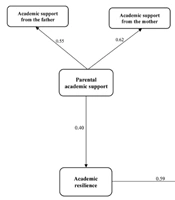
Fathi L, Bakhtiarpour S, Mahdad A. The Association Between Parental Academic Support and Students’ Academic Well-Being: The Mediating Role of Academic Resilience. Educ Res Med Sci. 2024;13(1):e149401. doi: https://doi.org/10.5812/ermsj-149401
Last Update: 4 days ago
Last Update: 4 days ago
Last Update: 4 days ago
Last Update: 6 days ago
Last Update: 2 days ago
Last Update: 4 days ago