Fulltext
Full-text is available in PDF format.
Journal of Nursing and Midwifery Sciences
The Official Journal of Mazandaran University of Medical Sciences
Authors
Background and Purpose: Fever is one of the most frequent disease symptoms and a common cause of emergency admissions in
infants and children. Considering the alarming nature of fever and pivotal role of mothers in the management of this symptom in
children, this study aimed to evaluate the ability of fever management among mothers in Sabzevar city, Iran.
Materials and Methods: This cross-sectional study was conducted on 340 mothers with children aged less than 10 years referring
to the healthcare centers of Sabzevar city, Iran in 2014. Data were collected using prepared checklists to assess the performance and
ability of mothers in the management of fever. Data analysis was performed in SPSS V.20 using descriptive statistics, Mann-Whitney
U test, and Kruskal-Wallis test.
Results: In this study, mean score of fever management was 4.65±1.64, and 20.9% of the mothers used antipyretic drugs at the body
temperature of 38°C to control the fever of children. In addition, 83.7% of the mothers used antipyretics during the night by waking the
children. Our findings were indicative of a significant association between fever management and maternal age (P=0.048), education
level (P=0.002), employment status (P<0.001), and referring to community healthcare centers (P<0.001).
Conclusion: According to the results of this study, mothers with low education levels required training to promote their performance
and conceptions regarding fever in order for the effective management of this common symptom in children.
2022 Journal of Nursing and Midwifery Sciences. This work is licensed under a Creative Commons Attribution-NonCommercial 3.0 Unported License which allows users to read, copy, distribute and make derivative works for non-commercial purposes from the material, as long as the author of the original work is cited properly. https://jnms.mazums.ac.ir/ https://wiki.creativecommons.org/wiki/License_Versions
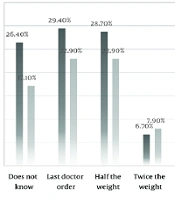
Tariverdi M, Sakhtemanpour Bolouki S, Tamaddondar M, Satarzadeh M, Rahmati MB, et al. Mothers' Health-Seeking Behaviors and Ignorance of Children's Fever: A Cross-Sectional Study. Arch Pediatr Infect Dis. 2024;12(3):e142885. doi: https://doi.org/10.5812/apid-142885
abdinia B. Knowledge and Practice of Mothers in the Management of Children’s Diarrhea, in Northwest, Iran. Arch Pediatr Infect Dis. 2014;2(4):e93453. doi:
Rayyani M. The effects of febrile convulsion control program on knowledge, attitude, anxiety, and action of mothers. Med Surg Nurs J. 2014;3(3):e87957. doi:
Khalili M, Mirshahi M, Zarghami A, Rajabnia M, Farahmand F. Maternal Knowledge and Practice Regarding Childhood Diarrhea and Diet in Zahedan, Iran. Health Scope. 2013;2(1):19-24. doi: https://doi.org/10.17795/jhealthscope-9885
Barzegar M, Valizadeh S, Gojazadeh M, Asghari Jafarabadi M, Zamanzadeh V, et al. The Effects of Two Educational Strategies on Knowledge, Attitude, Concerns, and Practices of Mothers With Febrile Convulsive Children. Thrita J Neu. 2016;5(2):e33411. doi: https://doi.org/10.5812/thrita.33411
Last Update: 4 days ago
Last Update: 4 days ago
Last Update: 4 days ago
Last Update: 6 days ago
Last Update: 2 days ago
Last Update: 4 days ago