Allura Red, the Artificial Azo Dye, Inhibits Esterase Activity of Carbonic Anhydrase II A Preliminary Study on the Food Safety in Term of Enzyme Inhibition
Authors
Abstract
Allura red (AR) is a widely used colorant in food industry, but there is debate on its potential security risk. In this study, in vitro inhibitory properties of the dye against carbonic anhydrase (CA) were evaluated. The esterase activity of purified CA decreased in the presence of AR, in a dose-dependent manner. Regarding literature review and observed results, this preliminary study may provide new horizons in safety of AR and the other dye additives.
Highlights
Copyright
© 2015, Author(s). This open-access article is available under the Creative Commons Attribution 4.0 (CC BY 4.0) International License (https://creativecommons.org/licenses/by/4.0/), which allows for unrestricted use, distribution, and reproduction in any medium, provided that the original work is properly cited.
Similar Articles
Inhibitory Effects of Six Allium Species on α-Amylase Enzyme Activity
Nickavar B, Yousefian N. Inhibitory Effects of Six Allium Species on α-Amylase Enzyme Activity. Iran J Pharm Res. 2022;8(1):e128615. doi: https://doi.org/10.22037/ijpr.2010.788
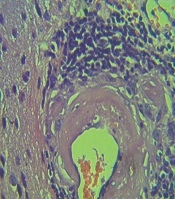
A Review of Cytotoxic Effects of Azo Dyes on Brain-subregion
Kamali M, Fazlpour F, Karimi F, Rezaee A, Sadri F, et al. A Review of Cytotoxic Effects of Azo Dyes on Brain-subregion. Middle East J Rehabil Health Stud. 2023;10(2):e130751. doi: https://doi.org/10.5812/mejrh-130751
Comparing Antibacterial and Antioxidant Activity of Annatto Dye Extracted by Conventional and Ultrasound-Assisted Methods
Yolmeh M, Habibi-Najafi MB, Shakouri S, Hosseini F. Comparing Antibacterial and Antioxidant Activity of Annatto Dye Extracted by Conventional and Ultrasound-Assisted Methods. Zahedan J Res Med Sci. 2015;17(7):-. doi: https://doi.org/10.17795/zjrms1020
In-vitro Antioxidant Activities of the Ethanolic Extracts of Some Contained-Allantoin Plants
Selamoglu Z, Dusgun C, Akgul H, Gulhan MF. In-vitro Antioxidant Activities of the Ethanolic Extracts of Some Contained-Allantoin Plants. Iran J Pharm Res. 2017;16(Suppl):e124922. doi: https://doi.org/10.22037/ijpr.2017.1993
Analysis of Carbonated Biosorbents Application in Heavy Metal Removal from Synthetic Wastewater
Taghavi L, Nasseh I, Barikbin B, Nasseh N. Analysis of Carbonated Biosorbents Application in Heavy Metal Removal from Synthetic Wastewater. Ann Mil Health Sci Res. 2016;14(2):e11360. doi:
More by these authors
- Scopus by DOI: 0
Last Update: 1 week ago
- Scopus by Title: 5
Last Update: 1 week ago
- Scopus by Title (Ref): 5
Last Update: 1 week ago
- CrossRef: 0
Last Update: 7 hours ago
- OpenAlex: 0
Last Update: 9 hours ago
- OpenCitations: 0
Last Update: 5 days ago