Hydroxypyridinone Derivatives: Synthesis And Cytotoxic Evaluation
Authors
Abstract
A series of 3-hydroxypyridin-4-one derivatives (HPOs) as bidentate iron (III) chelating agents were synthesized from 3-hydroxypyran-4-ones (maltol and ethyl maltol) in three steps through protection of hydroxyl group. The protected compounds were then reacted with suitable primary amines to give benzylated pyridinones. Finally, the benzyl group was removed by catalytic hydrogenation to produce the desired products. The partition coefficient of the free ligands and their iron (III) complexes were determined in an aqueous/octanol system using shakeflask method. The cytotoxic effects of these iron chelators against MCF-7 and MDA-MB-231 cancer cells were also evaluated using MTT assay. The results revealed that cytotoxicity of synthesized compounds were closely related to the lipophilycity of them so that the most lipophilic compound (4f) showed the highest activity; whereas compound 4a as a more hydrophilic agent showed the lowest cytotoxic effect; Although these compounds were cytotoxic at high concentration (≥ 0.1 mM).
Highlights
Copyright
© 2013, Author(s). This open-access article is available under the Creative Commons Attribution 4.0 (CC BY 4.0) International License (https://creativecommons.org/licenses/by/4.0/), which allows for unrestricted use, distribution, and reproduction in any medium, provided that the original work is properly cited.
Similar Articles
Synthesis and Comparison of Anti-Leishmania major Activity of Antimony and Iron Complexes of 3-Hydroxypyran-4-One and 3-Hydroxypyridine-4- One as Bi-Dentate Ligands
Zarrabi Z, Saghaie L, Fassihi A, Pestechian N, Saberi S. Synthesis and Comparison of Anti-Leishmania major Activity of Antimony and Iron Complexes of 3-Hydroxypyran-4-One and 3-Hydroxypyridine-4- One as Bi-Dentate Ligands. J Rep Pharm Sci. 2020;9(2):e147110. doi: https://doi.org/10.4103/jrptps.JRPTPS_64_18
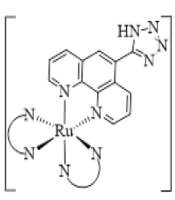
Ruthenium (II) Complexes Based on Phenanthroline-Tetrazole as Possible Anticancer Agents
Abaspour S, Soltani B, Hamishehkar H, Hossaini Sadr M. Ruthenium (II) Complexes Based on Phenanthroline-Tetrazole as Possible Anticancer Agents. Iran J Pharm Res. 2023;22(1):e136738. doi: https://doi.org/10.5812/ijpr-136738
Investigation of Intestinal Absorption of Pyridinones in Rat
Taher M, Saghaie L, Abrahilmi M. Investigation of Intestinal Absorption of Pyridinones in Rat. Iran J Pharm Res. 2022;3(4):e128208. doi: https://doi.org/10.22037/ijpr.2010.602
Synthesis and Determination of Partition Coefficients of Zinc Complexes with Clinical Potential application
Saghaie L, Houshfar G, Neishabor M. Synthesis and Determination of Partition Coefficients of Zinc Complexes with Clinical Potential application. Iran J Pharm Res. 2022;5(3):e128283. doi: https://doi.org/10.22037/ijpr.2010.673
Synthesis of 4-Phenyl-4,5-dihydropyranopyrazolone Derivatives with Activated Potassium Carbonate: Evaluation of Anticancer Activity on Cancer Cell Lines and Apoptosis Mechanism
Hosseinzadeh L, Mahmoudian N, Ahmadi F, Adibi H. Synthesis of 4-Phenyl-4,5-dihydropyranopyrazolone Derivatives with Activated Potassium Carbonate: Evaluation of Anticancer Activity on Cancer Cell Lines and Apoptosis Mechanism. J Rep Pharm Sci. 2019;8(2):e147411. doi: https://doi.org/10.4103/jrptps.JRPTPS_82_19
- Scopus by DOI: 0
Last Update: 1 week ago
- Scopus by Title: 4
Last Update: 1 week ago
- Scopus by Title (Ref): 4
Last Update: 1 week ago
- CrossRef: 0
Last Update: 7 hours ago
- OpenAlex: 0
Last Update: 10 hours ago
- OpenCitations: 0
Last Update: 5 days ago