Journal of Semnan University of Medical Sciences
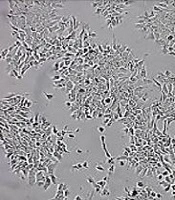
Image Credit:Koomesh
Outline
Investigating the Role of Tumor-Associated Macrophages in the Resistance of Brain Metastatic Tumor Cells to Paclitaxel in Two- Dimensional and Three-Dimensional Cell Culture Conditions
Authors

Abstract
Background: Brain metastasis is a devastating complication in breast cancer patients. Tumor-associated macrophages (TAMs) are cells in innate immunity, repair, and homeostasis. These cells play an important role in drug resistance in the metastatic microenvironment.
Objectives: In this study, the roles of TAMs in the resistance of brain metastatic cells to paclitaxel were evaluated in two-dimensional and three-dimensional cell culture conditions
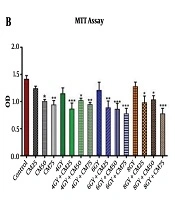
Methods: After the generation of a mouse model of breast cancer, brain metastatic tumor cells named 4T1B were isolated from brain metastasis lesions in mice. Simultaneous cultivation of RAW macrophage cells and 4T1B tumor cells was done in 2D and 3D (multicellular spheroids) culture mediums. The cytotoxic activity of paclitaxel on cells was evaluated by MTT assay.
Results: The results of this study show that TAMs cause a significant increase in paclitaxel resistance in brain metastatic cells only in 3D cell culture. Also, spheroidal formation was greater in terms of number and size when metastatic cells and macrophages were cultured simultaneously.
Conclusion: Therefore, according to the results of this study, it can be concluded that tumor-related macrophages increased brain metastatic cells in terms of spheroid formation, which indicates that they are cultured in three-dimensional conditions. Also, these cells reduce the response to treatment, or, in other words, drug resistance. These results may provide useful insights for future studies in cancer chemoresistance.
Highlights
References
- 1.Hajihosseini M, Amini P, Shahdoust M, Faradmal J, Sadeghyfar M, Sedighi-Pashaki A. [Application of log-normal parametric model in disability structure to predict metastasis and death due to breast cancer]. Koomesh. 2016;18(1):95-101. Persian.
- 2.Saroukhani D, Norouzi R, Zali H, Sayehmiri K, Forozeshfard M. [The quality of life in cancer patients in Iran: A systematic review by using meta-analysis]. Koomesh. 2016;18(1):1-12. Persian.
- 3.Gajewski TF, Schreiber H, Fu YX. Innate and adaptive immune cells in the tumor microenvironment. Nat Immunol. 2013;14(10):1014-22. [PubMed ID:24048123]. [PubMed Central ID:PMC4118725]. https://doi.org/10.1038/ni.2703.
- 4.Wynn TA, Chawla A, Pollard JW. Macrophage biology in development, homeostasis and disease. Nature. 2013;496(7446):445-55. [PubMed ID:23619691]. [PubMed Central ID:PMC3725458]. https://doi.org/10.1038/nature12034.
- 5.Qian BZ, Pollard JW. Macrophage diversity enhances tumor progression and metastasis. Cell. 2010;141(1):39-51. [PubMed ID:20371344]. [PubMed Central ID:PMC4994190]. https://doi.org/10.1016/j.cell.2010.03.014.
- 6.Grivennikov SI, Greten FR, Karin M. Immunity, inflammation, and cancer. Cell. 2010;140(6):883-99. [PubMed ID:20303878]. [PubMed Central ID:PMC2866629]. https://doi.org/10.1016/j.cell.2010.01.025.
- 7.Noy R, Pollard JW. Tumor-associated macrophages: from mechanisms to therapy. Immunity. 2014;41(1):49-61. [PubMed ID:25035953]. [PubMed Central ID:PMC4137410]. https://doi.org/10.1016/j.immuni.2014.06.010.
- 8.Yang Q, Guo N, Zhou Y, Chen J, Wei Q, Han M. The role of tumor-associated macrophages (TAMs) in tumor progression and relevant advance in targeted therapy. Acta Pharm Sin B. 2020;10(11):2156-70. [PubMed ID:33304783]. [PubMed Central ID:PMC7714989]. https://doi.org/10.1016/j.apsb.2020.04.004.
- 9.Firouzi Amandi A, Bahmanyar Z, Dadashpour M, Lak M, Natami M, Dogus Y, et al. Fabrication of magnetic niosomal platform for delivery of resveratrol: potential anticancer activity against human pancreatic cancer Capan-1 cell. Cancer Cell Int. 2024;24(1):46. [PubMed ID:38287318]. [PubMed Central ID:PMC10826113]. https://doi.org/10.1186/s12935-024-03219-2.
- 10.Khoshravan L, Dadashpour M, Hashemi M, Zarghami N. Design and Development of Nanostructured Co Delivery of Artemisinin and Chrysin for Targeting hTERT Gene Expression in Breast Cancer Cell Line: Possible Clinical Application in Cancer Treatment. Asian Pac J Cancer Prev. 2022;23(3):919-27. [PubMed ID:35345364]. [PubMed Central ID:PMC9360936]. https://doi.org/10.31557/APJCP.2022.23.3.919.
- 11.Dylami S, Farahani MK, Kia V, Atashi A. Survival, Adhesion and Migration of Metastatic Breast Tumor Cells: Roles of Parvins (PARVA and PARVB). 2024. Res Square. 2024;Preprint.
- 12.Foty R. A Simple Hanging Drop Cell Culture Protocol for Generation of 3D Spheroids. J Visualized Experime. 2011(51). https://doi.org/10.3791/2720-v.
- 13.Alagheband Y, Jafari-gharabaghlou D, Imani M, Mousazadeh H, Dadashpour M, Firouzi-Amandi A, et al. Design and fabrication of a dual-drug loaded nano-platform for synergistic anticancer and cytotoxicity effects on the expression of leptin in lung cancer treatment. J Drug Delivery Sci Technol. 2022;73. https://doi.org/10.1016/j.jddst.2022.103389.
- 14.Soheili M, Rezaei M, Salami M. [Anti-acetylcholine esterase activity of aqueous extract of lavandula angustifolia and its toxicity effect on HepG2 cell line]. Koomesh. 2017;19(2):263-8. Persian.
- 15.Pan Y, Yu Y, Wang X, Zhang T. Tumor-Associated Macrophages in Tumor Immunity. Front Immunol. 2020;11:583084. [PubMed ID:33365025]. [PubMed Central ID:PMC7751482]. https://doi.org/10.3389/fimmu.2020.583084.
- 16.Larionova I, Cherdyntseva N, Liu T, Patysheva M, Rakina M, Kzhyshkowska J. Interaction of tumor-associated macrophages and cancer chemotherapy. Oncoimmunology. 2019;8(7):1596004. [PubMed ID:31143517]. [PubMed Central ID:PMC6527283]. https://doi.org/10.1080/2162402X.2019.1596004.
- 17.Heindryckx F, Gerwins P. Targeting the tumor stroma in hepatocellular carcinoma. World J Hepatol. 2015;7(2):165-76. [PubMed ID:25729472]. [PubMed Central ID:PMC4342599]. https://doi.org/10.4254/wjh.v7.i2.165.
- 18.Wang S, Wang J, Chen Z, Luo J, Guo W, Sun L, et al. Targeting M2-like tumor-associated macrophages is a potential therapeutic approach to overcome antitumor drug resistance. NPJ Precis Oncol. 2024;8(1):31. [PubMed ID:38341519]. [PubMed Central ID:PMC10858952]. https://doi.org/10.1038/s41698-024-00522-z.
- 19.Yang C, He L, He P, Liu Y, Wang W, He Y, et al. Increased drug resistance in breast cancer by tumor-associated macrophages through IL-10/STAT3/bcl-2 signaling pathway. Med Oncol. 2015;32(2):352. [PubMed ID:25572805]. https://doi.org/10.1007/s12032-014-0352-6.
- 20.Xiao M, He J, Yin L, Chen X, Zu X, Shen Y. Tumor-Associated Macrophages: Critical Players in Drug Resistance of Breast Cancer. Front Immunol. 2021;12:799428. [PubMed ID:34992609]. [PubMed Central ID:PMC8724912]. https://doi.org/10.3389/fimmu.2021.799428.
- 21.Yin M, Li X, Tan S, Zhou HJ, Ji W, Bellone S, et al. Tumor-associated macrophages drive spheroid formation during early transcoelomic metastasis of ovarian cancer. J Clin Invest. 2016;126(11):4157-73. [PubMed ID:27721235]. [PubMed Central ID:PMC5096908]. https://doi.org/10.1172/JCI87252.
- 22.Devi KS, Mishra D, Roy B, Ghosh SK, Maiti TK. Assessing the immunomodulatory role of heteroglycan in a tumor spheroid and macrophage co-culture model system. Carbohydr Polym. 2015;127:1-10. [PubMed ID:25965450]. https://doi.org/10.1016/j.carbpol.2015.03.035.
- 23.Olson OC, Kim H, Quail DF, Foley EA, Joyce JA. Tumor-Associated Macrophages Suppress the Cytotoxic Activity of Antimitotic Agents. Cell Rep. 2017;19(1):101-13. [PubMed ID:28380350]. [PubMed Central ID:PMC5614506]. https://doi.org/10.1016/j.celrep.2017.03.038.
- 24.Emami F, Pathak S, Nguyen TT, Shrestha P, Maharjan S, Kim JO, et al. Photoimmunotherapy with cetuximab-conjugated gold nanorods reduces drug resistance in triple negative breast cancer spheroids with enhanced infiltration of tumor-associated macrophages. J Control Release. 2021;329:645-64. [PubMed ID:33022330]. https://doi.org/10.1016/j.jconrel.2020.10.001.
Copyright
© 2025, Author(s). This open-access article is available under the Creative Commons Attribution 4.0 (CC BY 4.0) International License (https://creativecommons.org/licenses/by/4.0/), which allows for unrestricted use, distribution, and reproduction in any medium, provided that the original work is properly cited.
Similar Articles
Harmine Augments the Cytotoxic and Anti-invasive Potential of Temozolomide Against Glioblastoma Multiforme Cells
Kamani M, Ghanbari A, Taghadosi M, Mansouri K, Jalili C. Harmine Augments the Cytotoxic and Anti-invasive Potential of Temozolomide Against Glioblastoma Multiforme Cells. Jundishapur J Nat Pharm Prod. 2022;17(2):e115464. doi: https://doi.org/10.5812/jjnpp.115464

Tumor Associated Macrophage: A Review on the Phenotypes, Traits and Functions
Suhashini R, Jagannathan N. Tumor Associated Macrophage: A Review on the Phenotypes, Traits and Functions. Int J Cancer Manag. 2014;7(1):e80496. doi:
Effects of Wound Fluid on Breast Cancer-derived Spheroids in a 3D Culture System: A Case Series Study
Hojat A, Jeibouei S, Aref AR, Kalbasi A, Moghaddam M, et al. Effects of Wound Fluid on Breast Cancer-derived Spheroids in a 3D Culture System: A Case Series Study. Iran J Pharm Res. 2022;21(1):e123828. doi: https://doi.org/10.5812/ijpr.123828
The Diagnostic Value of the Apparent Diffusion Coefficient Values Derived from Magnetic Resonance Imaging and Diffusion-Weighted Imaging in Differentiating the Types of Metastatic Brain Tumors
Haghighatkhah HR, Yousefi M. The Diagnostic Value of the Apparent Diffusion Coefficient Values Derived from Magnetic Resonance Imaging and Diffusion-Weighted Imaging in Differentiating the Types of Metastatic Brain Tumors. Int J Cancer Manag. 2020;13(1):e95813. doi: https://doi.org/10.5812/ijcm.95813
The Radio-Sensitivity Effects of Human Umbilical Cord Wharton’s Jelly Mesenchymal Stem Cell’s Conditional Medium on MDA-MB-231 Cells
Shoghi H, Neisi N, Saki G, Tahmasebi Birgani MJ, Danyaei A. The Radio-Sensitivity Effects of Human Umbilical Cord Wharton’s Jelly Mesenchymal Stem Cell’s Conditional Medium on MDA-MB-231 Cells. Jentashapir J Cell Mol Biol. 2020;11(3):e110320. doi: https://doi.org/10.5812/jjcmb.110320
- Scopus by DOI: 0
Last Update: 2 weeks ago
- Scopus by Title: 0
Last Update: 2 weeks ago
- Scopus by Title (Ref): 0
Last Update: 2 weeks ago
- CrossRef: 0
Last Update: 6 days ago
- OpenAlex: 0
Last Update: 1 day ago
- OpenCitations: 0
Last Update: 4 days ago
