Journal of Semnan University of Medical Sciences
Substrate stiffness effect on mechanical behavior of mesenchymal stem cells during differentiation to smooth muscle cells
Authors
Abstract
Introduction: Human mesenchymal stem cells (hMSCs) have shown a great potential in the field of regenerative medicine as well as vascular tissue engineering. Mechanical properties of the cell substrate provides an environment that influences physiological activity of cells such as proliferation, differentiation and cell cytoskeleton developments and consequently modulates functionality of in vitro engineered cells. Materials and Methods: hMSCs were cultured under two groups of control and growth factor-induced differentiation within two types of substrates with different stiffness. We used Micropipette aspiration technique to evaluate mechanical behavior of cultured cells (effective Young’s modulus (E) and creep compliance value) during their differentiation into smooth muscle cells phenotype. Results: hMSC with growth factor-induced differentiation showed significant decrease in E value in relation to both substrates in compare to control group, within 2 days of cell culture, whereas the creep compliance of these cells sharply increased. Consequently, by increasing the cultivation time to 4 to 6 days, the E values of induced-differentiation cells significantly increased in compare to control samples, with a decrease in the creep compliance of these cells. Furthermore, the state of increase or decrease in creep compliance was depended on substrate stiffness in which the cells were seeded on. Cells cultured on soft substrates showed high tendency for preserving their viscoelastic properties. Discussion: Our results provides groundwork for stem cell-based tissue engineering in order to optimize culture conditions due to effective usage of external physical cues as well as substrate properties as the regulatory mechanisms of differentiation to functional target cells
Highlights
Copyright
© 2015, Author(s). This open-access article is available under the Creative Commons Attribution 4.0 (CC BY 4.0) International License (https://creativecommons.org/licenses/by/4.0/), which allows for unrestricted use, distribution, and reproduction in any medium, provided that the original work is properly cited.
Similar Articles
Effect of cyclic uniaxial strain on morphology of mesenchymal stem cells during differentiation to smooth muscle cells
Rashidi N, tafazzoli shadpour M, Haghighipour N, khani MM, Zali H. Effect of cyclic uniaxial strain on morphology of mesenchymal stem cells during differentiation to smooth muscle cells. koomesh. 2016;17(2):e151356. doi:

Comparison of the differentiation potential of human mesenchymal stem cells and several animal species
Kadivar M, Piryaei F, Ramezani M. Comparison of the differentiation potential of human mesenchymal stem cells and several animal species. koomesh. 2010;11(4):e153847. doi:
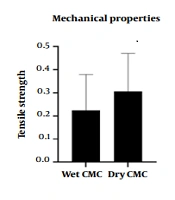
Investigation on the Differentiation of Human Bone Marrow-Derived Mesenchymal Stem Cells Cultured on a Non-woven Carboxymethyl Cellulose Scaffold Into Chondrocyte-Like Cells
Asadollahei N, Azam Sayahpour F, Karimzadeh F, Karimi A, Lotfi A, et al. Investigation on the Differentiation of Human Bone Marrow-Derived Mesenchymal Stem Cells Cultured on a Non-woven Carboxymethyl Cellulose Scaffold Into Chondrocyte-Like Cells. Koomesh. 2024;26(6):e151662. doi: https://doi.org/10.69107/koomesh-151662
The Effect of Human Cardiac Myocyte-Derived Conditioned Medium on Differentiation of Mesenchymal Stem Cells
Rousta N, Naeimi S, Zare S, Dara M, Razeghian-Jahromi I. The Effect of Human Cardiac Myocyte-Derived Conditioned Medium on Differentiation of Mesenchymal Stem Cells. Int Cardiovasc Res J. 2022;16(3):e129983. doi:

Effects of rat mesenchymal stem cells as a feeder layer in isolation and culture of mouse embryonic stem cells
forghani F, KodPoar M, Yaghmaei P, Kargar S, GhaziZadeh L. Effects of rat mesenchymal stem cells as a feeder layer in isolation and culture of mouse embryonic stem cells. koomesh. 2009;10(3):e152235. doi:
- Scopus by DOI: 0
Last Update: 6 days ago
- Scopus by Title: 0
Last Update: 6 days ago
- Scopus by Title (Ref): 0
Last Update: 6 days ago
- CrossRef: 0
Last Update: 6 hours ago
- OpenAlex: 0
Last Update: 8 hours ago
- OpenCitations: 0
Last Update: 4 days ago