Journal of Semnan University of Medical Sciences
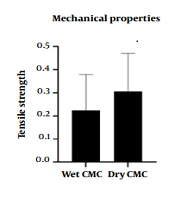
Image Credit:Koomesh
Outline
Investigation on the Differentiation of Human Bone Marrow-Derived Mesenchymal Stem Cells Cultured on a Non-woven Carboxymethyl Cellulose Scaffold Into Chondrocyte-Like Cells
Authors
 3, Afzal Karimi4, Abolfazl Lotfi5, Faezeh Faghihi3, 6,*
Abstract
Background: Trauma can significantly impact cartilage tissue and human quality of life. Limited cartilage regeneration capability has led to medical interventions for tissue repair. Carboxymethyl cellulose (CMC) is an anionic cellulose with suitable price and mechanical properties. Carboxymethyl cellulose is used as a lubricant or in constructing hydrogel scaffolds for cell culture.
Objectives: Since cartilage cells differentiate from bone marrow-derived mesenchymal stem cells, this study aimed to investigate their chondrogenic differentiation potential on a non-woven CMC scaffold in a monolayer system.
Methods: Non-woven CMC was synthesized and evaluated using Fourier-transform infrared spectroscopy (FTIR), scanning electron microscopy (SEM), and mechanical tests. Human bone marrow-derived mesenchymal stem cells were isolated and identified using flow cytometry. After chondrogenic differentiation induction, cell attachment and expression of chondrogenic-related genes were examined using dimethyl thiazolyl diphenyl tetrazolium (MTT) and Quantitative real-time polymerase chain reaction (Q-PCR).
Results: dimethyl thiazolyl diphenyl tetrazolium assay showed that cells adhered well to the scaffold surface. There was no significant difference in cell viability between the control group (cells without scaffold) and the experimental group. The SEM images showed that the cells were successfully attached to the membrane. Fourier-transform infrared spectroscopy spectra showed the singes of carbonyl, methyl, and hydroxyl groups. The tensile strength was as much as 0.224 ± 0.155 and 0.306 ± 0.164 in dry and wet forms, respectively. The tensile strength was measured as 0.155 ± 0.224 and 0.164 ± 0.306 MPa in the scaffold's dry and wet forms, which was insignificant. Young's modulus was equal to 0.077 and 0.079 MPa in dry and wet conditions, respectively. After two weeks of differentiation culture, a significant increase in Sox-9 and Collagen II expression was observed. No significant increase in the expression of Collagen X and Aggrecan was detected.
Conclusion: Human bone marrow-derived mesenchymal stem cells successfully adhered to the non-woven CMC scaffold and could express early chondrogenic pathway genes in the presence of inducing factors. However, expression of more specific cartilage-related genes morphological changes toward a chondrogenic phenotype and lacuna formation were not observed.
Highlights
References
- 1.Chuah YJ, Peck Y, Lau JE, Hee HT, Wang DA. Hydrogel based cartilaginous tissue regeneration: recent insights and technologies. Biomater Sci. 2017;5(4):613-31. [PubMed ID:28233881]. https://doi.org/10.1039/c6bm00863a.
- 2.Roy S, Rhim JW. Carboxymethyl cellulose-based antioxidant and antimicrobial active packaging film incorporated with curcumin and zinc oxide. Int J Biol Macromol. 2020;148:666-76. [PubMed ID:31978467]. https://doi.org/10.1016/j.ijbiomac.2020.01.204.
- 3.Place ES, Evans ND, Stevens MM. Complexity in biomaterials for tissue engineering. Nat Mater. 2009;8(6):457-70. [PubMed ID:19458646]. https://doi.org/10.1038/nmat2441.
- 4.Balakrishnan B, Banerjee R. Biopolymer-based hydrogels for cartilage tissue engineering. Chem Rev. 2011;111(8):4453-74. [PubMed ID:21417222]. https://doi.org/10.1021/cr100123h.
- 5.Rahman MS, Hasan MS, Nitai AS, Nam S, Karmakar AK, Ahsan MS, et al. Recent Developments of Carboxymethyl Cellulose. Polymers (Basel). 2021;13(8). [PubMed ID:33924089]. [PubMed Central ID:PMC8074295]. https://doi.org/10.3390/polym13081345.
- 6.Zennifer A, Senthilvelan P, Sethuraman S, Sundaramurthi D. Key advances of carboxymethyl cellulose in tissue engineering & 3D bioprinting applications. Carbohydr Polym. 2021;256:117561. [PubMed ID:33483063]. https://doi.org/10.1016/j.carbpol.2020.117561.
- 7.Rosilio V, Albrecht G, Baszkin A, Merle L. Surface properties of hydrophobically modified carboxymethylcellulose derivatives. Effect of salt and proteins. Colloids Surfaces B: Biointerfaces. 2000;19(2):163-72. https://doi.org/10.1016/s0927-7765(00)00151-x.
- 8.Ali M, Khan NR, Basit HM, Mahmood S. Physico-chemical based mechanistic insight into surfactant modulated sodium Carboxymethylcellulose film for skin tissue regeneration applications. J Polymer Res. 2019;27(1). https://doi.org/10.1007/s10965-019-1987-y.
- 9.Gregorova A, Saha N, Kitano T, Saha P. Hydrothermal effect and mechanical stress properties of carboxymethylcellulose based hydrogel food packaging. Carbohydr Polym. 2015;117:559-68. [PubMed ID:25498671]. https://doi.org/10.1016/j.carbpol.2014.10.009.
- 10.Cadena-Velandia ZG, Montenegro-Alarcón JC, Marquínez-Casas X, Mora-Huertas CE. Quercetin-loaded alginate microparticles: A contribution on the particle structure. J Drug Delivery Sci Technol. 2020;56. https://doi.org/10.1016/j.jddst.2020.101558.
- 11.Arora A, Mahajan A, Katti DS. TGF-beta1 presenting enzymatically cross-linked injectable hydrogels for improved chondrogenesis. Colloids Surf B Biointerfaces. 2017;159:838-48. [PubMed ID:28888201]. https://doi.org/10.1016/j.colsurfb.2017.08.035.
- 12.Singh BN, Panda NN, Mund R, Pramanik K. Carboxymethyl cellulose enables silk fibroin nanofibrous scaffold with enhanced biomimetic potential for bone tissue engineering application. Carbohydr Polym. 2016;151:335-47. [PubMed ID:27474575]. https://doi.org/10.1016/j.carbpol.2016.05.088.
- 13.Kulikowska A, Wasiak I, Ciach T. Carboxymethyl Cellulose Oxidation to Form Aldehyde Groups. Challenges Mod Technol. 2013;4.
- 14.Hedayati R, Aminianfar A, Darbani M, Dadbakhsh M, Ehsani F. [Efficacy of glucosamine compounds phonophoresis in knee osteoarthritis]. Koomesh. 2016;18(2):e151136. Persian.
- 15.Leone G, Delfini M, Di Cocco ME, Borioni A, Barbucci R. The applicability of an amidated polysaccharide hydrogel as a cartilage substitute: structural and rheological characterization. Carbohydr Res. 2008;343(2):317-27. [PubMed ID:18039540]. https://doi.org/10.1016/j.carres.2007.10.017.
- 16.Solali S, Kaviani jebeli S, Soleimani M, Zonoubi Z. [Isolation and characterization of mesenchymal stem cells derived from adipose tissue]. Koomesh. 2015;16(4):e151234. Persian.
- 17.Ogushi Y, Sakai S, Kawakami K. Hepatocytes exhibit constant metabolic activity on carboxymethylcellulose-based hydrogel with high phenolic hydroxy group content. Biochem Engin J. 2010;51(3):147-52. https://doi.org/10.1016/j.bej.2010.06.008.
- 18.Sakai S, Ogushi Y, Kawakami K. Enzymatically crosslinked carboxymethylcellulose-tyramine conjugate hydrogel: cellular adhesiveness and feasibility for cell sheet technology. Acta Biomater. 2009;5(2):554-9. [PubMed ID:19010747]. https://doi.org/10.1016/j.actbio.2008.10.010.
- 19.Song X, Melro L, Padrão J, Ribeiro AI, Yu L, Zille A. 20 - Nonwoven materials and technologies for medical applications. In: Mondal MIH, editor. Medical Textiles from Natural Resources. Sawston, Cambridge: Woodhead Publishing; 2022. p. 605-61.
- 20.Wang Q, Du H, Zhang F, Zhang Y, Wu M, Yu G, et al. Flexible cellulose nanopaper with high wet tensile strength, high toughness and tunable ultraviolet blocking ability fabricated from tobacco stalk via a sustainable method. J Materials Chem A. 2018;6(27):13021-30. https://doi.org/10.1039/c8ta01986j.
- 21.Pitpisutkul V, Prachayawarakorn J. Hydroxypropyl methylcellulose/carboxymethyl starch/zinc oxide porous nanocomposite films for wound dressing application. Carbohydr Polym. 2022;298:120082. [PubMed ID:36241320]. https://doi.org/10.1016/j.carbpol.2022.120082.
- 22.Baghaei K, Hashemi SM, Tokhanbigli S, Asadi Rad A, Assadzadeh-Aghdaei H, Sharifian A, et al. Isolation, differentiation, and characterization of mesenchymal stem cells from human bone marrow. Gastroenterol Hepatol Bed Bench. 2017;10(3):208-13. [PubMed ID:29118937]. [PubMed Central ID:PMC5660271].
- 23.Bhat S, Viswanathan P, Chandanala S, Jyothi Prasanna S, Raviraja N. Expansion and characterization of bone marrow derived human mesenchymal stromal cells in serum-free conditions. Sci Rep. 2021;11:3403. https://doi.org/10.1038/s41598-021-83088-1.
- 24.Gardner OF, Alini M, Stoddart MJ. Mesenchymal Stem Cells Derived from Human Bone Marrow. Methods Mol Biol. 2015;1340:41-52. [PubMed ID:26445829]. https://doi.org/10.1007/978-1-4939-2938-2_3.
- 25.Gabr MM, Zakaria MM, Refaie AF, Khater SM, Ashamallah SA, Ismail AM, et al. Differentiation of Human Bone Marrow-Derived Mesenchymal Stem Cells into Insulin-Producing Cells: Evidence for Further Maturation In Vivo. Biomed Res Int. 2015;2015:575837. [PubMed ID:26064925]. [PubMed Central ID:PMC4443784]. https://doi.org/10.1155/2015/575837.
- 26.Golizadeh M, Karimi A, Gandomi-Ravandi S, Vossoughi M, Khafaji M, Joghataei MT, et al. Evaluation of cellular attachment and proliferation on different surface charged functional cellulose electrospun nanofibers. Carbohydr Polym. 2019;207:796-805. [PubMed ID:30600068]. https://doi.org/10.1016/j.carbpol.2018.12.028.
- 27.Enoch K, Somasundaram AA. Rheological insights on Carboxymethyl cellulose hydrogels. Int J Biol Macromol. 2023;253(Pt 8):127481. [PubMed ID:37865366]. https://doi.org/10.1016/j.ijbiomac.2023.127481.
- 28.Lefebvre V, Dvir-Ginzberg M. SOX9 and the many facets of its regulation in the chondrocyte lineage. Connect Tissue Res. 2017;58(1):2-14. [PubMed ID:27128146]. [PubMed Central ID:PMC5287363]. https://doi.org/10.1080/03008207.2016.1183667.
- 29.Lefebvre V, Huang W, Harley VR, Goodfellow PN, de Crombrugghe B. SOX9 is a potent activator of the chondrocyte-specific enhancer of the pro alpha1(II) collagen gene. Mol Cell Biol. 1997;17(4):2336-46. [PubMed ID:9121483]. [PubMed Central ID:PMC232082]. https://doi.org/10.1128/MCB.17.4.2336.
- 30.Aigner T, Stove J. Collagens--major component of the physiological cartilage matrix, major target of cartilage degeneration, major tool in cartilage repair. Adv Drug Deliv Rev. 2003;55(12):1569-93. [PubMed ID:14623402]. https://doi.org/10.1016/j.addr.2003.08.009.
- 31.Dalir Abdolahinia E, Jafari B, Parvizpour S, Barar J, Nadri S, Omidi Y. Role of cellulose family in fibril organization of collagen for forming 3D cancer spheroids: In vitro and in silico approach. Bioimpacts. 2021;11(2):111-7. [PubMed ID:33842281]. [PubMed Central ID:PMC8022235]. https://doi.org/10.34172/bi.2021.18.
- 32.Lin L, Jiang S, Yang J, Qiu J, Jiao X, Yue X, et al. Application of 3D-bioprinted nanocellulose and cellulose derivative-based bio-inks in bone and cartilage tissue engineering. Int J Bioprint. 2023;9(1):637. [PubMed ID:36844245]. [PubMed Central ID:PMC9947488]. https://doi.org/10.18063/ijb.v9i1.637.
- 33.Cordeiro R, Alvites RD, Sousa AC, Lopes B, Sousa P, Mauricio AC, et al. Cellulose-Based Scaffolds: A Comparative Study for Potential Application in Articular Cartilage. Polymers (Basel). 2023;15(3). [PubMed ID:36772083]. [PubMed Central ID:PMC9919712]. https://doi.org/10.3390/polym15030781.
- 34.Szustak M, Gendaszewska-Darmach E. Nanocellulose-Based Scaffolds for Chondrogenic Differentiation and Expansion. Front Bioeng Biotechnol. 2021;9:736213. [PubMed ID:34485266]. [PubMed Central ID:PMC8415884]. https://doi.org/10.3389/fbioe.2021.736213.
- 35.Zhang Z, Lin S, Yan Y, You X, Ye H. Enhanced efficacy of transforming growth factor-beta1 loaded an injectable cross-linked thiolated chitosan and carboxymethyl cellulose-based hydrogels for cartilage tissue engineering. J Biomater Sci Polym Ed. 2021;32(18):2402-22. [PubMed ID:34428384]. https://doi.org/10.1080/09205063.2021.1971823.
- 36.Lee KW, Chung K, Nam DH, Jung M, Kim SH, Kim HG. Decellularized allogeneic cartilage paste with human costal cartilage and crosslinked hyaluronic acid-carboxymethyl cellulose carrier augments microfracture for improved articular cartilage repair. Acta Biomater. 2023;172:297-308. [PubMed ID:37813156]. https://doi.org/10.1016/j.actbio.2023.10.008.
- 37.Cochis A, Grad S, Stoddart MJ, Fare S, Altomare L, Azzimonti B, et al. Bioreactor mechanically guided 3D mesenchymal stem cell chondrogenesis using a biocompatible novel thermo-reversible methylcellulose-based hydrogel. Sci Rep. 2017;7:45018. [PubMed ID:28332587]. [PubMed Central ID:PMC5362895]. https://doi.org/10.1038/srep45018.
- 38.Le BQ, Vasilevich A, Vermeulen S, Hulshof F, Stamatialis DF, van Blitterswijk CA, et al. Micro-Topographies Promote Late Chondrogenic Differentiation Markers in the ATDC5 Cell Line. Tissue Eng Part A. 2017;23(9-10):458-69. [PubMed ID:28152670]. https://doi.org/10.1089/ten.TEA.2016.0421.
Copyright
© 2024, Author(s). This open-access article is available under the Creative Commons Attribution 4.0 (CC BY 4.0) International License (https://creativecommons.org/licenses/by/4.0/), which allows for unrestricted use, distribution, and reproduction in any medium, provided that the original work is properly cited.
Similar Articles
Investigation and Comparison of the Effect of TGF-β3, kartogenin and Avocado/Soybean Unsaponifiables on the In-vitro and In-vivo Chondrogenesis of Human Adipose-Derived Stem Cells on Fibrin Scaffold
Hashemibeni B, Izadi MA, Valiani A, Esfandiari I, Bahramian H, et al. Investigation and Comparison of the Effect of TGF-β3, kartogenin and Avocado/Soybean Unsaponifiables on the In-vitro and In-vivo Chondrogenesis of Human Adipose-Derived Stem Cells on Fibrin Scaffold. Iran J Pharm Res. 2021;20(3):e124296. doi: https://doi.org/10.22037/ijpr.2020.114420.14851

Fabrication and Characterization of Heparin/Collagen Sponge for in Vitro Differentiation of Wharton’s Jelly-Derived Mesenchymal Stem Cells into Hepatocytes
Aleahmad F, Talaei-Khozani T, Rajabi-Zeleti S, Sani M, Jalili-Firoozinezhad S, et al. Fabrication and Characterization of Heparin/Collagen Sponge for in Vitro Differentiation of Wharton’s Jelly-Derived Mesenchymal Stem Cells into Hepatocytes. Hepat Mon. 2017;17(2):e58724. doi: https://doi.org/10.5812/hepatmon.40599
Optimization of Topography and Surface Properties of Polyacrylonitrile-Based Electrospun Scaffolds via Nonoclay Concentrations and its Effect on Osteogenic Differentiation of Human Mesenchymal Stem Cells
Tabatabaei Mirakabad FS, Hosseinzadeh S, Abbaszadeh HA, Zeighamian V, Khoramgah MS, et al. Optimization of Topography and Surface Properties of Polyacrylonitrile-Based Electrospun Scaffolds via Nonoclay Concentrations and its Effect on Osteogenic Differentiation of Human Mesenchymal Stem Cells. Iran J Pharm Res. 2021;20(4):e124532. doi: https://doi.org/10.22037/ijpr.2021.115119.15208
Fabrication of Poly (Vinyl Alcohol)/Gelatin Biomimetic Electrospun Nanofibrous Composites and Its Bioactivity Assessment for Bone Tissue Engineering
Rashidi S, Asadi A, Latifi-Navid S, Zahri S, Khodayari A, et al. Fabrication of Poly (Vinyl Alcohol)/Gelatin Biomimetic Electrospun Nanofibrous Composites and Its Bioactivity Assessment for Bone Tissue Engineering. Gene Cell Tissue. 2021;8(4):e115569. doi: https://doi.org/10.5812/gct.115569

Effects of rat mesenchymal stem cells as a feeder layer in isolation and culture of mouse embryonic stem cells
forghani F, KodPoar M, Yaghmaei P, Kargar S, GhaziZadeh L. Effects of rat mesenchymal stem cells as a feeder layer in isolation and culture of mouse embryonic stem cells. koomesh. 2009;10(3):e152235. doi:
- Scopus by DOI: 0
Last Update: 2 weeks ago
- Scopus by Title: 0
Last Update: 2 weeks ago
- Scopus by Title (Ref): 0
Last Update: 2 weeks ago
- CrossRef: 0
Last Update: 6 days ago
- OpenAlex: 0
Last Update: 1 day ago
- OpenCitations: 0
Last Update: 4 days ago
