Journal of Semnan University of Medical Sciences
Machine learning models for predicting the diagnosis of liver disease
Authors
Abstract
Introduction: The liver is the most important organ of the body has a central role in metabolism. Liver disease cannot be easily discovered in the early stages, because even when the liver is damaged partially, it also can work truly, and this makes it difficult to diagnose. Automatic classification tools as a diagnostic tool can reduce the workload of doctors. Smart ways to detect liver disease classification used in this study consist of classifier and Naïve Bayes, Trees Random Forest, 1NN, AdaBoost, SVM. Materials and Methods: Our database was 583 patient records which they have been registered at university of California in 2013. For evaluate the proposed models, it is used K-fold cross validation. Five models of machine learning compare base on specificity, sensitivity, accuracy and area under ROC curve. Results: The accuracy of the five models, respectively, 55%, 72%, 64%, 70% and 71% respectively and area under the ROC curve of 0.72, 0.72, 0.59, and 0.67 is 0.5. Conclusion: Trees Random Forest model was the best model with the highest level of accuracy. The area under the ROC curve of Trees Random Forest and Naïve Bayes models have the largest area under the curve. Therefore Trees Random Forest model and predict the diagnosis of liver disease is recommended
Highlights
Copyright
© 2014, Author(s). This open-access article is available under the Creative Commons Attribution 4.0 (CC BY 4.0) International License (https://creativecommons.org/licenses/by/4.0/), which allows for unrestricted use, distribution, and reproduction in any medium, provided that the original work is properly cited.
Similar Articles
A new intelligent hepatitis diagnosis using principal component analysis and classifiers fusion
JalaleddinMousavirad S, Ebrahimpour Komleh H. A new intelligent hepatitis diagnosis using principal component analysis and classifiers fusion. koomesh. 2015;16(2):e151293. doi:

Determining the progression stages of liver fibrosis in patients with chronic hepatitis B
Tanhapour T, keikha L, maghooli M, Kalhori SRN. Determining the progression stages of liver fibrosis in patients with chronic hepatitis B. koomesh. 2022;24(5):e152775. doi:
Comparing Data Mining Algorithms for Breast Cancer Diagnosis
Shanbehzadeh M, Nopour R, Erfannia L, Amraei M, Mehrabi N, et al. Comparing Data Mining Algorithms for Breast Cancer Diagnosis. Shiraz E-Med J. 2022;23(7):e120140. doi: https://doi.org/10.5812/semj-120140
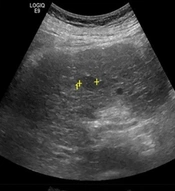
Hepatocellular Carcinoma Diagnosis Based on Ultrasound Images Using Feature Selection Techniques and K-nearest Neighbor Classifier
Azimi Nanvaee F, Setayeshi S. Hepatocellular Carcinoma Diagnosis Based on Ultrasound Images Using Feature Selection Techniques and K-nearest Neighbor Classifier. Hepat Mon. 2023;23(1):e136213. doi: https://doi.org/10.5812/hepatmon-136213
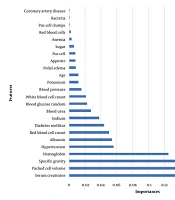
Comparing the Performance of Machine Learning Models in Predicting the Risk of Chronic Kidney Disease
Moosavi Kashani S, Zargar Balaye Jame S. Comparing the Performance of Machine Learning Models in Predicting the Risk of Chronic Kidney Disease. J Arch Mil Med. 2023;11(4):e140885. doi: https://doi.org/10.5812/jamm-140885
- Scopus by DOI: 0
Last Update: 1 week ago
- Scopus by Title: 16
Last Update: 1 week ago
- Scopus by Title (Ref): 16
Last Update: 1 week ago
- CrossRef: 0
Last Update: 4 hours ago
- OpenAlex: 0
Last Update: 6 hours ago
- OpenCitations: 0
Last Update: 5 days ago