Journal of Semnan University of Medical Sciences
Expression, extraction, purification and immunogenicity study of three recombinant proteins LTB, THc, BoNT / A and Comparison of produced antibody titer against them in laboratory animals
Authors
Abstract
Introduction: Among the bacterial agents, the most common cause of diarrheal disease is Entrotoxigenic Escherichia coli. Lebal toxin B (LTB) subunit of LT toxin could induce six-month immunity. Tetanus toxin of Clostridium tetani causes the fatal disease, tetanus. Tetanus can be prevented by vaccination with tetanus toxoid. This toxoid induces ten years immunity in humans. Binding domain of tetanus toxin (THc), of the toxoid is considered as immunogenic part of tetanus toxin. Clostridium botulinum causes botulism disease. The protectional effect of this toxoid is only two years against this disease. It seems that the immunogenicity potency of these three subunits may influence on the memory longevity. The aim of this study is the assessment of LTB, BoNT/A and THc immunogenicity in mouse. Materials and Methods: The transgenic E. coli BlDE3 with pET28a vector, containing recombinant ltb, thc and bont/A-Hc genes separately were used for expression of recombinant proteins. All mentioned proteins were derived, purified and evaluated on SDS-PAGE gel. Finally, mice immunization were carried out and antibody titration of all recombinant proteins were evaluated and compared using t-Test in SPSS software. Results: The result of SDS-PAGE gel evaluation showed a proper expression. The immunoassay results of serum showed that the antibody titer against the recombinant protein of THc was higher than those for the recombinant protein of BONT/A-Hc and LTB. A difference in antibody titer also was observed between two proteins i.e. BoNT/A-Hc and LTB (P value
Highlights
Copyright
© 2015, Author(s). This open-access article is available under the Creative Commons Attribution 4.0 (CC BY 4.0) International License (https://creativecommons.org/licenses/by/4.0/), which allows for unrestricted use, distribution, and reproduction in any medium, provided that the original work is properly cited.
Similar Articles
Expression, Purification, and Verification of Recombinant Botulinum Neurotoxin Type A Binding Domain: A Comparison Between X33 and PichiaPink Strains of Pichia pastoris
Ebrahimi F, Abedi MR. Expression, Purification, and Verification of Recombinant Botulinum Neurotoxin Type A Binding Domain: A Comparison Between X33 and PichiaPink Strains of Pichia pastoris. Jundishapur J Nat Pharm Prod. 2020;15(3):e80447. doi: https://doi.org/10.5812/jjnpp.80447
Evaluation of expression and titration of recombinant nucleocapsid protein as an immunogenic candidate against SARS-CoV2
Samiei Abianeh H, Nazarian S, Amani J, Kordbache E, Rezaie A. Evaluation of expression and titration of recombinant nucleocapsid protein as an immunogenic candidate against SARS-CoV2. koomesh. 2022;24(6):e152785. doi:
C-CfTXA-STxB chimeric antigen loading in PLA-PEG-PLA tri-block copolymers and its immunization in mice
Honari H, mojtabaaghaie S, Hoseinzadeh M. C-CfTXA-STxB chimeric antigen loading in PLA-PEG-PLA tri-block copolymers and its immunization in mice. koomesh. 2022;24(4):e152763. doi:
Nasal immunogenicity induced by STxB and STxB-IpaD antigens in laboratory rats
Baranvand M, Honari H. Nasal immunogenicity induced by STxB and STxB-IpaD antigens in laboratory rats. koomesh. 2015;16(3):e151264. doi:
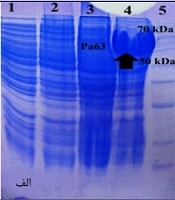
Investigating the Immunogenicity of PA63 Antigen in Free form and Loaded in PLGA Nanoparticle in Mice
Honari H, Minaei ME. Investigating the Immunogenicity of PA63 Antigen in Free form and Loaded in PLGA Nanoparticle in Mice. Koomesh. 2024;26(4):e149879. doi: https://doi.org/10.69107/koomesh-149879
More by these authors
- Scopus by DOI: 0
Last Update: 1 week ago
- Scopus by Title: 0
Last Update: 1 week ago
- Scopus by Title (Ref): 0
Last Update: 1 week ago
- CrossRef: 0
Last Update: 5 hours ago
- OpenAlex: 0
Last Update: 7 hours ago
- OpenCitations: 0
Last Update: 4 days ago