Journal of Semnan University of Medical Sciences
Development of transgenic mice harboring ovine beta lactoglobulin-calcitonin transgene
Authors
Abstract
Introduction: Expression of foreign proteins in mammalian milk is becoming a widespread strategy for high-level production of recombinant pharmaceuticals, especially those with the most complex post-translational modifications. We have attempted in this project to develop transgenic mice harboring a transgene driving mammary gland expression of hybrid human salmon calcitonin. Materials and Methods: A milk-specific ovine beta-lactoglobulin (oBLG) promoter was used to drive expression of recombinant calcitonin in mouse milk. A gene construct was generated, consisting of 10.7kbp of the oBLG gene including its promoter and 3' flanking region with the calcitonin coding sequences inserted in-frame into the oBLG fifth exon. The gene construct was purified using CsCl gradient, released from vector, and gel-purified. After appropriate dilution, it was microinjected into recently-fertilized mouse oocytes. These oocytes then were transferred to pseudo-pregnant foster mice. Results: Forty one pups were born from foster mice, which were genotyped using PCR, slot blotting, and Southern blotting. Among 9 mice which showed positive PCR results, 6 mice resulted in pups with positive PCR tests. All six families transmitted the transgene to first and second generation. Conclusion: As the main criteria for considering a mouse as transgenic is transgene transmission to the next generation, all 6 mice which stably transmitted their transgene to progeny are considered as transgenic founders and constitute independent transgenic lines.
Highlights
Copyright
© 2005, Author(s). This open-access article is available under the Creative Commons Attribution 4.0 (CC BY 4.0) International License (https://creativecommons.org/licenses/by/4.0/), which allows for unrestricted use, distribution, and reproduction in any medium, provided that the original work is properly cited.
Similar Articles

Genetic manipulation of probiotic bacterium Lactococcus lactis to produce OMP10 protein of Brucella abortus
kazemi K, Doosti A, Jami MS. Genetic manipulation of probiotic bacterium Lactococcus lactis to produce OMP10 protein of Brucella abortus. koomesh. 2023;25(3):e152826. doi:
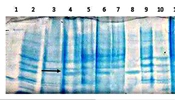
Comparison of Genomic and Episomal Expression of Recombinant Human Growth Hormone in Escherichia coli
Moein Jahromi E, Deldar AA, Shahali M. Comparison of Genomic and Episomal Expression of Recombinant Human Growth Hormone in Escherichia coli. Jentashapir J Cell Mol Biol. 2023;14(3):e137909. doi: https://doi.org/10.5812/jjcmb-137909
Efficiency of translation and post-translation regulatory genes in optimization of tissue plasminogen activator gene expression
Rahimpour A, Najaei A, Mahboudi F. Efficiency of translation and post-translation regulatory genes in optimization of tissue plasminogen activator gene expression. koomesh. 2015;17(1):e150781. doi:

Construction of pcDNA3.1-FSHβ expression vector in order to transfer FSHβ gene into a mammalian cellline
Nasr R, Akbari Eidgahi MR, RezaPorJavaShak AS, Bandegi AR, ValiZadeh S. Construction of pcDNA3.1-FSHβ expression vector in order to transfer FSHβ gene into a mammalian cellline. koomesh. 2013;14(4):e152591. doi:
Construction of a Mammalian IRES-based Expression Vector to Amplify a Bispecific Antibody; Blinatumomab
Naddafi F, Davami F, Tabarzad M, Barkhordari F, Shirazi FH. Construction of a Mammalian IRES-based Expression Vector to Amplify a Bispecific Antibody; Blinatumomab. Iran J Pharm Res. 2019;18(4):e126265. doi: https://doi.org/10.22037/ijpr.2019.14387.12351
- Scopus by DOI: 0
Last Update: 3 weeks ago
- Scopus by Title: 0
Last Update: 3 weeks ago
- Scopus by Title (Ref): 0
Last Update: 3 weeks ago
- CrossRef: 0
Last Update: 5 hours ago
- OpenAlex: 0
Last Update: 1 day ago
- OpenCitations: 0
Last Update: 4 days ago