Journal of Semnan University of Medical Sciences
An evulation of 5-year survival of metastatic colon and rectal cancer patients using cumulative incidence models
Authors

Abstract
Introduction: In the presence of competing risks, using of cumulative incidence function is important from the health economic evaluation point of view. This study aimed to use this function for determining the risk factors of competing events of colon and rectal cancers in metastatic patients. Materials and Methods: In this survival study, data including age at diagnosis, sex, marital status, Body Mass Index (BMI), morphology of cancer, tumor size, tumor grade and pathological stage were gathered from the Research Center for Gastroenterology and Liver Diseases, Shaheed Beheshti University of Medical Sciences, Tehran for 94 metastatic colorectal cancer patients. Using a regression model based on the cumulative incidence function, parameters and tests of significance were obtained utilizing the R 2.13.1 software. Results: Five-year survival for metastatic patients with colon and rectal cancer, were 46.79% and 65.58% respectively, and the cumulative incidences were computed as .8 and 1.0 during a 100 months period, respectively. In the univariate and multivariate model, marital status in patients with colon cancer and in the univariate model, BMI and morphology were significant risk factors for rectal cancer. Conclusion: Using of modeling based on cumulative incidence function is recommended as a model to study the risk factor of colon and rectal cancers due to its optimal characteristics.
Highlights
Copyright
© 2013, Author(s). This open-access article is available under the Creative Commons Attribution 4.0 (CC BY 4.0) International License (https://creativecommons.org/licenses/by/4.0/), which allows for unrestricted use, distribution, and reproduction in any medium, provided that the original work is properly cited.
Similar Articles
Comparison of influential factors affecting survival of patients with colon and rectum cancer using competing risks model
Akhond MR, Kazemnejad A, Hajizadeh E, GhanbariMotlagh A, Zali MR. Comparison of influential factors affecting survival of patients with colon and rectum cancer using competing risks model. koomesh. 2011;12(2):e153808. doi:
Demographic and Pathological Predictors of Colorectal Cancer Survival in Competing Risk Model, Using Generalized Weibull Distribution
Baghestani AR, Moamer S, Pourhoseingholi MA, Khadem Maboudi AA, Ghoreshi B, et al. Demographic and Pathological Predictors of Colorectal Cancer Survival in Competing Risk Model, Using Generalized Weibull Distribution. Int J Cancer Manag. 2017;10(6):e7352. doi: https://doi.org/10.5812/ijcm.7352
Analyzing the Long-Term Survival of Patients with Colorectal Cancer: A Study Using Parametric Non-Mixture Cure Rate Models
Azizmohammad Looha M, Zarean E, Pourhoseingholi MA, Hosseini SV, Azimi T, et al. Analyzing the Long-Term Survival of Patients with Colorectal Cancer: A Study Using Parametric Non-Mixture Cure Rate Models. Int J Cancer Manag. 2018;11(9):e81681. doi: https://doi.org/10.5812/ijcm.81681
The Estimation of Survival Function for Colon Cancer Data in Tehran Using Non-parametric Bayesian Model
Abadi A, Ahmadi F, Alavi Majd H, Esmaeil Akbari M, Abolfazli Khonbi Z, et al. The Estimation of Survival Function for Colon Cancer Data in Tehran Using Non-parametric Bayesian Model. Int J Cancer Manag. 2013;6(3):e80421. doi:
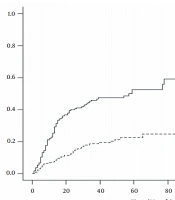
Identifying Factors Affecting Cancer-related Death in Patients with Adenocarcinoma Gastric Cancer; An Analysis in the Presence of Competing Risks
Safari M, Mahjub H, Esmaeili H, Abasi M, Roshanaei G. Identifying Factors Affecting Cancer-related Death in Patients with Adenocarcinoma Gastric Cancer; An Analysis in the Presence of Competing Risks. Int J Cancer Manag. 2021;14(6):e103402. doi: https://doi.org/10.5812/ijcm.103402
- Scopus by DOI: 0
Last Update: 1 week ago
- Scopus by Title: 0
Last Update: 1 week ago
- Scopus by Title (Ref): 0
Last Update: 1 week ago
- CrossRef: 0
Last Update: 8 hours ago
- OpenAlex: 0
Last Update: 10 hours ago
- OpenCitations: 0
Last Update: 5 days ago