Journal of Semnan University of Medical Sciences
Image Credit:Koomesh
Outline
The effect of a topical ointment containing methanol extract of Buxus hyrcana Pojark. leaves on cutaneous wound healing in rats
Authors
 , Somayeh Shahani,*
Abstract
Introduction: Buxus hyrcana Pojark. has been traditionally used for the treatment of skin disorders including wound injuries and recent studies have shown the therapeutic potential of some Buxus species in healing skin wounds. In this study, the effect of an ointment containing methanolic extract of B. hyrcana leaves was evaluated on the full-thickness wound healing in a rat model. Materials and Methods: The full-thickness wound was made with a scalpel on the dorsum cervical area of 32 Wistar rats (weighing 250-300 g). The animals were randomly divided into four groups: I; control, II; ointment base (eucerin), III; 1 % phenytoin cream, and IV; 5 % B. hyrcana methanolic extract ointment. For histopathological assessment, wound criteria were evaluated on the 12th day of treatment according to the Abramov score method. The collagen fiber deposition in the skin tissue was determined using Masson’s trichrome staining. The spectrophotometric analysis was performed to evaluate the total phenol and total flavonoid content of the extract. Results: Based on macroscopic observations, herbal ointment increased wound closure in the treatment group compared to the control group. In this way, the collagen deposition, epidermal and keratin formation, neovascularization, and fibroblast maturation increased significantly (P<0.05) with the herbal ointment, the same as the phenytoin group. The extract did not show any antimicrobial effect using the disc agar diffusion method. Conclusion: The observed wound-healing effect of B. hyrcana seems to be mainly due to the presence of flavonoid compounds in the plant extract.
Highlights
References
- 1.Yousef H, Alhajj M, Sharma S. Anatomy, skin (integument), epidermis, StatPearls Publishing; 2017.
- 2.Talebpour Amiri F, Mirzaee F, Hasanzadeh SN, Enayatifard R, Shahani S. Therapeutic potential of ointment containing methanol extract of Lamium album L. on cutaneous wound healing in rats. J Med Plants 2021; 20: 72-84.##https://doi.org/10.52547/jmp.20.79.72.
- 3.Ravishankar K, Kiranmayi GV, Prasad YR, Devi L. Wound healing activity in rabbits and antimicrobial activity of Hibiscus hirtus ethanolic extract. Braz J Pharm Sci 2018; 54: 1-12.##https://doi.org/10.1590/s2175-97902018000417075.
- 4.Han G, Ceilley R. Chronic wound healing: a review of current management and treatments. Adv Ther 2017; 34: 599-610.
- 5.Qureshi M, Khatoon F, Ahmed S. An overview on wounds, their issue s and natural remedies for wound healing. Biochem Physiol 2015; 4: 1-9.
- 6.Thammina CS, Olsen RT, Kramer M, Pooler MR. Genetic relationships of boxwood (Buxus L.) accessions based on genic simple sequence repeat markers. Genet Resour Crop Evol 2017; 64: 1281-1293.##https://doi.org/10.1007/s10722-016-0436-6.
- 7.Khorasani MA, Makhzan al Advieh. Tehran, Iran: Bavardaran Press. Research institute for Islamic and Complementary Medicine, Iran Univ Med Sci 2001. (Persian).
- 8.Esmaeili S, Naghibi F, Mosaddegh M, Sahranavard S, Ghafari S, Abdullah NR. Screening of antiplasmodial properties among some traditionally used Iranian plants. J Ethnopharmacol 2009; 121: 400-4.
- 9.Suganthy N, Pandian SK, Devi KP. Cholinesterase inhibitors from plants: Possible treatment strategy for neurological disorders-a review. Int J Biomed Pharm Sci 2009; 3: 87-103.
- 10.Akkol EK, Suntar I, Keles H, Aktay G. Evaluation of the wound healing activity of Buxus sempervirens L. and Centaurium erythraea (L.) Rafn. by using in vivo and in vitro Methods. Planta Med 2013; 79: 1155.##https://doi.org/10.1055/s-0033-1352002.
- 11.Rehman K, Khan MA, Ullah Z, Chaudhary HJ. An ethno botanical perspective of traditional medicinal plants from the Khattak tribe of Chonthra Karak. Pakistan J Ethnopharmacol 2015; 165: 251-259.
- 12.Malik K, Ahmad M, Zafar M, Ullah R, Mahmood HM, Parveen B, et al. An ethnobotanical study of medicinal plants used to treat skin diseases in northern Pakistan. BMC Complement Altern Med 2019; 19: 1-38.
- 13.Gaur R, Bhatt K, Tiwari J. An ethnobotanical study of Uttar Pradesh Himalaya in relation to veterinary medicines. J Indian Bot Soc 1993; 72: 139-144.
- 14.Gao L, Wei N, Yang G, Zhang Z, Liu G, Cai C. Ethnomedicine study on traditional medicinal plants in the Wuliang Mountains of Jingdong, Yunnan, China. J Ethnobiol Ethnomed 2019; 15: 1-20.
- 15.Kim YM, Kim MK. Efficacy Evaluation of Extracts from Different Parts of Buxus Koreana. J Converg Inf Technol 2020; 10: 272-278.
- 16.Karimi E, Mehrabanjoubani P, Es-Haghi A, Chamani J. Phenolic compounds of endemic buxus plants in caspian hyrcanian Forest (Buxus Hyrcana Pojark) and their biological Activities. Pharm Chem J 2019; 53: 741-747.##https://doi.org/10.1007/s11094-019-02072-2.
- 17.Yan YX, Sun Y, Li ZR, Zhou L, Qiu MH. Chemistry and biological activities of Buxus alkaloids. Curr Bioact Compd 2011; 7: 47-64.##https://doi.org/10.2174/157340711795163811.
- 18.Guo D, Li J, Wang Y, Lei L, Yu C, Chen N. Cyclovirobuxinum D suppresses lipopolysaccharide-induced inflammatory responses in murine macrophages in vitro by blocking JAK-STAT signaling pathway. Acta Pharmacol Sin 2014; 35: 770-778.
- 19.Yousefbeyk F, Soltani TB, Motavallian A. Antidepressant-and anxiolytic-like effects of methanolic extract of Salvia spinosa L. in mice. Koomesh 2021; 23: 415-423. (Persian).##https://doi.org/10.52547/koomesh.23.3.415.
- 20.Bakhshi-Jouybari H, Bekhradnia A, Mirzaee F, Hosseinzadeh MH. Chemical composition of the lumpy bracket mushroom (Trametes gibbosa). Res J Pharmacogn 2022; 9: 19-27.
- 21.Sembiring E, Elya B, Sauriasari R. Phytochemical screening, total flavonoid and total phenolic content and antioxidant activity of different parts of Caesalpinia bonduc (L.) Roxb. Pharmacogn J 2018; 10: 123-127.##https://doi.org/10.5530/pj.2018.1.22.
- 22.Najaf Zadeh Gharaboghaz M, Farahpour MR, Saghaie SH. Topical co-administration of Teucrium polium hydroethanolic extract and Aloe vera gel triggered wound healing by accelerating cell proliferation in diabetic mouse model. Biomed Pharmacother 2020; 127: 110-189.
- 23.Hanafi N, Shahani S, Enayatifard R, Talebpour Amiri F, Ghasemi M, et al. Licorice cream promotes full-thickness wound healing in Guinea pigs. Marmara Pharm J 2018; 22: 411-421.##https://doi.org/10.12991/jrp.2018.81.
- 24.Abramov Y, Golden B, Sullivan M, Botros SM, Miller JJR, Alshahrour A. Histologic characterization of vaginal vs. abdominal surgical wound healing in a rabbit model. Wound Repair Regen 2007; 15: 80-86.
- 25.CLSI. Performance Standards for Antimicrobial Susceptibility Testing. 28th ed. CLSI supplement M100. Wayne, PA: Clinical and Laboratory Standards Institute; 2018.
- 26.Sundari A, Jayakumararaj R. Herbal remedies used to treat skin disorders in Arasankulam region of Thoothukudi District in Tamil Nadu, India. J drug Deliv Ther 2020; 10: 33-38.##https://doi.org/10.22270/jddt.v10i5.4277.
- 27.Sewell RD, Rafieian-Kopaei M. The history and ups and downs of herbal medicines usage. J Herbmed Pharmacol 2014; 3: 1-3.
- 28.Raina R, Parwez S, Verma P, Pankaj N, Medicinal plants and their role in wound healing. Vet Scan 2008; 3: 1-21.
- 29.Ebrahimzadeh M, Nabavi S, Pourmorad F. Nitric oxide radical scavenging potential of some Elburz medicinal plants. Afr J Biotechnol 2010; 9: 5212-5217.
- 30.Gad HA, Roberts A, Hamzi SH, Touiss I, Altyar AE. Jojoba Oil: An Updated Comprehensive Review on Chemistry, Pharmaceutical Uses, and Toxicity. Polymers 2021; 13: 2411-2502.
- 31.Khan S. Evaluation of Wound healing activity of Buxus wallichiana Baill. Asian J Pharm Clin Res 2010; 10: 59-63.
- 32.Palchykov VA, Zazharskyi VV, Brygadyrenko VV, Davydenko PO, Kulishenko OM, Borovik IV. Chemical composition and antibacterial effect of ethanolic extract of Buxus sempervirens on cryogenic strains of microorganisms in vitro. Chem Data Collect 2020; 25: 100323.##https://doi.org/10.1016/j.cdc.2019.100323.
- 33.Ngobeni B. Pharmacological evaluation of extracts from Buxus macowanii, Polygala myrtifolia, Scilla sp. and Xanthocercis zambesiaca: CUT Univ.; 2016.
- 34.Mothana RA, Lindequist U. Antimicrobial activity of some medicinal plants of the island Soqotra. J Ethnopharmacol 2005; 96: 177-181.
- 35.Yang DJ, Moh SH, Son DH, You S, Kinyua AW, Ko CM. Gallic acid promotes wound healing in normal and hyperglucidic conditions. Molecules 2016; 21: 899.
- 36.Kapoor M, Howard R, Hall I, Appleton I. Effects of epicatechin gallate on wound healing and scar formation in a full thickness incisional wound healing model in rats. Am J Pathol 2004; 165: 299-307.
- 37.Zhang Y, Wang J, Cheng X, Yi B, Zhang X, Li Q. Apigenin induces dermal collagen synthesis via smad2/3 signaling pathway. Eur J Histochem 2015; 59: 2467.
- 38.zay Y, Gzel S, Yumruta , Pehlivanolu B, Erdodu H, Yildirim Z. Wound healing effect of kaempferol in diabetic and nondiabetic rats. J Surg Res 2019; 233: 284-296.
- 39.Taskan MM, Yuce HB, Karatas O, Gevrek F. Topical quercetin gel application improved wound healing in Wistar rats. J Int Med Res 2019; 26: 2397-2404.##https://doi.org/10.5455/annalsmedres.2019.05.289.
- 40.Fallahzadeh AR, Mohammadi S. Antinociceptive and anti-inflammatory, and acute toxicity effects of Asparagus persicus essential oil in male mice. Koomesh 2021; 23: 474-81. (Persian).##https://doi.org/10.52547/koomesh.23.4.474.
Copyright
© 2023, Author(s). This open-access article is available under the Creative Commons Attribution 4.0 (CC BY 4.0) International License (https://creativecommons.org/licenses/by/4.0/), which allows for unrestricted use, distribution, and reproduction in any medium, provided that the original work is properly cited.
Similar Articles
Evaluation of the Wound Healing Activity of a Traditional Compound Herbal Product Using Rat Excision Wound Model
Jahandideh M, Hajimehdipoor H, Mortazavi SA, Dehpour A, Hassanzadeh G. Evaluation of the Wound Healing Activity of a Traditional Compound Herbal Product Using Rat Excision Wound Model. Iran J Pharm Res. 2017;16(Suppl):e124919. doi: https://doi.org/10.22037/ijpr.2017.1990
Wound Healing Effect of an Ointment Made From a Mixture of Brassica oleracea var, Punica granatum, and Plantago major L Extracts in Rats
Bazafkan MH, Hardani A, Afzal Zadeh MR, Amir Zargar A, Orazi Zadeh M, et al. Wound Healing Effect of an Ointment Made From a Mixture of Brassica oleracea var, Punica granatum, and Plantago major L Extracts in Rats. Jentashapir J Cell Mol Biol. 2014;5(4):e21877. doi: https://doi.org/10.17795/jjhr-21877
Evaluation the Healing Potential of Oleuropein on Second-Degree Burn Wounds in a Rat Model
Ahmadi I, Foruozandeh H, Yekke F. Evaluation the Healing Potential of Oleuropein on Second-Degree Burn Wounds in a Rat Model. Jundishapur J Nat Pharm Prod. 2022;17(1):e114568. doi: https://doi.org/10.5812/jjnpp.114568
PROMOTION OF WOUND HEALING BY HYPERICUM PERFORATUM EXTRACT IN RABBIT
Hemmati A, Rashidi I, Jafari M. PROMOTION OF WOUND HEALING BY HYPERICUM PERFORATUM EXTRACT IN RABBIT. Jundishapur J Nat Pharm Prod. 2007;2(2):. doi:
In Vivo Wound-Healing and Anti-Inflammatory Activities of Honey Produced by Melipona beecheii Bees
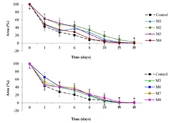
Ramírez Miranda I, Acevedo-Fernandez J, Negrete-Leon E, Abram Betancur-Ancona D, Beatriz Moguel-Ordoñez Y. In Vivo Wound-Healing and Anti-Inflammatory Activities of Honey Produced by Melipona beecheii Bees. Jundishapur J Nat Pharm Prod. 2024;19(2):e143682. doi: https://doi.org/10.5812/jjnpp-143682
- Scopus by DOI: 0
Last Update: 2 weeks ago
- Scopus by Title: 3
Last Update: 2 weeks ago
- Scopus by Title (Ref): 3
Last Update: 2 weeks ago
- CrossRef: 0
Last Update: 8 hours ago
- OpenAlex: 0
Last Update: 10 hours ago
- OpenCitations: 0
Last Update: 4 days ago

