Journal of Semnan University of Medical Sciences
Effects of perturbation training on quadriceps and hamstring electromyographic ratios
Authors
Abstract
Introduction: It seems knee joint stability through co-contraction (CC) of hamstrings and quadriceps may be necessary for athletes with quadriceps dominance (QD) neuromuscular deficit. The lower CC and muscle activity ratio in medial compartment of knee can predispose this joint to excessive valgus position that exaggerates anterior cruciate ligament (ACL) injury. The purpose of this study was to determine the effects of perturbation training on quadriceps and hamstring ratios in QD deficit athletes. Materials and Methods: EMG data of quadriceps and hamstrings (during single limb drop landing) of 53 (26 control and 27 experimental) athletes with quadriceps dominance deficit (identified with tuck jump test) acquired in pre-test and post-test. After completing 6 weeks of perturbation training in experimental group, the repeated-measures analyses of variance, independent sample t-test and paired sample t tests used for statistical analysis. Results: After perturbation training, the lateral knee compartment CC decreased and medial knee compartment CC increased (both in feed-forward and feedback phases). The medial to lateral knee compartment ration increased after six weeks of perturbation training. Also in the post test, the higher effect size observed in studied variables. Conclusion: Improvement in CC in knee medial compartment can limit the knee valgus and also anterior shear force that led to ACL optimal control. Considering the extremely large effect size of the perturbation group, we recommend that this program be used in the correction of QD deficit women in future
Highlights
Copyright
© 2014, Author(s). This open-access article is available under the Creative Commons Attribution 4.0 (CC BY 4.0) International License (https://creativecommons.org/licenses/by/4.0/), which allows for unrestricted use, distribution, and reproduction in any medium, provided that the original work is properly cited.
Similar Articles
Comparison of functional and conventional hamstring/quadriceps ratio in patients with knee osteoarthritis
Fatemi E, Bakhtiari A, Pirayesh B, Iravani M, NamAvarian N, et al. Comparison of functional and conventional hamstring/quadriceps ratio in patients with knee osteoarthritis. koomesh. 2012;14(1):e152544. doi:
Effects of Ankle Mobilization Added to the STOP-X Protocol on Landing Mechanics and Dynamic Postural Control in Adolescent Male Soccer Players with Dynamic Knee Valgus
Ghanbari M, Saki F. Effects of Ankle Mobilization Added to the STOP-X Protocol on Landing Mechanics and Dynamic Postural Control in Adolescent Male Soccer Players with Dynamic Knee Valgus. J Clin Res Paramed Sci. 2026;15(1):e172367. doi: https://doi.org/10.5812/jcrps-172367
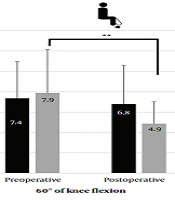
Importance of Lower Extremity Muscle Performance and Knee Proprioception During First 60 Degrees of Knee Flexion at Three Months After Anterior Cruciate Ligament Reconstruction
Kanchanomai S, Rueangthong C, Chernchujit B, Kitsuksan T, Suttanon P, et al. Importance of Lower Extremity Muscle Performance and Knee Proprioception During First 60 Degrees of Knee Flexion at Three Months After Anterior Cruciate Ligament Reconstruction. Asian J Sports Med. 2022;13(3):e120211. doi: https://doi.org/10.5812/asjsm-120211
Effect of Six Weeks Reactive Neuromuscular Training on Balance and Performance in Volleyball Players with Anterior Cruciate Ligament Reconstruction: A Randomized Trial
Seyedahmadi M, Khalaghi K, Yali AH, Akbari H. Effect of Six Weeks Reactive Neuromuscular Training on Balance and Performance in Volleyball Players with Anterior Cruciate Ligament Reconstruction: A Randomized Trial. J Motor Control Learn. 2024;6(4):e157167. doi: https://doi.org/10.5812/jmcl-157167
Isokinetic Evaluation of Quadriceps Strength in Open and Closed Kinetic Chains in Patients with Anterior Cruciate Ligament Reconstruction
Nassadj G, Pirali M, Amiri A, Shanbehzadeh S, Sanjari MA, et al. Isokinetic Evaluation of Quadriceps Strength in Open and Closed Kinetic Chains in Patients with Anterior Cruciate Ligament Reconstruction. Zahedan J Res Med Sci. 2014;16(6):. doi:
- Scopus by DOI: 0
Last Update: 1 week ago
- Scopus by Title: 2
Last Update: 1 week ago
- Scopus by Title (Ref): 2
Last Update: 1 week ago
- CrossRef: 0
Last Update: 9 hours ago
- OpenAlex: 0
Last Update: 11 hours ago
- OpenCitations: 0
Last Update: 5 days ago