Journal of Semnan University of Medical Sciences
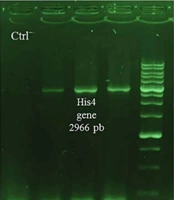
Image Credit:Koomesh
Outline
Engineering the pPICZαA Vector for Optimized Recombinant Protein Expression in Pichia pastoris: Substitution of Antibiotic Resistance and Auxotrophic Selection Markers
Authors
Abstract
Background: Plasmids play a crucial role in biotechnology by facilitating the transfer and manipulation of heterologous DNA in host cells for the production of recombinant proteins. The pPICZαA plasmid, featuring the AOX1 promoter, is regarded as one of the best expression vectors in Pichia pastoris strains. However, the product of the zeocin antibiotic resistance gene (BleR) can be toxic to the host during stable growth, and the high cost of this antibiotic presents a significant barrier to the use of this plasmid.
Objectives: This study aims to clone the kanamycin resistance gene (KanR) and the histidinol dehydrogenase gene (HIS4) to facilitate the selection of clones in transformed bacteria using the KanR gene and in histidine auxotrophic yeasts, while also reducing costs by eliminating the need for zeocin.
Methods: PCR and cloning steps were performed for each of the target genes in the pPICZαA plasmid. Subsequently, the GFP gene was cloned as a control to test the functionality of the KanR resistance gene in bacteria within the pPICZαA plasmid. Functional testing of the his4 gene in the histidine auxotrophic Pichia pastoris GS115 was conducted after cloning the target gene in YNB medium, both with and without histidine amino acid.
Results: The PCR and cloning steps for both target genes in the pPICZαA plasmid were successfully completed, demonstrating positive antibiotic resistance to KanR and growth in a medium lacking histidine amino acids. The expression of the GFP gene was confirmed through Western blotting.
Conclusion: The modified pPICZαA plasmid enabled selection in bacteria using the kanamycin resistance gene and in histidine auxotrophic yeast Pichia pastoris using the histidinol dehydrogenase gene (HIS4). This approach can significantly reduce cloning and expression costs in yeast.
Highlights
References
- 1.Tschopp JF, Brust PF, Cregg JM, Stillman CA, Gingeras TR. Expression of the lacZ gene from two methanol-regulated promoters in Pichia pastoris. Nucleic Acids Res. 1987;15(9):3859–76. [PubMed ID:3108861]. [PubMed Central ID:PMC340787]. https://doi.org/10.1093/nar/15.9.3859.
- 2.Cereghino JL, Cregg JM. Heterologous protein expression in the methylotrophic yeast Pichia pastoris. FEMS Microbiol Rev. 2000;24(1):45–66. [PubMed ID:10640598]. https://doi.org/10.1111/j.1574-6976.2000.tb00532.x.
- 3.Cregg JM, Madden KR, Barringer KJ, Thill GP, Stillman CA. Functional characterization of the two alcohol oxidase genes from the yeast Pichia pastoris. Mol Cell Biol. 1989;9(3):1316–23. [PubMed ID:2657390]. [PubMed Central ID:PMC362724]. https://doi.org/10.1128/mcb.9.3.1316-1323.1989.
- 4.Baron M, Reynes JP, Stassi D, Tiraby G. A selectable bifunctional beta-galactosidase::phleomycin-resistance fusion protein as a potential marker for eukaryotic cells. Gene. 1992;114(2):239–43. [PubMed ID:1601306]. https://doi.org/10.1016/0378-1119(92)90581-9.
- 5.Drocourt D, Calmels T, Reynes JP, Baron M, Tiraby G. Cassettes of the Streptoalloteichus hindustanus ble gene for transformation of lower and higher eukaryotes to phleomycin resistance. Nucleic Acids Res. 1990;18(13):4009. [PubMed ID:1695734]. [PubMed Central ID:PMC331125]. https://doi.org/10.1093/nar/18.13.4009.
- 6.Behvandi E, Bagherpour G, Nedaei K, Kaboli S, Johari B. [Expression of Receptor Binding Domain (RBD) from Coronavirus Spike Protein Fused to Carboxylic Terminal of Clostridium perfringens Enterotoxin (c-CPE) in Pichia pastoris]. Koomesh. 2024;26(2):e149316. Persian. https://doi.org/10.69107/koomesh-149316.
- 7.Mohammadgholizad F, Hashemi A. Construction of recombinant Pichia pastoris expressing single-chain antibody fragment against extracellular domain of EpCAM. Koomesh. 2019;21(4):743–50. Persian.
- 8.Chen J, Stubbe J. Bleomycins: towards better therapeutics. Nat Rev Cancer. 2005;5(2):102–12. [PubMed ID:15685195]. https://doi.org/10.1038/nrc1547.
- 9.Lanza AM, Kim DS, Alper HS. Evaluating the influence of selection markers on obtaining selected pools and stable cell lines in human cells. Biotechnol J. 2013;8(7):811–21. [PubMed ID:23450727]. https://doi.org/10.1002/biot.201200364.
- 10.Oliva-Trastoy M, Defais M, Larminat F. Resistance to the antibiotic Zeocin by stable expression of the Sh ble gene does not fully suppress Zeocin-induced DNA cleavage in human cells. Mutagenesis. 2005;20(2):111–4. [PubMed ID:15755800]. https://doi.org/10.1093/mutage/gei016.
- 11.Hagen L, Sharma A, Aas PA, Slupphaug G. Off-target responses in the HeLa proteome subsequent to transient plasmid-mediated transfection. Biochimica et Biophysica Acta (BBA) - Proteins Proteomics. 2015;1854(1):84–90. https://doi.org/10.1016/j.bbapap.2014.10.016.
- 12.Li Cc, Hu R, Hua Xm, Ni Yx, Ge L, Zhang L, et al. Construction and functional verification of size-reduced plasmids based on TMP resistance gene dfrB10. Microbiol Spectr. 2023;11(6):e0120623. [PubMed ID:37905802]. [PubMed Central ID:PMC10714783]. https://doi.org/10.1128/spectrum.01206-23.
- 13.Abdemami B, Shokrgozar MA, Shahreza HK, Ghavami M. Design and construction of two yeast shuttle vectors containing human procollagen genes expression cassette for expression in yeast. Avicenna J Med Biotechnol. 2011;3(1):11.
- 14.Fani R, Tamburini E, Mori E, Lazcano A, Lio P, Barberio C, et al. Paralogous histidine biosynthetic genes: evolutionary analysis of the Saccharomyces cerevisiae HIS6 and HIS7 genes. Gene. 1997;197(1-2):9–17. [PubMed ID:9332345]. https://doi.org/10.1016/s0378-1119(97)00146-7.
- 15.Gietz RD, Sugino A. New yeast-Escherichia coli shuttle vectors constructed with in vitro mutagenized yeast genes lacking six-base pair restriction sites. Gene. 1988;74(2):527–34. [PubMed ID:3073106]. https://doi.org/10.1016/0378-1119(88)90185-0.
- 16.Imadeartika. The Use of HIS6 Gene as a Selectable Marker for Yeast Vector. HAYATI J Biosciences. 2009;16(1):40–2. https://doi.org/10.4308/hjb.16.1.40.
- 17.Bar-Nun S, Shneyour Y, Beckmann JS. G-418, an elongation inhibitor of 80 S ribosomes. Biochimica et Biophysica Acta (BBA) - Gene Structure Expression. 1983;741(1):123–7. https://doi.org/10.1016/0167-4781(83)90018-0.
- 18.Lin-Cereghino J, Hashimoto MD, Moy A, Castelo J, Orazem CC, Kuo P, et al. Direct selection of Pichia pastoris expression strains using new G418 resistance vectors. Yeast. 2008;25(4):293–9. [PubMed ID:18327886]. [PubMed Central ID:PMC2504081]. https://doi.org/10.1002/yea.1587.
- 19.Mignon C, Sodoyer R, Werle B. Antibiotic-free selection in biotherapeutics: now and forever. Pathogens. 2015;4(2):157–81. [PubMed ID:25854922]. [PubMed Central ID:PMC4493468]. https://doi.org/10.3390/pathogens4020157.
- 20.Raiford DW, Heizer EM, Jr., Miller RV, Doom TE, Raymer ML, Krane DE. Metabolic and translational efficiency in microbial organisms. J Mol Evol. 2012;74(3-4):206–16. [PubMed ID:22538926]. https://doi.org/10.1007/s00239-012-9500-9.
Copyright
© 2026, Author(s). This open-access article is available under the Creative Commons Attribution 4.0 (CC BY 4.0) International License (https://creativecommons.org/licenses/by/4.0/), which allows for unrestricted use, distribution, and reproduction in any medium, provided that the original work is properly cited.
Similar Articles
Optimization of Recombinant Expression of Synthetic Bacterial Phytase in Pichia pastoris Using Response Surface Methodology
Akbarzadeh A, Dehnavi E, Aghaeepoor M, Amani J. Optimization of Recombinant Expression of Synthetic Bacterial Phytase in Pichia pastoris Using Response Surface Methodology. Jundishapur J Microbiol. 2015;8(12):e27553. doi: https://doi.org/10.5812/jjm.27553
Expression of Receptor Binding Domain (RBD) from Coronavirus Spike Protein Fused to Carboxylic Terminal of Clostridium perfringens Enterotoxin (c-CPE) in Pichia pastoris
Behvandi E, Bagherpour G, Nedaei K, Kaboli S, Johari B. Expression of Receptor Binding Domain (RBD) from Coronavirus Spike Protein Fused to Carboxylic Terminal of Clostridium perfringens Enterotoxin (c-CPE) in Pichia pastoris. Koomesh. 2024;26(2):e149316. doi: https://doi.org/10.69107/koomesh-149316
Secretive expression of bacterial β-xylosidase gene including hexahistidin-tag in Pichia pastoris
Yousefian S, Ranaei siadat O, Dehnavi E, BarChianBorojeni M, Nikzad jamnani F. Secretive expression of bacterial β-xylosidase gene including hexahistidin-tag in Pichia pastoris. koomesh. 2013;14(4):e152592. doi:
Isolation and cloning of the β subunit of human follicle stimulating Hormone (hFSHβ) with its native gene’s signal sequence in methylotroph yeast Pichia pastoris pPIC9 shuttle vector
AkbariEydgahi M, Nasr R, Shabani A, Maghbli M. Isolation and cloning of the β subunit of human follicle stimulating Hormone (hFSHβ) with its native gene’s signal sequence in methylotroph yeast Pichia pastoris pPIC9 shuttle vector. koomesh. 2006;8(1):e152112. doi:
Cloning and DNA sequence analysis of the glucose transporter gene2 from Iranian Saccharomyces cerevisiae
amiri S, TariNezhad TN, SharifiSirChi G. Cloning and DNA sequence analysis of the glucose transporter gene2 from Iranian Saccharomyces cerevisiae. koomesh. 2013;14(2):e152559. doi:
More by these authors
- Scopus by DOI: 0
Last Update: 1 week ago
- Scopus by Title: 0
Last Update: 1 week ago
- Scopus by Title (Ref): 0
Last Update: 1 week ago
- CrossRef: 0
Last Update: 6 days ago
- OpenAlex: 0
Last Update: 6 hours ago
- OpenCitations: 0
Last Update: 4 days ago
